

Potential Traffic Management Solutions
A review of traffic solutions and their pros and cons.
Aberdeen South Harbour Link Road – Permanent Traffic Management Measures
Potential Traffic Management Solutions
The following section explores a range of potential solutions, outlining their benefits and drawbacks to support informed decision-making. These measures include regulatory restrictions, physical design changes, and traffic calming techniques, each offering unique advantages and challenges depending on the context of implementation.
For the issues that you consider might occur post implementation of the network changes please consider whether any of the following traffic management measures might provide an appropriate solution.
 |  |  |
 |  |  |
Choose a traffic management solution, or click “Next” to see all options.
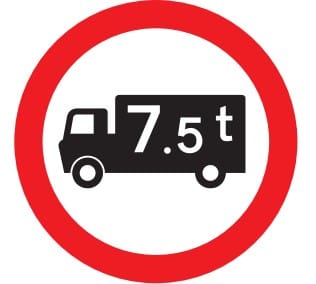
Signed Weight Restrictions
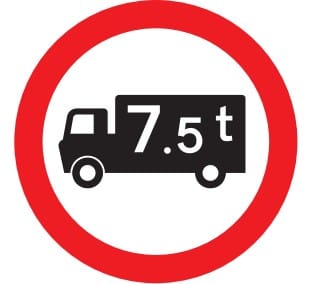
Signed weight restrictions are road signs that indicate the maximum authorised weight a vehicle can have to use a specific road or bridge. These signs are used to protect infrastructure from structural damage or to reroute heavy vehicles for environmental and safety reasons. It is an offence to ignore these signs, as they apply to all vehicles over the specified weight, regardless of whether they are carrying a load.
PROS
- Protects infrastructure: Prevents heavy vehicles from damaging weak bridges, roads, and buildings.
- Reduced noise and disruption: By limiting vehicle access, these restrictions can lead to less noise and disturbance on residential streets.
- Preserves the environment: Keeps heavy vehicles off minor or residential roads, protecting the character and amenity of an area and reducing noise and pollution.
- Increases safety: Reduces the risk to vulnerable road users, such as pedestrians and cyclists, who may be put in danger by large vehicles on roads.
- Will not hinder emergency services: Emergency services will still have access to these restricted areas.
- Bus-friendly design: A restriction can be designed to allow buses through, making them effectively "bus-friendly".
CONS
- Inconvenience for drivers: It may result in drivers of affected vehicles taking longer, less direct, and potentially more costly routes.
- Enforcement of measures: Weight restrictions can be more problematic to enforce as the weight of a vehicle suspected of being prohibited would need to be determined or confirmed. This would require the appropriate apparatus to weigh vehicles, for example, a weighbridge.
- Impact on residents: Can impact on resident’s amenity, ability to receive deliveries.
Click 'Next' to proceed
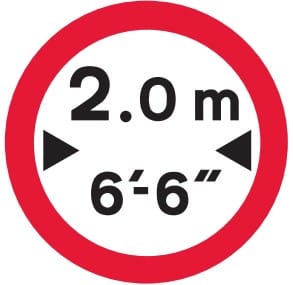
Signed Width Restrictions
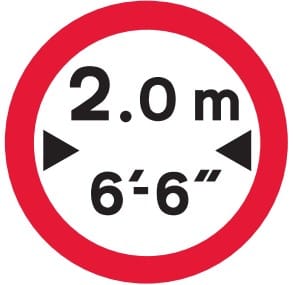
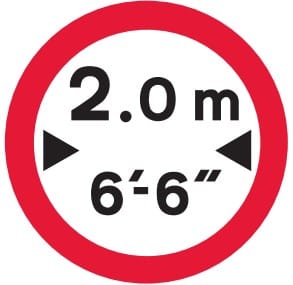
A signed width restriction is a traffic sign that prohibits vehicles wider than the specified limit from passing. The regulatory sign is a red-bordered circle with a number specifying the maximum width in both metres and feet/inches, it prohibits large vehicles from entering narrow roads, bridges, or sensitive areas. Ignoring the sign is an offence, and the restriction applies to the entire width of the vehicle, including mirrors, not just the body of the vehicle.
PROS
- Protects infrastructure: Prevents heavy vehicles from damaging weak bridges, roads, and buildings.
- Reduced noise and disruption: By limiting vehicle access, these restrictions can lead to less noise and disturbance on residential streets.
- Preserves the environment: Keeps heavy vehicles off minor or residential roads, protecting the character and amenity of an area and reducing noise and pollution.
- Increases safety: Reduces the risk to vulnerable road users, such as pedestrians and cyclists, who may be put in danger by large vehicles on roads.
- Will not hinder emergency services: Emergency services will still have access to these restricted areas.
- Bus-friendly design: A restriction can be designed to allow buses through, making them effectively "bus-friendly".
- Enforcement: If compliance with a width restriction is limited physical measures can be installed either temporarily or on a more permanent basis without the need to change legislation.
CONS
Inconvenience for drivers: It may result in drivers of affected vehicles taking longer, less direct, and potentially more costly routes.
Enforcement of measures: Without a physical width restriction, many drivers especially those unfamiliar with the area may ignore or misjudge the restriction. Enforcement usually requires on-site presence of Police or DVSA staff who can check compliance with the use of calibrated measuring devices.
Impact on residents: Can impact on resident’s amenity, ability to receive deliveries.
Click 'Next' to proceed
Physical Width Restriction (Used in combination with signed width restriction)
Physical width restrictions are used to reduce vehicle speeds and prevent large vehicles from entering certain areas.
Physical barriers, such as traffic islands, could be installed to prevent movement of wider vehicles, however this would remove flexibility on the network in case of roadworks or incidents, and physically limit the passage of some wider vehicles which may be considered desirable at times.
PROS
Reduces large vehicle access: Effectively prevents large vehicles from accessing certain roads by physically blocking them.
- Preserves the environment: Keeps heavy vehicles off minor or residential roads, protecting the character and amenity of an area and reducing noise and pollution.
- Reduces danger to pedestrians and other road users: Reduces the risk to vulnerable road users, such as pedestrians, who may be put in danger by large vehicles on roads.
- Enforcement: This type of measure can be self-enforcing as the width of the vehicle using the route is limited by the physical measures in place.
CONS
- Intimidation for cyclists: Some drivers may intimidate cyclists at road narrowing points, making them feel unsafe.
- Higher costs: These are physical engineering solutions that can be expensive to install and maintain.
- Limited speed reduction effect: Width restrictions are primarily for access control, not speed control, and some drivers may try to speed up to get through before an oncoming vehicle.
- Unsuitable for large emergency vehicles and buses: Certain emergency vehicles, such as fire service vehicles, and buses cannot pass through if the restriction is not designed with a sufficient gap.
- Winter maintenance: Would limit accessibility for winter maintenance vehicles.
- HGV movement: Will not stop HGV flow if designed with a gap to facilitate larger emergency vehicles movements.
- Network resilience: Physical restrictions limit network resilience if incidents occur elsewhere along a route preventing access.
Click 'Next' to proceed
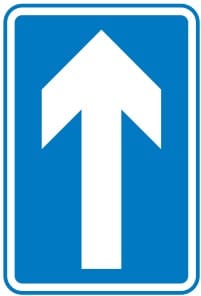
One-Way Restriction
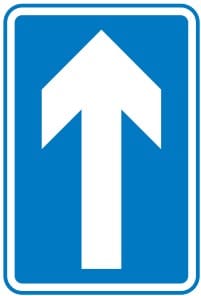
A one-way system is a traffic management method that restricts all motor vehicles to a single direction of travel on a specific road.
PROS
Discourages shortcuts: They can prevent vehicles from using residential streets as shortcuts, which can reduce noise and danger in those areas.
- Improved traffic flow: One-way systems can help traffic move more freely and increase traffic flow by eliminating the need to account for opposing traffic or turns through oncoming traffic.
- Reduced crashes: They reduce certain types of collisions, such as head-on crashes, and can lead to more orderly gaps in traffic.
- More parking: One-way streets can sometimes create more road space for parking.
- Safety measures: They can be used in conjunction with other measures, such as cycle contraflow lanes, to make streets safer for cyclists.
CONS
- Increased travel distances: Drivers may have to take longer, circuitous routes to reach their destinations.
- Increased vehicle speed: Drivers may increase their speed due to the lack of oncoming traffic, creating a less safe environment for pedestrians and cyclists.
- Confusion for drivers: One-way networks can be confusing for non-local drivers and can make it more difficult to navigate the area.
- Harm to local businesses: One-way streets can negatively impact local businesses, as it can reduce footfall and accessibility.
- Slower emergency vehicle response: Forcing longer routes can delay the arrival of emergency vehicles, which can be critical in time-sensitive situations.
- Circuitous routes: One-way systems can force buses to take longer, indirect paths, increasing travel times.
Click 'Next' to proceed
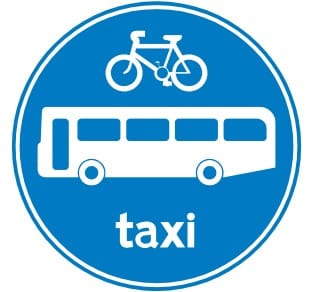
Bus Gate
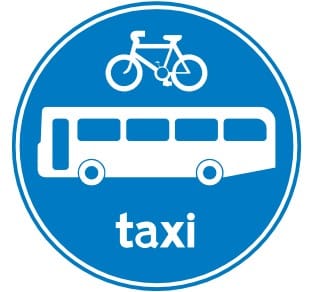
A bus gate is a section of a road that is restricted to only buses, bicycles, and certain other authorised vehicles, with all other vehicle classes prohibited during its operational hours.
PROS
Improves bus service: Bus gates prioritise buses, which can lead to shorter travel times and more reliable service, encouraging people to use public transport.
Promotes sustainable travel: By making public transport a more attractive option, bus gates can help reduce overall traffic congestion and promote sustainable or active travel (like cycling).
Reduces congestion: Directing private vehicles onto different routes can help reduce traffic on main streets, improving flow for authorised vehicles.
Can be enforced via cameras: A local authority (Council) can use enforcement cameras thereby ensuring bus gate restrictions are robust, efficient and consistent.
CONS
- Sign Awareness: While the regulatory sign for ‘Route for buses only’ was established for use in the UK in 1994 and similarly has become increasingly used in cities to provide for bus priority measures, there is still disquiet from some drivers who claim they are unfamiliar with the sign.
- Business Concerns: If through traffic is being diverted, and where there is a history of some of that through traffic stopping roadside at adjacent businesses, there could be concern that sales could be negatively affected.
- Can be expensive to implement: The costs associated with setting up and maintaining bus gates, including signage and camera equipment, can be significant.
- Increased journey times and pollution: It can lead to general traffic being forced to divert onto longer or less suitable routes which can increase journey times which often results in higher fuel consumption and emissions.
Click 'Next' to proceed
Traffic Calming Vertical
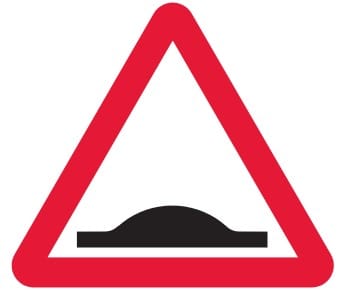
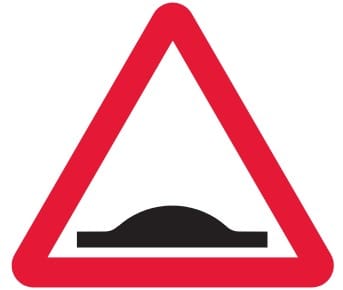
Vertical traffic calming uses physical features that protrude from the road surface to slow vehicles, such as speed humps, speed tables, and speed cushions.
PROS
- Increased safety: They are highly effective at reducing vehicle speeds and personal injury accidents.
- Pedestrian safety: They can be used as part of an informal crossing, making it easier for pedestrians to cross roads safely.
- Bus and emergency vehicle friendly: Some types, like speed cushions or specially designed speed tables, are more acceptable for buses and emergency vehicles because they can be straddled.
- Effectiveness: They are one of the most effective traffic calming treatments and have relatively short installation times.
CONS
Noise and vibrations: The bumps may lead to increased noise and vibrations, impacting residents, especially those living close to the road.
Discomfort to passengers: The jolting can cause discomfort or pain for passengers, particularly those who are elderly, have medical conditions, or are in ambulances.
Cost: Large speed tables can be expensive to install, and they can require complex and costly drainage management to prevent flooding.
Emergency response time: They can add time to emergency response, as emergency services may have to navigate them, though some types are designed to minimise this impact.
Click 'Next' to proceed
Traffic Calming Horizontal
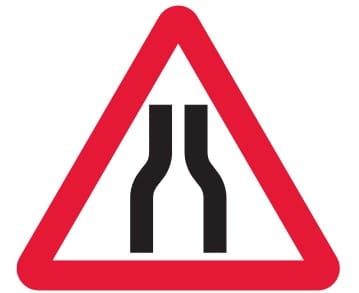
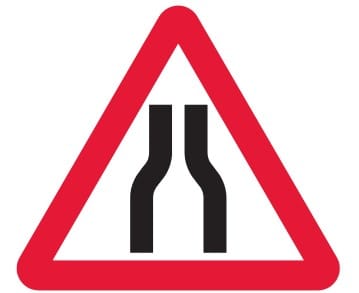
Traffic calming horizontal measures use street design to alter the path of vehicles, such as chicanes, road narrowing, and build-outs. These techniques force drivers to slow down by creating physical obstacles or changing the road's alignment, making it more difficult and less safe to drive in a straight line.
PROS
- Speed reduction: Horizontal deflection forces drivers to slow down to navigate the change in path.
- Improved safety: Slower speeds lead to a significant reduction in collisions and the severity of crashes, especially for pedestrians and cyclists.
- Creates a calmer environment: It can make streets feel safer and more welcoming for pedestrians and cyclists by making them less dominant.
- Discourages "rat running": Horizontal methods like chicanes can make it more difficult for drivers to use residential streets as shortcuts.
- Can be integrated with other features: Road narrowing can be achieved through elements like kerb build-outs, parking bays, and greenery.
CONS
- Cost: Installation can be expensive.
- Emergency vehicle access: Without specific design considerations like overrun areas, horizontal features can impede larger vehicles like fire engines and buses.
- Potential for noise: Sudden braking and acceleration from drivers, especially those who are not used to the new layout, can increase noise levels.
- Parking reduction: Some designs, especially road narrowing, may lead to a loss of on-street parking spaces.
- Potential discomfort for cyclists: Unless the design provides a bypass for cyclists, it can cause discomfort for cyclists, riders can lose balance and be forced to swerve into traffic when trying to avoid such measures.
Discover more

Stay Informed
Follow our projects to get notified of upcoming engagements and the latest project related news.