The Heart of the Hedgerow
The Heart of the Hedgerow: a living legacy of Landscape and Community in WalesIn Carmarthenshire, Local Places for Nature is celebrating a traditional countryside craft that is rooted deep in Welsh he
Local Places for Nature Carmarthenshire
The Heart of the Hedgerow: a living legacy of Landscape and Community in Wales
In Carmarthenshire, Local Places for Nature is celebrating a traditional countryside craft that is rooted deep in Welsh heritage: Hedgelaying— a technique involving partially cutting through stems and bending them to form a living barrier.
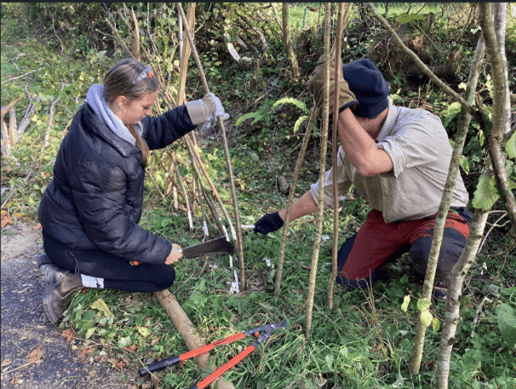
A Carmarthenshire secondary school pupil, practicing a “pleach” cut
Hedgelaying ('Plygu Perthu' in Welsh) - has been practiced in Britain for centuries, probably well before the 'Enclosures Act' between 1600 and the 19th century - when our current, iconic field systems were put in place. Over 30 regional variants are recognized in Britain, with Wales having its own distinct styles, each shaped by local needs, farming practices and the environment.
Welsh hedgelaying styles can be separated into two categories: The first is practiced on plants growing straight from the field surface – commonly called “Welsh Borders” – and is often a “stake and pleach” style, with many variations having a hazel or willow binder to hold the stakes.
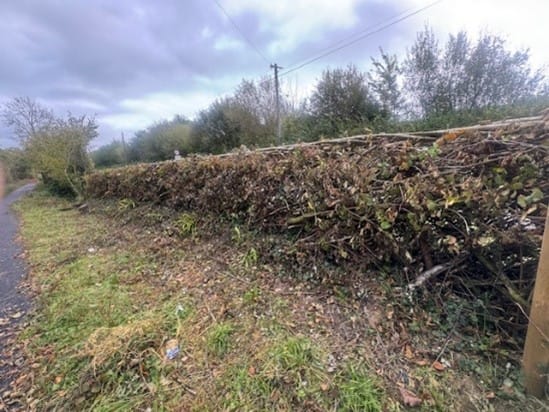
A “stake and pleach” style hedgerow under construction in Llandeilo in October 2025
The second is practiced on plants that grow on the top of earth banks, locally known as 'Clawdd'. The techniques vary in style, with differences between Gower and Pembrokshire – known as a “flying hedge” - to Brecknock Rhadnorshire and the “crop and pleach” styles found in Carmarthenshire; here, 'croppers' also known locally as 'oxers', half or full in size are used in combination with 'crooks' to hold the living pleached stems in place, forming a neat stockproof barrier:
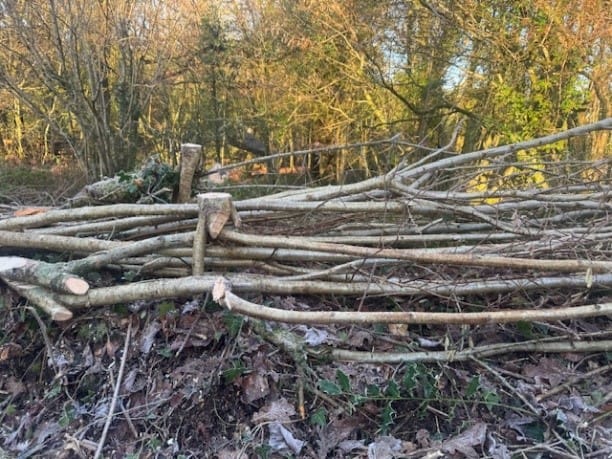
A “crop and pleach” style hedgerow, Swiss Valley, Llanelli
The craft of laying and maintaining hedgerows appropriately delivers many benefits beyond stock-proofing farm fields. For example, well‑managed hedgerows form biodiversity corridors that help to connect natural habitats, providing essential shelter, and food for wildlife; they can include an incredible diversity of plant species, often being remnants of ancient woodlands; they can also help to reduce soil erosion, store large amounts of carbon in the soil, as well as creating effective barriers against harsh climate and pollution.
Hedgerows and hedgelaying practices have unfortunately declined sharply since World War II, due to mechanization, urban expansion, neglect and fencing alternatives. However, the 1970s saw the founding of the National Hedgelaying Society and from the late 1990’s, laws were created to protect existing hedgerows.
Thanks to the skills of local Hedgelayer Malcolm Edwards and support from Welsh Government funding, Local Places for Nature has so far been able to support the laying of over 700 metres of hedgerows across 4 sites across Carmarthenshire in the last year, involving at least 70 local people, who have come to learn these skills for themselves. Hopefully, these regenerated hedgerows should help to enhance our experience of the landscape as we pass through it – telling us stories about nature that must surely rest at the heart of our rural heritage!
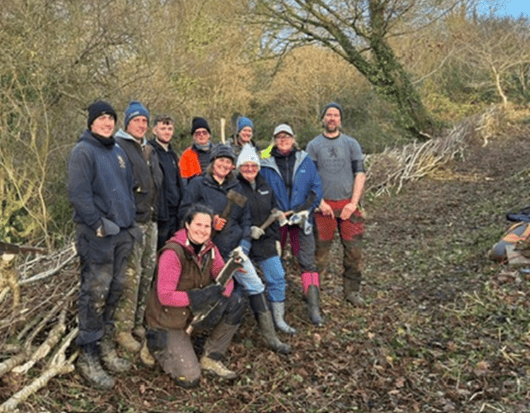
Volunteers learning the craft at Swiss valley Reservoir, Llanelli
Stay Informed
Follow our projects to get notified of upcoming engagements and the latest project related news.