
COUNCIL REQUESTS (CRs)
CR Snapshot
What This Tells Us
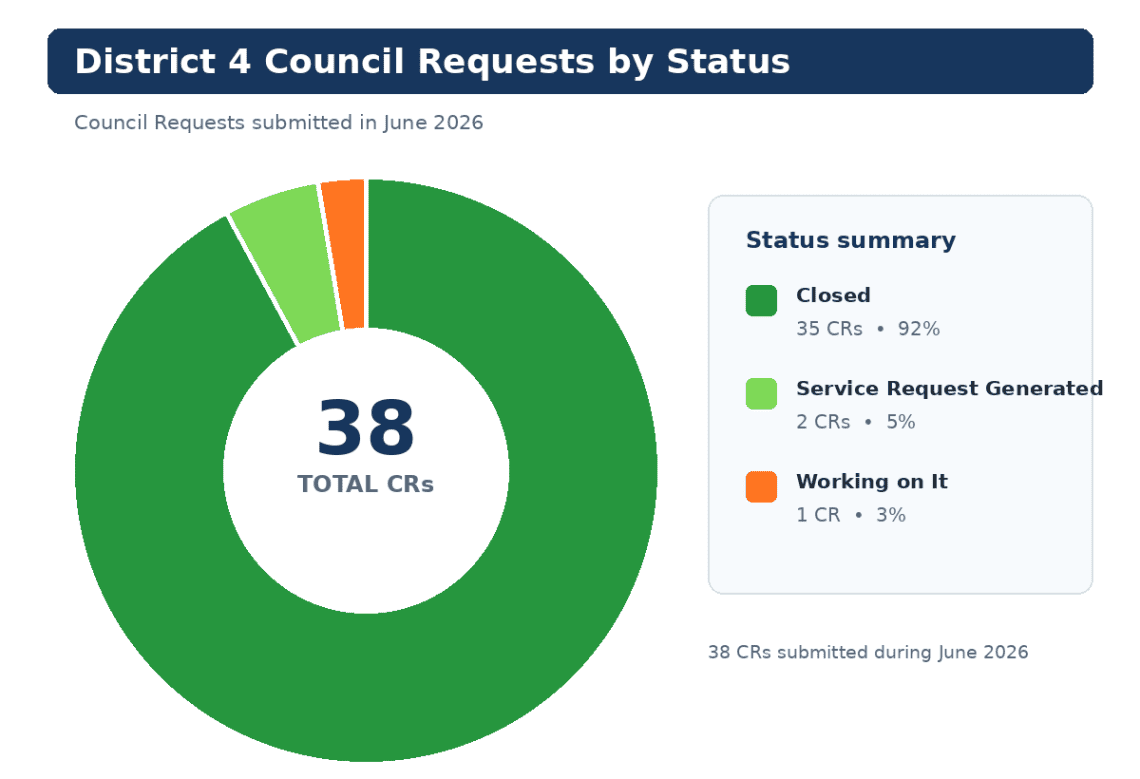
- 92% of all District 4 CRs were closed by the end of June
- Two requests transitioned into longer-term departmental work queues.
- Only one request remained actively being worked on, indicating departments have maintained strong responsiveness to District 4 submissions.
Top 3 Departments
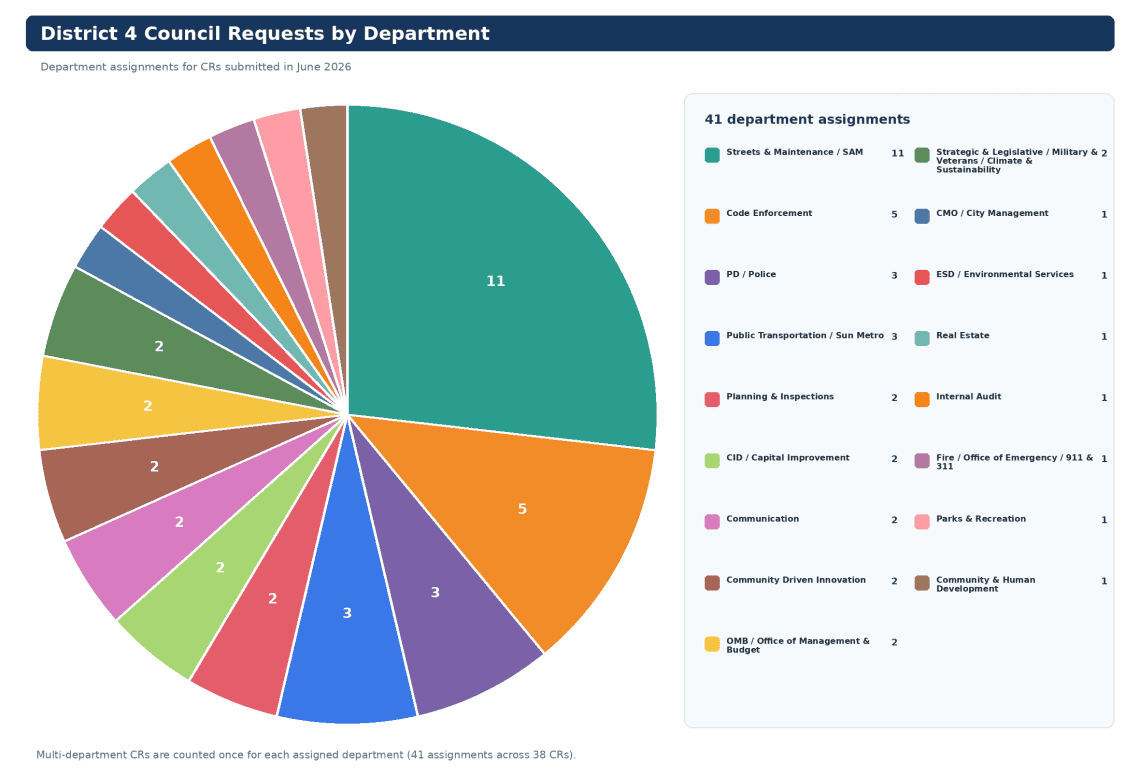
Streets and Maintenance
Streets and Maintenance received the highest volume of requests, including roadways conditions, drainage, traffic operations, street lighting, speed concerns, and infrastructure maintenance. Many of these requests require engineering review, technical assessment, or placement within existing maintenance programs before work can be scheduled.
Code Enforcement
Code Enforcement requests centered on property maintenance, nuisance properties, abandoned structures, and neighborhood quality-of-life concerns. These cases generally require inspections, property owner notification, compliance periods, and follow-up inspections before enforcement actions may occur.
El Paso Police Department and Sun Metro
District 4 also submitted several requests involving EPPD, Sun Metro, and other operational partners. These included constituent safety concerns, transit-related issues, and coordination requiring communication between multiple departments.
EP311 SNAPSHOT
District 4 EP311 Requests
What We're Hearing from District 4 Residents
1. Residents are highly invested in neighborhood appearance and upkeep.
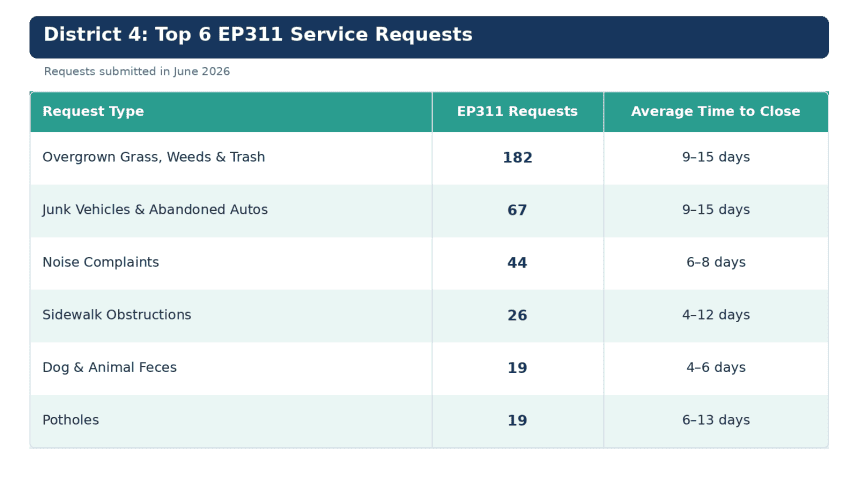
The overwhelming number of requests for overgrown grass, weeds, and trash (182 requests) and junk vehicles (67 requests) indicates that residents place a high value on clean, well-maintained neighborhoods. These concerns account for a significant share of all reported service requests and suggest that visible property maintenance continues to shape residents' perception of neighborhood quality.
2. Quality-of-life concerns extend beyond property maintenance.
Residents also submitted numerous requests related to noise complaints (44 requests), sidewalk obstructions (26 requests), and dog/animal waste (19 requests). These requests reflect day-to-day issues that directly impact residents' ability to comfortably enjoy their neighborhoods.
3. Transportation infrastructure remains a consistent concern.
With 19 pothole requests, roadway maintenance continues to be an important issue, although it is reported less frequently than neighborhood maintenance concerns.
4. Most reported concerns are operational rather than policy-related.
The top service request categories primarily involve issues that City departments routinely address through maintenance, inspections, or enforcement activities rather than long-term capital projects. Residents are primarily seeking timely service delivery and maintenance of existing City assets rather than requesting new infrastructure.
This aligns with the CR data, where many requests also involved operational concerns such as infrastructure maintenance, property conditions, and neighborhood issues.
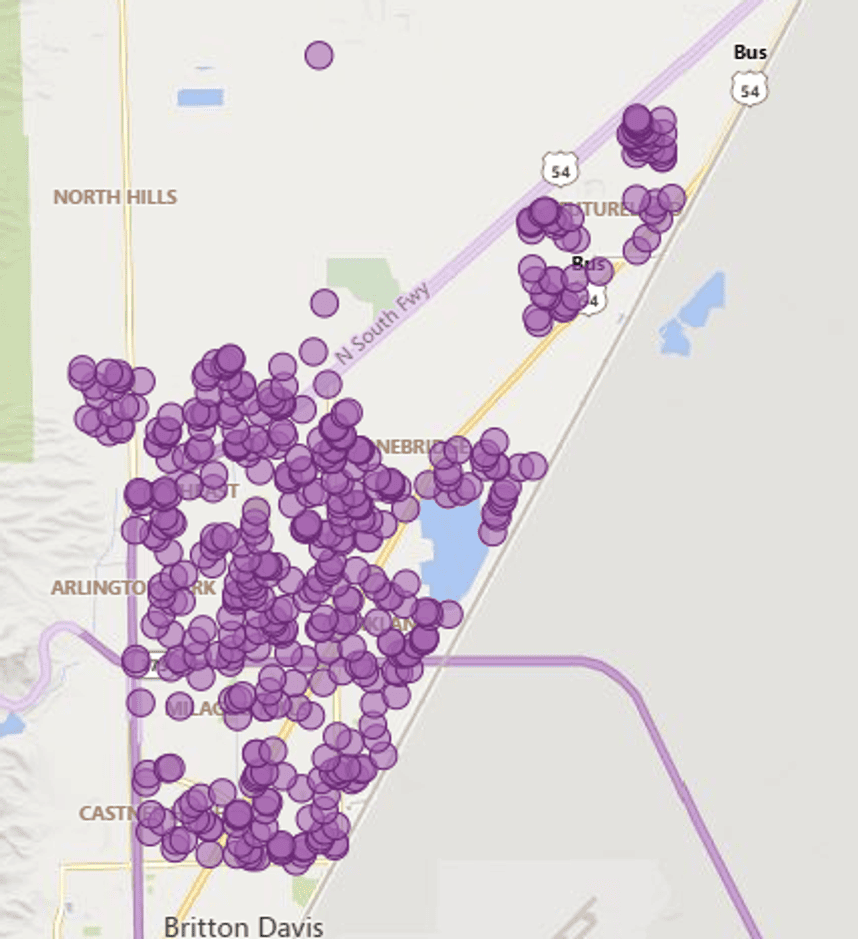
5. Service requests are geographically widespread.
The service request map shows reports are distributed throughout the developed portions of District 4. While several clusters are visible, residents are engaged across the district.
6. Duplicate requests present an opportunity.
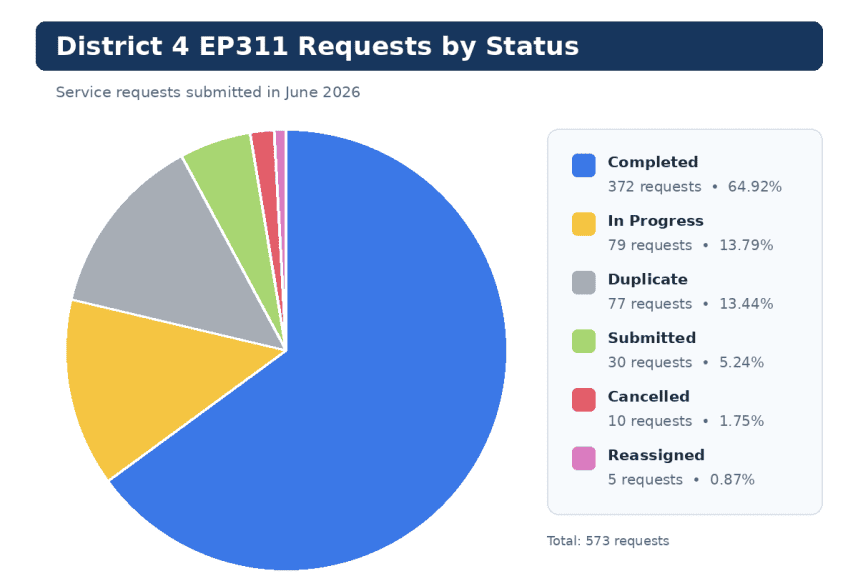
Approximately 65% of all June EP311 SRs have been completed, while roughly 14% remain in progress. Duplicate requests account for another 13%, with relatively few requests remaining in submitted, cancelled, or reassigned status.
Departments are making steady progress on addressing reported concerns, although the amount of duplicate requests may indicate that multiple residents are reporting the same issues before work is completed. Duplicate requests can create unnecessary administrative work, complicate tracking efforts, create multiple records for the same issue, and occasionally result in confusion regarding which request should remain active.
This presents an opportunity for the District 4 Office to educate residents on:
- Checking request statuses before creating a new report
- Retaining SR numbers for follow-up
- Allowing time for inspections and assessments to occur
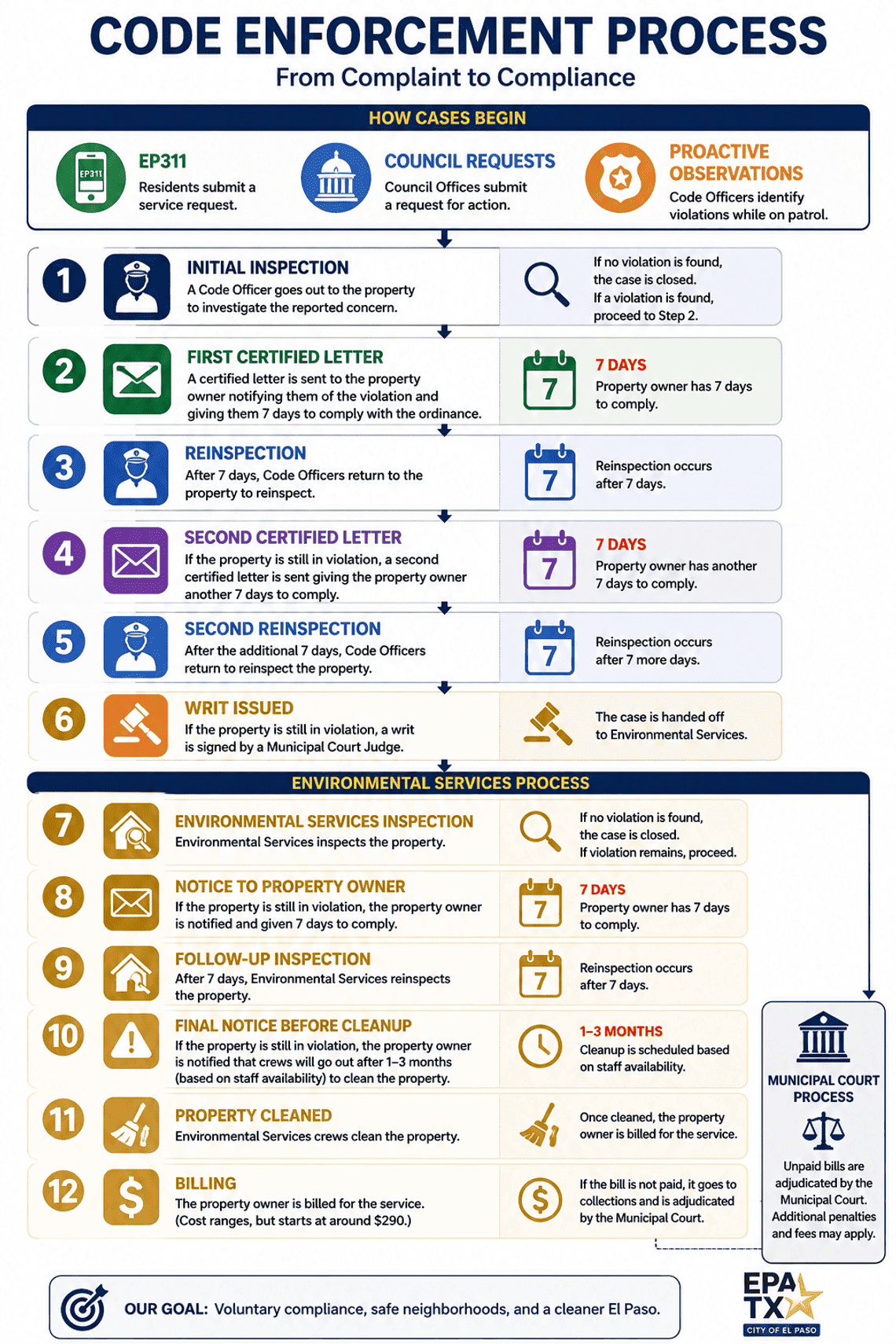
An example of a messaging infographic that can be shared in your newsletter or during community meetings regarding the Code Enforcement process can be seen below. If the District 4 Office would like some guidance in creating communication plans, please reach out to the Community Innovation & Strategy Manager to schedule time to discuss.
Code Enforcement Process Map - Overgrown Weeds
District 4 Community in Action
Preserving Clean, Attractive Neighborhoods
Keeping neighborhoods clean and well maintained continues to be a priority across District 4. Throughout June, City crews responded to concerns involving overgrown vegetation, illegal dumping, junk vehicles, and property maintenance issues.
City departments activated on these concerns include:
- Code Enforcement
- Environmental Services
- Municipal Court
- Parks and Recreation
Together, these departments work behind the scenes to:
- Conduct inspections and reinspections
- Coordinate compliance efforts with property owners
- Investigate abandoned vehicle complaints
- Schedule removals and abatements when necessary
- Monitor recurring problem locations throughout the district
Residents are encouraged to continue reporting neighborhood concerns through EP311 so they can be routed quickly to the appropriate department.

Maintaining Safe Streets and Public Infrastructure
City departments continued working throughout District 4 to address roadway maintenance, drainage concerns, traffic operations, street lighting, and other infrastructure needs. Routine maintenance helps preserve existing infrastructure while improving safety and mobility for residents.
City departments activated on these concerns include:
- Streets and Maintenance
- Capital Improvement
Together, these departments work behind the scenes to:
- Repair potholes and roadway damage
- Conduct traffic studies and engineering evaluations
- Maintain streetlight infrastructure
- Review school-zone safety concerns
- Evaluate signage and traffic control improvements
Residents are encouraged to report street and public infrastructure concerns through EP311 so they can be routed quickly to the appropriate department.
Supporting Safe Neighborhoods
District 4 continued coordinating with public safety partners on constituent concerns involving neighborhood safety, abandoned properties, traffic issues, and other quality-of-life matters. Collaboration between departments helps ensure concerns are directed to the appropriate resources while improving community safety.
City departments activated on these concerns include:
- El Paso Police Department
- Code Enforcement
- Streets and Maintenance
- Environmental Services
- Capital Improvement
Together, these departments work behind the scenes to:
- Conduct inspections and reinspections
- Investigate safety concerns
- Monitor recurring problem locations throughout the district
- Conduct traffic studies and engineering evaluations
- Evaluate signage and traffic control improvements
Protecting Neighborhood Quality of Life
Many resident concerns centered on maintaining enjoyable neighborhoods through nuisance abatement, sidewalk accessibility, noise concerns, and enforcement of City ordinances. These efforts help preserve neighborhood character while creating cleaner, safer public spaces for everyone.
City departments activated on these concerns include:
- Code Enforcement
- Capital Improvement
- Streets and Maintenance
- Environmental Services
- Parks and Recreation
Together, these departments work behind the scenes to:
- Evaluate accessibility improvements
- Maintain pedestrian infrastructure
- Conduct inspections and reinspections
- Coordinate compliance efforts with property owners
- Schedule removals or abatements when necessary
- Monitor recurring problems throughout the district
The Bigger Picture
District 4 residents continue to demonstrate a strong commitment to maintaining clean, safe, and attractive neighborhoods. June's requests show that residents are actively engaged in reporting concerns that affect daily quality of life - from neighborhood upkeep and transportation infrastructure to public safety and accessibility. These reports provide valuable information that helps departments prioritize maintenance activities and coordinate services throughout the district.
RECOMMENDATIONS
Recommendations
Leverage EP311 as the First Step for Routine Service Requests
June's CR and EP311 data indicate that many concerns submitted through the CR process - including property maintenance, potholes, drainage, streetlights, and neighborhood upkeep - can begin more efficiently through EP311.
Submitting an EP311 SR first allows departments to immediately begin inspection and operational work while creating a tracking number that can later be referenced if the 3-month processing time lapses and Council coordination becomes necessary.
Opportunity: Encourage residents and the District 4 Office to submit routine maintenance concerns directly to EP311 and include the SR number in future CRs if follow-up is needed.
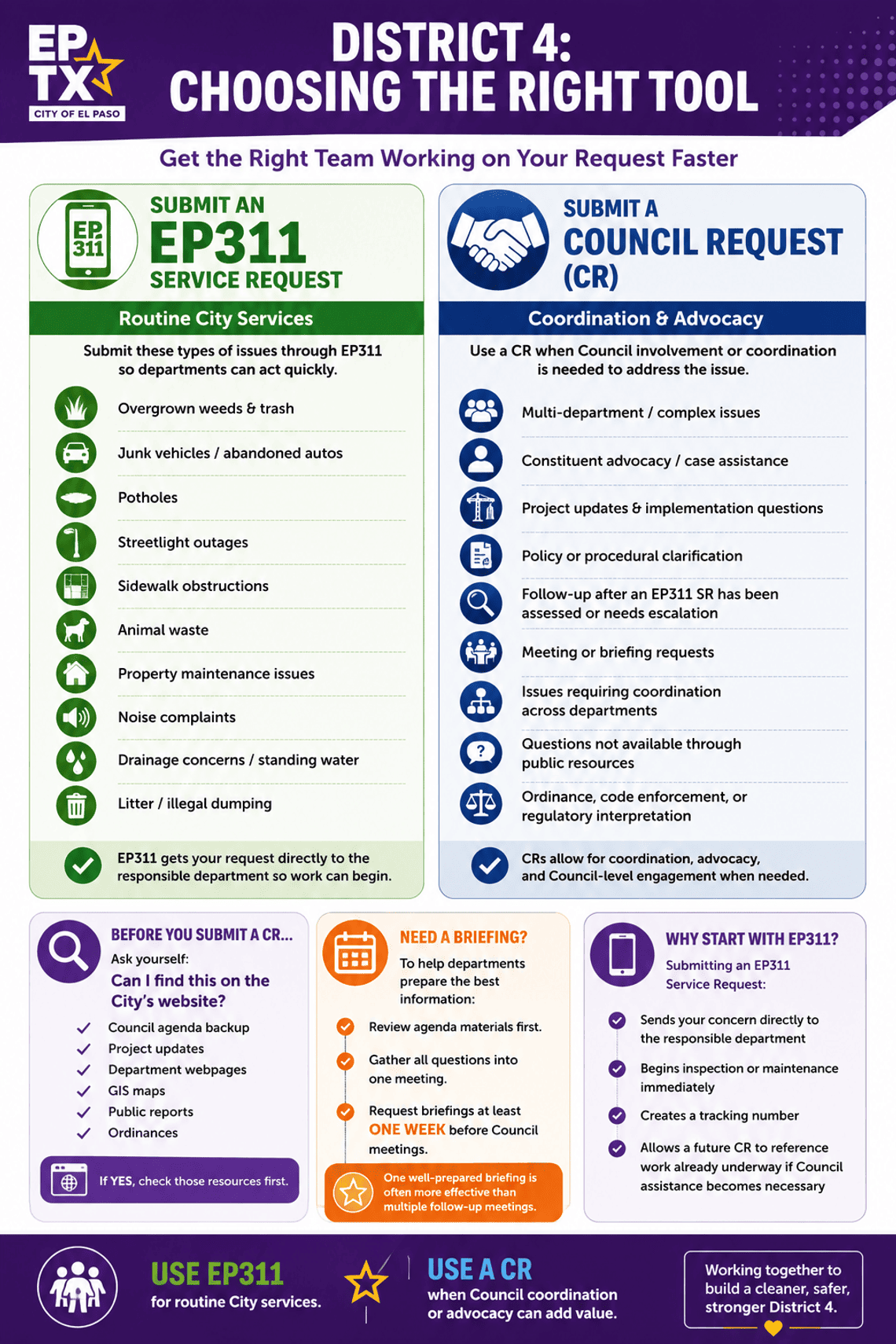
Below is a helpful guide for when to submit a CR versus an EP311 SR based on frequently-reported topics seen this month.
CR vs. EP311 Guide
Utilize Existing Resources Before Submitting a CR
Several June CRs sought information that is already available through existing City resources, including Council agendas, past CRs, project updates already provided, department webpages, GIS resources, and publicly available reports.
District staff conducting preliminary research before submitting a CR can often provide immediate answers while allowing department staff to focus on requests that require coordination or operational action.
Opportunity: Use all available resources as a first stop for all questions, reserving CRs for issues requiring department collaboration or clarification.
Maximize Initial Briefings
District 4 regularly requests project briefings and agenda discussions. Ensuring all desired questions and discussion topics are addressed during the initial briefing helps departments prepare comprehensive presentations while reducing the need for follow-up meetings on the same material.
If questions arise after the initial briefing, please list them out in writing in a CR so staff can collect and provide the appropriate information. General re-briefings are not always feasible nor are considerate of staff time.
Opportunity: Consolidate questions prior to or immediately after briefings so departments can provide the most complete information possible during the initial presentation.
Use Available Digital Tools to Your Advantage
District 4 uniquely has requested clips from City Council meetings which are available online. YouTube includes built-in playback tools that allow users to navigate directly to the desired portion of the recording. Numerous free video clipping tools, YouTube guides, and online forums exist to help you clip short excerpts.
Opportunity: Create clips using available tools to allow City staff to focus on requests requiring expertise and coordination.
Use Briefings Strategically
Briefings are most effective when they focus on policy decisions, project impacts, or issues requiring discussion rather than informational updates that can be provided through written communication.
When appropriate, reviewing staff reports, agenda backup, and publicly available project information beforehand allows briefing time to be spent on higher-value discussion and decision-making.
Opportunity: Reserve briefings for topics where dialogue, clarification, or strategic discussion will add value beyond the information already available in agenda materials.
Use Monthly Trends to Drive Proactive Communication
The top EP311 categories are highly predictable:
- Weeds and trash
- Junk vehicles
- Potholes
This creates opportunities for proactive communication before receiving an influx of resident reports. These monthly CR and EP311 insights provide an opportunity for the District Office to use the trends highlighted to educate residents about available reporting tools, expected timelines, and seasonal concerns.
Examples of trending topics to build communication plans around include:
- Summer weed season
- Monsoon season potholes