
Pima County Sustain-A-Building
In order to achieve the county’s sustainability goals, Pima County’s Project Design & Construction Department is developing an 8-year plan to optimize space utilization through efficient design. The plan will allow Pima County to reduce the overall occupied square footage by more than 200,000 square feet. Through this approach, the Project Design & Construction Department has developed design strategies built around fiscal responsibility, people and the workspace.
The following design elements will be implemented in future tenant improvements and will help Pima County reduce the county's property footprint, energy consumption, and floor area costs:
- Shared conference rooms– at various locations within buildings
- Employee zones of privacy
- Highly flexible, shared huddle rooms on each floor
- Open work space concepts along perimeter of floors
- Dedicated workstations for telecommuters
- Improved temperature control via open-space environments
- Offices that utilize large glass sidelights to draw in natural light
- Lower cubicle height panels within open-space concepts to increase view to the outdoors & natural light
- Upgrades to mechanical, plumbing and electrical systems
- Improved security-controlled entry points
- Improved government and community centralization
Frequently Asked Questions
What is the difference between Sustainability and Open Concent Design?
Sustainable design seeks to reduce negative impacts on the environment, and the health and comfort of building occupants, thereby improving building performance. The basic objectives of sustainability are to reduce consumption of non-renewable resources, minimize waste, and create healthy, productive environments. An open concept floor plan design merges common rooms into one open space to promote better communication, ease of movement, and increased lighting while maximizing your square footage.
Effects of Sustainability and Open Concept Design when dealing with Covid or similar health crisis?
Although no environment is designed in a vacuum, Covid and health protocols, such as distancing, mask wearing, hand sanitizer and a regiment of cleaning and sanitizing work areas and surfaces serve as some of the most effective barriers in dealing with an outbreak. Some of the county’s open concept environments remained fully operational and staffed during the Covid 19 outbreak. These spaces continued to offer distancing between staff, cubical barriers between spaces and technology for use of video meetings. Open concept environments also offer improved ventilation and fresh air distribution.
How does Sustainability and Open Concept Design impact noise control?
Offering spaces that promote open collaboration is not always a benefit for every user. At times open collaboration can increase noise, while offering the greater benefit of promoting better communication. Taking into consideration that every space is different and requires its own design considerations is key to which form of open concept best suits the staff occupying the space. Some examples follow - the use of zones to control noise by grouping noisy or quiet activity spaces together, not locating windows or doors towards sources of noise, avoiding direct and flanking sound paths by off-setting doors and windows from noise sources and the addition of white noise systems for creating a positive impact on mitigating sound concerns.
How does Sustainability and Open Concept Design impact privacy?
An open floor plan creates the feeling of more square footage without actually adding to your space. These concepts create equitable spaces for a greater number of people. In that approach privacy and access to private spaces is equally important. Huddle rooms, phone booths and designated quiet spaces are perfect for private interactions, phone calls or meetings.
Still have questions? Please email project_design_construction@pima.gov.
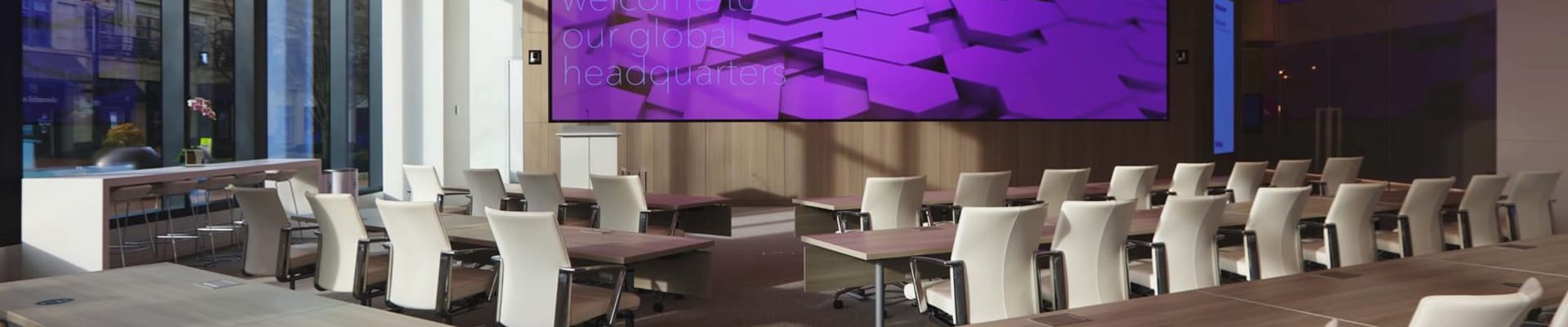
Industry Examples
Manténgase informado
Reciba notificaciones sobre los próximos compromisos y las últimas noticias relacionadas con el proyecto.
