
Water Meters and Conservation
Starting May 1, 2026, water use in Hinton will be measured by water meters and homeowners will pay for the water they use. That means residents who conserve water can pay less. Read on, to learn how.
How Much Water Do Hinton Residents Use?
Across Canada, average residential water use is 223 litres (L) per person per day (2021). That's enough water to overflow a regular bathtub.
Alberta residents use an average of 195 L of water per person per day. That can increase by 50% in summer, up to 293 L per person per day.
But Hinton’s average water use is a whopping 640 L per person per day, including non-residential demand. That's almost three times the national average!
How Much Will Metered Water Cost?
Beginning May 1, 2026, the combined flat rate for water and sewer for a single-family residence that has a water meter installed will be $50 per month. This helps pay for maintaining the distribution system because the water and sewer pipes and systems must still be maintained regardless of how much water each residence uses.
The combined usage rate for the same home will be $5.50 per cubic metre (m3). Note that one cubic meter (m3) of water equals 1,000 litres. Different rates apply for multi-residential and commercial/industrial properties.
So, a single-family residential home that uses 10 m3 (or 10,000 litres) of water per month would pay $50 + (10 m3 x $5.50/m3) = $105 for one month of municipal water/sewer services. Hence, those who use less water will pay less.
Utility rates are available in the Fees, Rates and Charges Bylaw No. 2001. They are also posted on the Town’s website.
No water meter yet?
Residences that do not have a water meter by May 1, 2026 will be billed a flat rate.
Those who have been working with the Town of Hinton to get a water meter installed will pay $160/month for water starting May 1, 2026. Those who refuse to install a meter will be billed $360/month for water until a meter is installed.
**To install a water meter, call Town of Hinton Infrastructure Services: 780-865-2634. **
- Water meters will be provided free to Hinton residents until Dec. 31, 2026; however, residents will have to pay their own plumber to do the installation plus the Town will need to inspect the installation.
- After Dec. 31, 2026, water meters must be purchased.
- Water meters are mandatory. Those who choose not to install a water meter will be non-compliant with the bylaw and their monthly water rate will be $360/month until a meter is installed.
Want to conserve water and lower your utility bill?
1. Track Your Water Use on Neptune My360
You can track your water use on Neptune My360 and monitor the effectiveness of conservation tactics.
Here's how to sign in to your account.
Go to hintonportal.my360-app.ca
- Select ‘Create an account’ at the bottom of the popup window.
- Agree to the Terms and Conditions. Note that this tick box is mandatory, but you are not agreeing to any terms.
- Fill in your utility bill Account Number located on the left side of your utility bill.
- Leave the name blank.
- Fill in the street address. Use the following abbreviations, including the period, as needed: Ave. Cres. Crt. Dr. Pl. Rd. St. (do not include Hinton, AB or postal code). Do not abbreviate Cove, Lane, or Way.
- Complete the next form with security questions.
- Receive an email that your account is activated.
- Create a password.
- Next log-in: Use email and password
If you have questions about your water meter or Neptune My360, contact Infrastructure Services: 780-865-2634, M-F, 8 a.m.-4 p.m.
- When you’re at home and no water is being used, you can check to ensure that you don’t have any leaks.
- When you go on holiday, you can track water usage at home and immediately identify potential water issues remotely.
2. Learn to Read Your In-house Water Meter
Understanding your meter helps you monitor water use and detect unusual activity early.
To activate the meter screen, lift the lid to let in light. If the screen is off, use a flashlight. The display will cycle through several screens automatically.
Key screens you may see
Water Consumption (00000.0000 m³)
The first 5 digits show cubic metres; last 4 digits show litres.
Example: 00001.2345 = 1 m³ + 234.5 litres or 1234.5 L
Water Temperature (00.0 °C)
Flow Rate (0.00 lpm)
0.00 means no water is running in the house right now.
0.36 = 0.36 litres per minute (L/minute) is how much water is running (ie from taps, toilet flushing, laundry etc.)
If everything in your house is turned off and no water is in use but the meter indicates water flow, then you have a leak.
Other number-only screens are not used by customers and can be ignored.
3. Bathroom Water-Saving Tips
Almost half of household water is used in the bathroom. Small changes can save thousands of litres of water and reduce costs.
Check Toilets for Leaks
A leaking toilet can waste up to 750 - 4,000 L per day (!) so test regularly and repair leaks quickly. Older toilets use 13 to 20 L per flush.
- Consider replacing older toilets with low flow models (4.8 L or less).
Reduce Shower Time
Showers use about 10 L per minute, so an eight-minute shower uses 80 L.
- Cut showers to five minutes to save over 35% of the water of a typical shower.
- Install a low-flow showerhead to reduce usage to 7.5 L per minute.
- While showering, play songs on your phone that only last five minutes. When the songs end, turn off the shower.
Limit Baths
It takes at least 150 L to fill a bathtub, so showers generally use less water than baths.
- To reduce water use, take fewer baths or fill the tub with less water.
4. Save Water in the Kitchen
The kitchen accounts for about 15% of typical residential indoor water use. Here's how to save water.
Reduce Kitchen Faucet Flow
A standard kitchen faucet flows at about 8 L per minute. If the kitchen faucet runs water down the drain for five minutes each day (for example, waiting for hot water to heat up or cold water to get colder), that’s 14,600 L of water wasted every year.
Replacing a standard kitchen faucet with a low flow faucet reduces water use to 5.6 L of water per minute, saving 4,380 L of water per year if the tap runs for five minutes every day. That’s enough to fill 2.5 hot tubs!
Use a Dishwasher, if Possible
Handwashing dishes can use upwards of 100 L of water every meal. If you wash breakfast dishes and dinner dishes five days per week, that adds up to 52,000 L of water per year.
To reduce that amount:
- Fill one sink halfway for washing and another sink halfway for rinsing.
- If you only have one sink, rack the washed dishes then rinse them altogether.
- Avoid continuously running the water while washing or rinsing.
However, a dishwasher may be a better option. Older model dishwashers use upwards of 22 litres of water per load. If a household runs one full dishwashing load every day of the year, they will use 8,030 L – that’s 85% less water than handwashing.
Using an efficient dishwasher, such as an ENERGY STAR® certified dishwasher which cannot use more than 12.11 litres of water per cycle, will save even more water. A residence running one full dishwashing load every day of the year would use only 4,420 L of water per year, reducing annual water usage by 92 per cent!
Avoid the Garburator
A garburator uses up to 8.5 L of water per minute. That means 3,102 L of water will go down the drain if a garburator is used for one minute every day of the year. Instead, residential green waste can be used as compost, saving over 3,000 L of water every year.
More Water Conservation Tips for the Kitchen
- Install a hot water dispenser.
- Keep a jug of cold water in the fridge.
- Don't use water to defrost frozen foods.
- Repair faucet and plumbing leaks.
5. Laundry Efficiency
Here are some water-saving tips for the laundry room.
Run Full Loads
Washing machines are water intensive, using an average of 75 L of water per load. That means if you do one load of laundry per week, you’re using 3,900 L of water per year – enough to fill eight hot tubs.
Three loads of laundry per week uses 11,700 L per year or enough water to fill 26 hot tubs. So, running full loads and only doing laundry when necessary will help reduce household water use.
Upgrade to a High Efficiency Washing Machine
High-efficiency (HE) washers use an average of 53 L per load which means they reduce water used to wash one load of laundry by 30%.
Some front-loading HE washers use as little as 26 L per load, saving 49 L or 65% of the water used by a standard washing machine. Annually, three loads of laundry per week in a front-loading HE washer would use a similar amount of water as a standard washing machine only doing one load of laundry per week.
Pre-treat Stains
Pre-treating stained clothing means you only have to wash items once. This saves water and extends the life of your clothes.
Some stains can be removed by soaking in cold water soak or with a combination of vinegar and baking soda. Tougher stains may need a commercial pre-treatment. Whichever method you choose, pre-treating stains can help ensure it’s removed in a single wash.
Other Tips to Conserve Water in the Laundry Room
- Avoid using the ‘extra rinse’ feature on the washer.
- Check washer hoses and connections for leaks.
- Re-use towels multiple times before washing.
- Wear jeans and t-shirts multiple times before washing.
6. Outdoor / Yard Water Conservation Tips
Water conservation isn't just for indoor activities. Remember your yard!
Buy a Rain Barrel; Get $50 from the Town!
In June 2026, The Town of Hinton has a new rain barrel reimbursement program!
Rain barrels are a practical way to collect water for gardens, lawns, and fire protection and reduce the use of drinking water provided by Town systems. They are one step on the path towards a greener future.
- If you're a Hinton resident, purchase a rain barrel from a local business or organization in Hinton or Yellowhead County.
- Keep your receipt
- Apply for a $50 reimbursement on the Rain Barrel Reimbursement web page. You will need to provide a copy of the receipt and proof of residence in Hinton along with banking information.
Water Efficiently
A standard oscillating lawn sprinkler can use up to 1,800 L of water every hour. If you water for one hour, three times per week, that's 21,600 L per month. Over a full summer, that’s almost 70,000 L.
Here are some tips for watering efficiently.
- Only water when needed. Over-watering rots roots and kills the grass.
- Use a timer.
- Water before 10 a.m. and after 6 p.m. This can save up to 50% of the water that might otherwise be lost to evaporation.
- Take advantage of rain and don’t water when Mother Nature provides.
Use Mulch
Use mulch to keep water in the soil and prevent evaporation. Options include wood chips, straw and leaves.
Spread up to 10 cm of mulch around the base of trees, shrubs, perennials, and even in your vegetable garden. A good layer of mulch can reduce watering needs by up to 55%.
Mow Less Often
Short grass looks neat, but it drinks more water. Mow less often and let your lawn grow taller so that it shades the soil and locks in moisture. Less mowing also means deeper roots that reach water and nutrients. Aim for 7.5 to 10 cm in height.
Pick the Right Grass
Choose drought-tolerant grass varieties like Tall Fescue, Fine Fescue, and Kentucky Bluegrass. These grasses stay green even in dry spells.
Plant in early fall or spring for faster germination and a healthier lawn.
Other Methods to Conserve Water in Your Yard
- Collect rainwater for yard use.
- Water the base of potted plants rather than pouring water on top.
- Hydro-zone the garden by grouping plants with similar water requirements together.
- Sweep g outdoor areas instead of hosing them down.
Where Does Hinton's Water Come From? What Happens When You Flush?
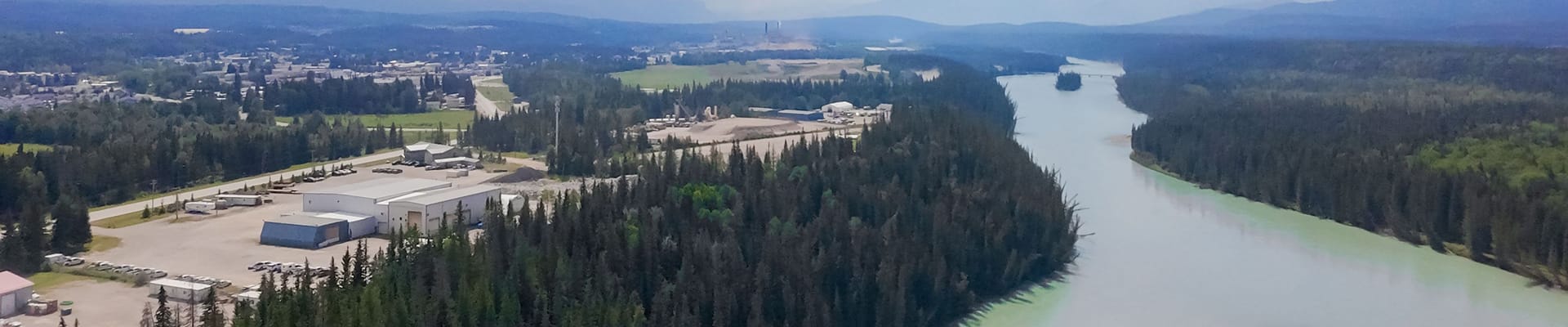
Water used by Hinton residents and businesses is taken from the Athabasca River, piped to a Water Treatment Plant, and distributed via underground pipes to homes and businesses throughout Town.
Water that flows down the drains in bathrooms and kitchens, is flushed down the toilet, and flows from laundry room washing machines is piped through the municipal sewer system to a wastewater treatment plant. There it is treated before being piped back into the Athabasca River.
The volume and cleanliness of the water that Hinton returns to the Athabasca River affects downstream towns such as Whitecourt, Fort Assiniboine, Smith, Athabasca, Fort McMurray, and Fort McKay along with birds, reptiles and mammals that rely on the river to survive.
Can Reducing Water Use Help Prevent Climate Change?
Yes! Saving water can help slow climate change because it reduces energy use and greenhouse gas emissions. Here’s how.
Decreased Energy Use: Treating and moving water takes a lot of energy. When we use less water, we cut down on energy-heavy processes which the Town has to provide. That means fewer emissions.
Protects Nature: Saving water reduces the amount of water removed from rivers, which lets them flow and keeps wetlands healthy. Wetlands absorb carbon dioxide, which helps clean the air, plus support many species that rely on river and wetland ecosystems.
Prepares for Shortages: Using water wisely helps make sure we have enough in the future, even as climate change causes droughts.
Makes Us Stronger: Smart water practices help communities cope with the challenges of a changing climate by leaving more water available for crises such as fighting wildfire.
Saving water is a simple but powerful way for everyone to help fight climate change.
Be Informed
Water meters will allow residents to choose to conserve water resources and lower their household utility bill.
Water conservation will also decrease the volume of water that the Town of Hinton has to treat and distribute, thereby saving wear and tear on the Town's water and sewer system and, ultimately saving residents money. The Town will be constructing a new Water Treatment Plant and these cost savings will help.
To learn more, check out Frequently Asked Questions on the Town's website and the Water Treatment Plant project page
Get Involved
Project updates will be shared on this page and via other communication channels such as social media (Facebook), and emails to those who have elected to be notified (see below).
Stay Informed
Get notified on upcoming engagements and the latest project related news.
Approximate Timeline
Residential water meters are installed and commercial meters replaced
Residents use their meters to conserve water
Important Dates
Water rates for those who do not have a meter by May 1, 2026 were decided by Council
Water rates are $160/month for those residents who have been working with the Town; $360/month for those who refuse to install a meter.
Neptune My360 website now available
Create an account here: hintonportal.my360-app.ca
Utility rates change to reflect water use measured by meters
Variable rates for water consumption will apply to single family and multi-residential properties, as measured by water meters.