
Carbon Reduction Supporting Paper
This is a HTML friendly version of the carbon reduction supporting paper.
Leeds Local Plan
Carbon Reduction Supporting Paper
LEEDS LOCAL PLAN (2024 to 2042)
Carbon Reduction Supporting Paper
Regulation 18 Consultation
June 2025
INTRODUCTION
In March 2019 Leeds City Council, like many other Local Government organisations across the world, declared a climate emergency and committed to action to reduce carbon emissions, mitigate damage to the environment and help communities adapt to the effects of climate change.
One of the ways that the Council is delivering on its commitment to a climate emergency is by updating its Local Plan, because the land use planning system plays a critical role in mitigating and adapting to climate change. Specifically, it can shape places in ways that contribute to reductions in greenhouse gas emissions, it can minimise vulnerability and improve resilience; encourage the more prudent use of existing resources and support the move towards renewable and low carbon energy and associated infrastructure.
The Carbon Reduction policy approach of the Leeds Local Plan aims to minimise energy demand and meet all demands for heat and power without increasing the operational carbon emissions to allow Leeds to meet its climate emergency ambition of zero carbon by 2030.
Leeds City Council (LCC) has declared a Climate Emergency and has an ambition to achieve net zero carbon emissions across the city by 2030 through the adoption of science-based targets. The current version of the targets, the Net Zero Carbon Roadmap for Leeds, identifies and evaluates carbon reduction opportunities and sets out a league table of the most carbon-effective options for Leeds, emphasising the importance of focusing on housing, public and commercial buildings in achieving net zero. According to the latest available data, the city of Leeds emitted 3.8 mtCO2 in 2019, reflecting a 33% reduction since 2005 whilst experiencing an 8% increase in population. While this is a promising start, with annual decreases of around 114 ktCO2/year at the current trajectory, carbon emissions across the city would remain around 2.6 mtCO2 in 2030. Buildings account for around a third of the carbon emissions from the city of Leeds[1].
There is a legal duty under section 19(1A) of the Planning and Compulsory Purchase Act 2004 to ensure that climate change mitigation and adaptation is a core objective of a local authorities’ planning policy. Section 182 of the Planning Act 2008 puts a legal duty on local authorities to include policies on climate change mitigation and adaptation in Development Plan Documents.
Additionally, para 161 of the NPPF requires the planning system to help to:
"Shape places in ways that contribute to radical reductions in greenhouse gas emissions, minimise vulnerability and improve resilience; encourage the reuse of existing resources, including the conversion of existing buildings; and support renewable and low carbon energy and associated infrastructure."
The mechanisms in the Climate Change Act provide an institutional framework for long-term decision-making and a counterbalance to short-term political pressures. The Committee provides advice, but we do not set policy. Decisions remain with the Government and Parliament. To meet our Carbon Budget pathway, what is needed is action, continuing the momentum built up since the introduction of the Climate Change Act. Action by businesses, governments, and households can drive a rapid shift away from fossil fuels, boost investment, support good new jobs, and enhance the UK’s energy security.
It is therefore essential for this legal and policy requirement to be addressed in the Local Plan.
The existing Local Plan currently has several policies that help adapt and mitigate the impacts of climate change. However, these policies were written and adopted prior to the Council declaring its Climate Emergency. Therefore, it is essential to update and add new policies, using up to date evidence, to help Leeds meet its zero operational carbon goal by 2030.
THE CLIMATE EMERGENCY AND THE LOCAL PLAN
A Climate Conversation was launched in 2019 because of the declaration of the Climate Emergency and nearly 8,000 people responded to the Council with the overwhelming majority agreeing with the scientific consensus that the climate is changing due to human activity, that they are worried about it and that tackling the climate emergency, becoming a carbon-neutral city and protecting wildlife diversity should be priorities for the Council. The majority of responses to the Climate Conversation also considered that more should be done around the following issues:
- transport, especially suggestions for a mass transit system;
- building ‘greener’ developments, e.g. requiring stricter energy efficiency standards, the installation of renewables;
- making it harder to develop on green field sites;
- planting more trees.
The Climate Emergency affects Leeds in a number of ways from the inner city and the City Centre to the outer areas, some of which are specific to the nature and character of Leeds and that the inner areas are especially vulnerable to the impacts of climate change. Leeds must be ready to deal with and adapt to a changing climate in the following ways:
- Keeping within our carbon budget. The climate emergency declaration sets the Council on a path of carbon accounting so that as a Metropolitan District Leeds is playing its responsible role in the UK and globally.
- Building on good practice. It is recognised that Leeds – as the second largest authority outside of London – is well placed to use the examples of good low carbon developments that are already being delivered to help generate new ways of thinking about development for all investors in the City. It is also recognised that many businesses are on that journey e.g. 60 of the UK’s FTSE 100 companies have signed up to the United Nation’s Race to Zero campaign – the largest ever global alliance committed to achieving net zero carbon emissions by 2050 at the latest.
- Learn from the 3 pillars approach of the Council. The City Council’s City Ambition is supported by 3 pillars: Net Zero, Health and Well-being and Inclusive Growth. The Council’s proposed planning policies in the LLP reflect that “net gains” approach to development where economic growth must be achieved alongside wider societal and environmental benefits. In this regard the work of Nicholas Stern is important; the economist who advocates recovery and rebuilding in a way that creates sustained economic growth and transforms our economies while tackling the social and ecological stresses caused by our current economic models. Net Zero will increase economic security against fossil fuel price shocks, which have caused around half of the UK’s recessions since 1970. There are also opportunities for new jobs in areas such as heat pump installation, and growing markets such as green finance. Clean, efficient, electric technologies will mean reduced air pollution and should mean lower energy bills than continued reliance on fossil fuel technologies.
- Preparing for heat waves and their impacts. It is recognised that as a large urban area Leeds will experience an increase in temperature fluctuations. The health impacts of heatwaves can be significant, particularly for vulnerable people, when excess deaths can occur. Therefore, it is crucial that we make places ready for extremes of temperature to ensure they are resilient. In Leeds, the urban heat island effect will affect those who are most vulnerable, including the elderly, those with respiratory conditions and those in built up high density areas, particularly those with little shade.
- Planning for flood risk. Leeds with its two main rivers and many smaller tributaries is well aware of the issues that flooding brings e.g. the damage caused by Storm Eva in 2015, will increase as the global and local climate changes.
- The inner areas are less resilient than the outer areas. As a result of work of the University of Leeds and their climate vulnerability tool, it is understood that lack of green spaces, relative deprivation, health indicators and location in general make the inner areas of Leeds more vulnerable to higher summer temperatures and wetter winters.
- Protecting our infrastructure which will need to be built to higher specifications and new nature-based infrastructure solutions help not only deal with the effects of climate change, they can also support biodiversity.
- Protecting our water resources which will need to be used more wisely in development and in activities such as agriculture.
- Supporting nature. Temperature changes won’t just affect people and there will be a need to plan for better biodiversity and resilient local habitats for our species. Leeds has significant environmental and habitat resources which need protecting. The Council has also focused on the ecological crisis that is being faced, with a loss of 70% of insects over the last thirty years across Europe. As part of this response the Council has established an arms length company called Leeds Nature Company to help direct developer contributions to recover nature locally.
- A need for resilient places has also been heightened during the past 2 years by the global pandemic, its localised impacts on Leeds communities in “lock down” with a greater understanding of what their local environments are offering them and its impacts on the economy.
Planning policies help determine planning applications for development that can:
- shape places in ways that contribute to radical reductions in greenhouse gas emissions, e.g. by reducing the need to travel by car
- minimise vulnerability and improve resilience e.g. by avoiding places that flood and dealing with water
- encourage more prudent use of existing resources e.g. by making homes more efficient
- support the move towards renewable and low carbon energy and associated infrastructure e.g. by setting where wind farms and solar farms can be located
- promote nature-based solutions that help adaptation to a changing climate e.g. green flood solutions that soak up water rather than store it.
CARBON TRAJECTORY
For the planning system to support the transition to a low carbon future in a changing climate and make radical reductions in greenhouse gas emissions, it is necessary to measure what that looks like locally. Otherwise, this critical national and local objective will not be delivered. To that end, framing both the Council’s Carbon Budget and its science-based targets within the Local Plan is important and sets the focus for the relevant policies that follow.
The Climate Change Act 2008 is the statutory basis for the UKs attempt to meet the problem of climate change. The Act recognises that there is a need to reduce greenhouse gas emissions and provides a framework of legal obligations by which the level of those reductions can be calculated, identified, and achieved over a specific period.
The Climate Change Act11 requires the UK Government to reduce its greenhouse gas emissions by 100% on 1990 levels by 2050. This is commonly referred to as the Net Zero Target because if 100% of the emissions reductions are achieved then the net emissions compared to 1990 levels will be zero. The act states:
“The target for 2050 (1) It is the duty of the Secretary of State to ensure that the net UK carbon account for the year 2050 is at least 100% lower than the 1990 baseline. (2) “The 1990 baseline” means the aggregate amount of—(a) net UK emissions of carbon dioxide for that year, and (b) net UK emissions of each of the other targeted greenhouse gases for the year that is the base year for that gas.”
The percentage reduction in the Climate Change Act reflects wider international consensus as to the need to limit global temperature rise to at most 2°C above pre industrial levels in order to avoid the most serious existential threats of climate change.
In order to meet the target, the Climate Change Act requires that carbon budgets are set to provide shorter term targets to aim at as stepping stones on the journey to achieving the overall goal of net zero by 2050. The Act requires the Government to set these carbon budgets for periods of 5 years and ensure that the UK does not exceed these budgets. At COP29 in Baku, the Prime Minister announced that the UK will commit to a “nationally determined contribution” of an 81% reduction in emissions by 2035, compared to 1990 levels. Every sector of the economy will be required to reduce emissions to contribute to the national targets and the UK’s net zero strategy.
The Act also established the Climate Change Committee whose role is to advise the Government on what these budgets should be based on the scientific data that is collected at any specific time and to give annual reports on progress towards meeting individual carbon budgets and overall targets. The Committee has found that the government’s policies and plans are not enough to meet carbon budgets and that the policy gap has widened. Therefore, in order to close the policy gap and ensure compliance with their individual carbon budgets it will be necessary for some local authorities to go beyond current government policy.
Full Council declared a climate emergency in March 2019, with the stated ambition of working towards a net zero carbon city by 2030. At a meeting of its Executive Board in April 2019 the Council agreed the recommendations of the Leeds Climate Commission for science-based emission reduction targets for the city, together with the accompanying roadmap. Leeds’ share of the ‘carbon budget’ to 2050 on a per capita basis is estimated at circa 31 million tonnes and Leeds is emitting 4m tonnes of carbon per annum. If we continue business as usual the budget will have been used up by 2029. The Climate Commission demonstrate that by 2030 the world will have locked itself into a greater than 1.5°C global temperature rise unless efforts are made to remain within budget. The LLP has a plan period of 2024 to 2042 and therefore it is essential for the Plan to consider how it can best protect the carbon budget and make it last until 2050 so as to be in line with IPCC forecasts.
The Leeds Climate Commission and City Council have worked to clarify what efforts are needed to reduce carbon locally to remain within budget. The initial focus is on Scope 1 and 2 carbon emissions generated within Leeds (i.e. the fuel and electricity directly used within the District boundary). These are the emissions which are of most relevance to the planning system and the grant of planning permission. Scope 3 emissions - concern consumption and personal choices (e.g. owning a pet, buying lots of clothes with a high carbon footprint as well as long distance travel). In Leeds Scope 1 and 2 emissions have fallen by 40% since 2000. With on-going decarbonisation of grid electricity and considering population and economic growth within the city region, it is projected that the District’s 2000 level of annual emissions will have fallen by a total of 45% in 2030 and 49% in 2050. If it is to stay within its carbon budget, the District needs to add to the emissions reductions already achieved to secure significant further reductions. The Leeds Climate Commission Roadmap follows the Government’s roadmap of aiming for net zero by 2050 but recognises on the basis of the IPCCC evidence that further reductions are needed sooner.
The Climate Commissions analysis includes assessment of the potential contribution of approximately 130 energy saving or low carbon measures for:
- Households and for both public and commercial buildings (including better insulation, improved heating, more efficient appliances, some small scale renewables)
- Transport (including more walking and cycling, enhanced public transport, electric and more fuel efficient vehicles)
- Industry (including better lighting, improved process efficiencies and a wide range of other energy efficiency measures).
The Leeds Climate Commission demonstrates that it is technically and economically possible for Leeds to become a carbon neutral city and to meet ambitious carbon reduction targets in line with the global targets set out by the United Nations. The roadmap makes clear that no single innovation will resolve the climate crisis or put the District on the right path to zero carbon but that a combination of activities is essential. This means that no-one and no sector can afford to not play their part or to leave it to someone else to make the efforts. This is critical to the approach to the LLP as the objectives within in will assist in primarily supporting the necessary measures for households and public and commercial buildings as well as transport. The planning system cannot remedy this alone and achieving the Leeds Carbon Roadmap relies on other innovative measures as well as activities beyond the control of planning. This is why it is important to note that the LPU the plan has the means to deliver new development in line with the Carbon Roadmap and Leeds’ Carbon Budget (as noted by the wider evidence base, including on viability).
The Leeds Carbon Roadmap is available at: https://www.leedsclimate.org.uk/sites/default/files/Net-Zero%20Carbon%20Roadmap%20for%20Leeds_0.pdf
DEFINITIONS
To provide clarity throughout the remainder of the paper, it is first necessary to establish clear definitions for what zero carbon means in the context of new development. To this end we will follow the framework definition by UKGC for net zero carbon buildings. The framework sets out two definitions for net zero carbon buildings – net zero carbon- construction and net zero carbon -operational.
Net zero carbon – construction is when the amount of carbon emissions associated with a building’s product and construction stages up to practical completion is zero or negative, through the use of offsets or the net export of on-site renewable energy. These emissions can be addressed though the introduction of Whole Life Carbon Assessments (WLCA).
A building is recognized as being net zero carbon - operational when the amount of carbon emissions associated with the building’s operational energy on an annual basis is zero or negative. A net zero carbon building is highly energy efficient and powered from on-site and/or off-site renewable energy sources, with any remaining carbon balance offset [2].
WHOLE LIFE CYCLE CARBON ASSESSMENTS
WHY IS THE POLICY NEEDED?
Whole life cycle carbon emissions and ‘embodied carbon’ refers to the carbon emissions resulting from the construction and use of a building over its entire life, including the carbon that is emitted from the operation of a building once it is complete and its end of life demolition and disposal. Embodied carbon can represent up to 50% of total emissions over a building's lifetime[3].
Our current planning policy approach is focussed on reducing operational carbon but we don’t at present ask for any reduction or calculation of the embodied carbon which is emitted through construction materials and the processes used to create them and transport them and the maintenance of buildings, repair and replacement as well as dismantling, demolition and eventual material disposal.
Section 4 of the Study on The Carbon Reduction of Buildings by the University of Leeds, found within the Council’s evidence base, sets out what whole life cycle carbon assessments are, and why they are necessary to truly understand the carbon emissions associated with the construction and use of buildings. We can reduce emissions by considering the implications of the cost of carbon at earlier stages in the design process.
POLICY OBJECTIVES
The policy approach is seeking new development to acknowledge the carbon cost of a development over its entire lifetime. As demonstrated above, the embodied carbon of a building can be responsible for up to 50% of its lifetime carbon emissions and often reusing a building could be an appropriate process to deliver a scheme. However, through consultation and stakeholder workshops, there are industry concerns about the resources and skill base required to deliver a whole life cycle carbon assessment to a Leeds set target. Therefore, the Council is only proposing that major developments will have to provide an assessment which demonstrates actions to reduce its embodied carbon. Minor developments will have to provide information for how the scheme has considered basic principles set out in the Council’s whole life carbon guidance. The proposed policy approach also supports the reuse and repurposing buildings by requiring the impacts associated with demolition and deconstruction to be included in the whole life carbon assessment. The Council’s whole life carbon guidance is being developed and aimed at all applications.
Alternative policy approaches would be to set a benchmark target for WLCAs to meet, or just rely on existing national policy of which there is very little relating to the embodied carbon of development.
EVIDENCE
The University of Leeds has provided a study on the carbon reduction of buildings which explores the justification for the introduction of whole life cycle carbon assessments (section 4). To summarise that section of the report, it explains how embodied carbon represents around 50% of total emissions over a building's lifetime[5] and how current national guidance and planning policy does not require developments to account for this. There is a relationship between operational carbon and embodied carbon in the construction and lifecycle of buildings, and there is a significant amount of carbon used during the construction, refurbishment and demolition of a building.
Paragraph 4.6 of the Study on The Carbon Reduction of Buildings by the University of Leeds details how taking WLC approach may offset the costs of undertaking a whole life cycle carbon assessment:
A focus on embodied carbon emissions of materials and construction practices as part of WLC assessment and emissions reduction is likely to be a challenge for the sector, and supplementing current materials and products with like-for-like replacements will likely result in higher costs[7]. However, taking a WLC approach from the outset may realise potential cost savings through:
- Promoting recovery and reuse of existing structures over demolition and new construction.
- Designing to use less construction material from the outset of a development project
- Construction methods (such as modular construction) which can deliver embodied carbon savings and higher levels of efficiency[8].
It will be important that potential cost savings are recognised during viability assessment as well as likely cost increases which occur through the selection of lower carbon products and materials.
Whilst the report recommends the assessments for new development demonstrate that the scheme will be zero carbon (including offsetting), the Council believe that this is unlikely to be achievable in the short-term. This is echoed in other Local Authorities, where it is believed that the industry has a way to go in reporting and reducing embodied carbon whilst offsetting emissions for construction is not viable at this moment[9]. However, it is expected that the building industry’s experience and knowledge of whole life carbon assessments will rapidly improve over the next 3-5 years, and therefore aligns with the proposed policy approach of monitoring assessments up until a review of the policy.
NPPF CONSISTENCY
Whilst the current version of the NPPF (February 2025) does not contain any specific reference to embodied carbon or whole life cycle carbon assessments, the environmental objective of the NPPF states that “minimising waste and pollution, and mitigating and adapting to climate change, including moving to a low carbon economy” is one of the ways in which achieving sustainable development should be pursued. Paragraph 20 also details how strategic objectives should be delivered through strategic policies, of which “planning measures to address climate change mitigation and adaptation” is included. Paragraph 164 part b also requires new development to be planned in ways that “can help to reduce greenhouse gas emissions, such as through its location, orientation and design”. The introduction of a whole life cycle carbon assessment policy would comply with the NPPF requirements above, by encouraging the reuse of materials and buildings and reducing the amount of greenhouse emissions through new development’s design. Paragraph 161 also requires the planning system to “encourage the reuse of existing resources, including the conversion of existing buildings”.
MONITORING
The following indicators will be used to assess the policy:
Indicator | Reason |
CO2 reduction | Applicants will have to consider, and subsequently publish, their assessments which may lead to lower embodied carbon and more energy efficient schemes. Therefore, new buildings will have lower CO2 emissions. |
EPC Ratings | Applicants considering the whole life cycle carbon of a building may lead to more energy efficient buildings, and subsequently improved EPC ratings. |
IMPLEMENTATION
The policy may require applications to submit a whole life cycle carbon assessment using the latest version of RICS methodology[10]. Paragraph 4.8 to 4.29 of the Study on The Carbon Reduction of Buildings by the University of Leeds looks at potential methods to calculate the whole life cycle carbon of a building, however the Council has required the RICS Whole Life Carbon Assessment for the Built Environment assessment as it is a nationally recognised method and therefore provide consistency at a national level once more Local Authorities introduce assessments.
There are several reporting tools available for applications, both major and minor, to use:
- One Click LCA, which includes collaborations with RICS, the GLA and the UKGBC to provide a variety of tools
- UKGBC One Click Planetary tool covers A1-A5 of the RICS methodology and can be used for free to assess the embodied carbon of key construction materials.
- Leeds City Council whole life cycle carbon assessment guidance
OPERATIONAL CARBON
WHY IS THE POLICY NEEDED?
The Council has existing planning policy that goes beyond national building regulations. Core Strategy Policy EN1[11] requires major development to be 20% more energy efficient than the Building Regulations standard and requires 10% of the energy needs of the development to come from renewable or low carbon energy sources. The objective is also met by Core Strategy Policy EN2 which requires major commercial development to be built to the BREEAM Excellent standard (which includes mandatory energy standards).
Section 1 of the Planning and Energy Act 2008 gives local planning authorities the power to set energy efficiency performance standards that exceed those required in Building Regulations and for proportion of energy used in the development to be from low carbon or renewable sources[12]. Whilst this power will be amended by Section 43 of the Deregulation Act 2015, the Government has confirmed that it has no current plans to commence Section 43 of the Act. In 2019, the Climate Change Act (2008) was amended to reflect the Government’s commitment to phase out carbon emissions by 2050. This sets a reasonable expectation that local plans have not only the ability but a legal obligation to adopt policies that would be consistent with the Act. Several Local Planning Authorities have also gone beyond minimum national energy requirements[13].
The Government has clarified its position on local authorities going beyond the energy requirements set by Building Regulations, stating that[14]:
“To clarify, the Framework does not prevent local authorities from using their existing powers under the Planning and Energy Act 2008 or other legislation where applicable to set higher ambition. In particular, local authorities are not restricted in their ability to require energy efficiency standards above Building Regulations. The Government remains committed to delivering the clean growth mission to halve the energy usage of new buildings by 2030”
The response to the Future Homes Standard consultation detailed how 86% of consultation respondents oppose the commencement to amend the Planning & Energy Act and were in favour of retaining local planning authorities’ flexibility to set standards. The above sets out the national planning and legal context for why Local Planning Authorities should seek to go beyond building regulations to ensure that new development meets the Government’s and Leeds’ net zero targets.
POLICY OBJECTIVES
Leeds City Council (LCC) is committed to taking significant action to mitigate and adapt to the impacts of Climate Change. There is a legal duty under section 19(1A) of the Planning and Compulsory Purchase Act 2004 to ensure that climate change mitigation and adaptation is a core objective of a local authorities’ planning policy. To achieve this goal, LCC had proposed several carbon reduction based policies[15] within a previous draft Local Plan Update “Your City, Your Neighbourhood, Your Planet”, including a policy that focussed on new buildings to be zero carbon. This previous approach included Policy EN1B that required new development to meet the following:
- Minimise energy demand through passive design principles including fabric efficiency measures.
- Use Energy Use Intensity (EUI) targets to reduce the energy demands of a building.
- Use onsite renewable energy generation deliver the EUI target, therefore balancing the annual energy demand (unregulated and regulated energy) onsite through a renewable energy source.
- If onsite renewable energy generation could not meet the EUI target, then offsite financial contributions may be sought.
- Ensure that onsite plant are fossil fuel free (no gas boilers etc.)
However, following the publication of the Local Energy Efficiency Standards Update Written Ministerial Update (WMS)[16] in December 2023, LCC has had to reconsider its approach to energy efficiency within its emerging Local Plan. The key paragraph of the WMS that has required this reconsideration is:
Any planning policies that propose local energy efficiency standards for buildings that go beyond current or planned buildings regulation should be rejected at examination if they do not have a well-reasoned and robustly costed rationale that ensures:
- That development remains viable, and the impact on housing supply and affordability is considered in accordance with the National Planning Policy Framework.
- The additional requirement is expressed as a percentage uplift of a dwelling’s Target Emissions Rate (TER) calculated using a specified version of the Standard Assessment Procedure (SAP).
The Council’s previous policy was not consistent with the above WMS guidance as the policy referred to EUI targets, rather than a TER. Whilst the WMS has been subject to a High Court challenge, it was ultimately dismissed and is now subject of the Court of Appeal.
LCC’s proposed EN1B policy was significantly going beyond what would be expected to be delivered through building regulations, as the EUI approach considers both the regulated (heating/cooling/lighting etc.) and unregulated energy (electrical appliances/refrigeration cooking etc.) of a building whilst a TER approach would only consider regulated energy. In certain developments, the unregulated energy of a development can account for up to 50% of its total energy demand. As a result, there was a significant risk of the policy being found unsound at the examination in public.
However, in the interim period the WMS has been interpreted differently by the Planning Inspectorate, with some plans being found unsound without modification and some plans e.g. Tendring being found sound with an EUI approach.
The Council’s approach to adopting a new energy efficiency policy must also be considered within the national context of the building regulations update which is proposing the Future Homes Standard (FHS) and Future Building Standards (FBS). The FHS and FBS are expected to be introduced formally in 2025, however the standards that new buildings will be expected to achieve has yet to be confirmed. Generally, the FHS and FBS are seeking to:
- Future proof buildings to ensure that no further energy retrofit work will be required to enable them to become zero carbon developments over time.
- Shift away from the use of fossil fuels onsite and promote alternative methods of energy regeneration (such as solar panels and heat pumps)
- Reduce the carbon emissions of new homes further that currently required by building regulations
- Improve ventilation standards
- Provide overheating mitigation
These are similar objectives to what LCC would be seeking to achieve with an energy efficiency based policy. Subject to the FHS the Council may not need to prepare a policy at all or may consider it appropriate to seek further net zero ambitions. Much therefore depends on the final form of the FHS. The uncertainty created by not knowing what the final standards will actually require limits the Council’s ability to progress a detailed policy at this stage. It should be noted the FHS and FHB have been subject to numerous rounds of public consultation and LCC has submitted representations to those which encourage and support the regulations to be as progressive as possible and include metrics such as EUI targets. However, it is ultimately unadvisable for the Council to prepare an energy efficiency policy for this round of consultation when there is uncertainty to what will be required at a national level.
Since preparation of the previous Local Plan Update polices, there has been a change in national government and a shift towards growth and speeding up the planning system[17]. One of the Government’s key milestones for growth[18] includes the “building of 1.5 million homes in England and fast-tracking planning decisions to create decent affordable housing for working people”. The NPPF requires clear and concise polices to reduce ambiguity and speed up decision making, and within the national context as set out above, LCC’s previously proposed policy would have not been consistent that objective due to its potential unsoundness. The WMS, which has not been superseded by the Labour government, states that “The proliferation of multiple, local standards by local authority area can add further costs to building new homes by adding complexity and undermining economies of scale” and the Council’s previous approach would have also conflicted with this objective.
Considering all of the above, the Council decided to withdraw the initial Local Plan Update and incorporate those plan objectives into the Leeds Local Plan – this consultation . The Council will retain its intent to progress the objectives of the initial Local Plan Update to continue consider how the planning system can help address the Net Zero carbon reduction aspirations of the Council. The policy options available to the Council are very much dependent on what is decided at a national level, however the following section sets out the Council’s potential preferred approaches.
COUNCIL’S PREFERRED APPROACH MOVING FORWARD
Whilst the Council would ultimately like to see national policy and building regulations deliver net zero homes and buildings, the Council can adopt energy efficiency planning policies that encourage and require development to deliver well designed and quality development within whatever national policy framework is set by building regulations and policy requirements.
Objective 28 of the plan states that the plan should:
Minimise the use of carbon through the design of new development including through assessing its whole life cycle carbon emissions and adopting sustainable construction standards so as to deliver high quality zero carbon ready buildings that do not need to be retrofitted in the future.
Previously, Policy EN1B had required development to meet the following hierarchy:
- Minimise energy demand through passive design principles including fabric efficiency measures,
- Maximise renewable energy onsite to attempt to deliver an annual net zero energy balance (including regulated and unregulated emissions) and
- Ensure on-site plant (e.g. heating, cooking, generator) are fossil fuel free, with the exceptions of emergency uses and uses where backup energy generation is deemed essential
These principles are still considered to be sound and in line with national guidance and can be encouraged through future planning policies, however the details on how to deliver them are dependent on what is expected from the incoming building regulations.
Whilst the ability to set energy efficiency standards may be limited by national guidance, any future policy could ensure that new development is net zero ready by not relying upon fossil fuel boilers. It is estimated that individual buildings will face retrofit costs of between £15,000 and £25,000[19] to meet the South West’s 2030 climate objectives, and similar costs would be expected in Leeds.
EVIDENCE BASE
As part of the Leeds Local Plan Update, the Council had commissioned and collated an evidence base to justify its previous planning policy approach. Whilst there has subsequently been changes to the national planning context as detailed above, the evidence base can still be used to justify any future approach and the need for an energy efficiency planning policy.
LEEDS CLIMATE COMMISSION ROAD MAP
Work produced by the Leeds Climate Commission has provided a science based carbon budget for Leeds and a roadmap on how to meet certain targets. The report[20] has identified that Leeds has carbon budget of 42 million tonnes from 2018 to 2050. To become a net zero city, Leeds would need to cut emissions by the following amounts:
- 70% by 2025
- 85% by 2030
- 95% by 2035
- 100% by 2050
Whilst decarbonisation of the grid may account up to 59% of the reduction in Leeds’ carbon emissions, further actions to achieve carbon neutrality are required for the remaining 41%. Policies within Local Plans can play a significant role in reducing the carbon emissions of new buildings but improving their fabric efficiency and ensuring non-fossil fuel energy sources are installed. It also promotes the use of EUI targets over a TER based approach, however the report was written prior to the WMS.
UNIVERSITY OF LEEDS STUDY ON THE CARBON REDUCTION OF BUILDINGS REPORT
The Council commissioned the University of Leeds to provide a report[21] that justified adopting planning policies relating to carbon reduction of buildings. With regards to operational energy, the report encourages new buildings to have high energy efficiency, use onsite renewable energy sources and offset remaining emissions locally. The report also highlights the importance of restricting fossil fuel boilers in new development when compared to heat pumps. Paragraph 5.13 of the Study on the Carbon Reduction of Buildings by the University of Leeds uses the expected dwelling construction figures of the Core Strategy to compare the carbon impacts of a Leeds City Council net zero operational policy:
Based on the expected dwelling construction figures in the Core Strategy, and assuming a linear housebuilding increase onwards to 2050, the total operational carbon emissions (for homes only) without an LPU policy to require net zero operational emissions in Leeds would be:[22][23]
- Scenario 1 – Part L 2021 Uplift remains in force but Future Homes Standard with accompanying ban on gas boilers not introduced: 2.87m tonnes of carbon by 2050.
- Scenario 2 – Future Homes Standard implemented with accompanying gas boiler ban from 2025 onwards: 104,700 tonnes of carbon by 2050
SCATTER TOOL
SCATTER[24] provides local authorities and city regions with the opportunity to standardise their greenhouse gas reporting and align to international frameworks, including the setting of targets in line with the Paris Climate Agreement. Factoring in direct and indirect emissions and with no change to current technology for heating homes in Leeds the pathway will resemble figure 1. By 2050, if most heating comes from ground source heat pumps, community scale combined heat pumps and some by district heating, then there is a significant decline in our carbon emissions.
CASE FOR EUI AND SPACE HEATING TARGETS
Energy Use Intensity (EUI) targets which describe a building’s operational energy targets on a maximum kWh/m2/year basis. Whilst an EUI approach is not currently supported by the WMS, it is generally acknowledged that EUI (and space heating demand) targets are a more accurate metric to understand the total energy use of a building. EUI includes all the energy consumed in the building including regulated energy (heating, hot water, cooling, ventilation and lighting) and unregulated energy (plug loads and equipment e.g. kitchen white goods, ICT and AV equipment). It is calculated as the annual kWh/ m2, where area is taken as the gross internal area. The UKGBC urges as an immediate priority to set up energy use intensity (EUI) targets. The future development of a market for Green Mortgages is also likely to result in an increased emphasis on measuring in-use performance of properties. Implementing an EUI target without a space heating target would risk high fuel bills, implementing both targets without an onsite fossil fuel ban would allow gas to be used to meet the other targets[25]. The Council will continue to support and promote the use of EUIs through policy but the extent to which this is a mandatory requirement will depend on the FHS and the WMS. it is noted that Tendring Council have recently successfully progressed an EUI approach through examination, but that plan is not yet adopted and unchallenged.
NPPF CONSISTENCY
Paragraph 164 of the NPPF states new development should be planned for in ways that:
a) avoid increased vulnerability to the range of impacts arising from climate change. When new development is brought forward in areas which are vulnerable, care should be taken to ensure that risks can be managed through suitable adaptation measures, including through the planning of green infrastructure; and
b) help to reduce greenhouse gas emissions, such as through its location, orientation and design. Any local requirements for the sustainability of buildings should reflect the Government’s policy for national technical standards
The Government’s current policy for technical standards are defined through the Building Regulations and WMS. Any sound policy approach will need to take account of those factors.
Paragraph 166 also requires applications to:
b) take account of landform, layout, building orientation, massing and landscaping to minimise energy consumption.
MONITORING
The following indicators will be used to assess the policy’s effectiveness:
Indicator | Reason |
Air Quality | New buildings will promote the use of renewable energy, or provide financial contributions through offsetting, that can help improve Leeds air quality. |
CO2 reduction | New buildings will be net zero operational energy, or offset to other carbon reduction schemes, which will help decrease the amount of CO2 emissions within Leeds. |
EPC Ratings | As buildings will be built to net zero operational energy and meet EUI targets, EPC ratings should improve in new domestic and non-domestic buildings. |
Renewable Energy generation | The policy requires new development to provide renewable energy onsite, and therefore should result in an increase in the amount if renewable energy delivered within Leeds. |
IMPLEMENTATION
As it is still unclear when the Council’s operational energy policy may require new development to achieve, it is difficult to state exactly how it will be implemented. Whether a TER or EUI based approach is adopted, it is likely the Council will produce and publish technical guidance on the methodology required to fully comply with the policy.
SUSTAINABLE CONSTRUCTION STANDARDS
WHY IS THE POLICY NEEDED?
Leeds City Council wants all development to be built to a high standard across a range of sustainability measures. To achieve this we has previously adopted Policy EN2 in our Core Strategy to require specific construction standard ratings to be achieved, and adopted the Building for Tomorrow Today— Sustainable Design and Construction Supplementary Planning Document (SPD) to help developers design and construct sustainable developments within Leeds. For major residential development it was required to be built to Level 6 of the Code for Sustainable Homes and major commercial development to be built to BREEAM excellent standard.
However, in 2015 the Government abolished the Code for Sustainable Homes and consequently the Council amended Policy EN2 accordingly through the Core Strategy Select Review (2019). Policy EN2 currently still asks for BREEAM Excellent for non-residential development but for residential development it only asks for a water consumption standard (in line with the Government’s Technical Standards).
As set out above, our current policies for sustainable construction have been limited by changes to national guidance and are not as ambitious as was originally intended. Whilst we have not been able to set policy to encourage all development to achieve these standards where we are able (e.g. through our own development) we have sought to go further.
Energy efficiency is a key component of most sustainable construction standards but the options proposed now for development to achieve zero carbon across the whole life cycle of a development need to improve even more. One way of helping to achieve this is through measuring of the improvement through accreditation by a sustainable construction rating method, which provides a standard against all of the different sustainable construction factors. Sustainability standards also provide a system of accountability and monitoring for intentions and measures set out during the application stage.
POLICY OBJECTIVES
As set out above, our current policies for sustainable construction have been limited by changes to national guidance and are not as ambitious as was originally intended. Whilst we have not been able to set policy to encourage all development to achieve these standards where we are able (e.g. through our own development) we have sought to go further.
The policy is seeking to ensure that all new development (non-domestic and residential) is delivered to a high standard.
One option is to adopt the The Home Quality Mark [26][27] certification scheme from BRE, which awards a 1-5 star rating for new homes against a set of criteria which include living costs, health and wellbeing and environmental footprint.
Indicators include reducing energy and carbon emissions, improving biodiversity, home security and recreational space, flood risk, internal noise and temperature. Promotion of public or active travel options and access to local amenities would support reductions in household carbon emissions outside of the scope of the buildings themselves.
Credits can be obtained from a range of indicators within three indicator bands - ‘my costs’, ‘my wellbeing’ and ‘my footprint’. A minimum number of credits have to be achieved in each to obtain a 1-5 star rating. By requiring a 4 star rating, it ensures that ‘a home is designed and built to have very low running costs, many positive impacts upon your health and wellbeing, all with an extremely low impact upon our environment’[28].
The HQM involves a two-stage assessment to ensure principles are incorporated at design stage and to verify the standard has been met post-construction. Assessment is undertaken by independent assessors, trained and licensed by BRE. According to a UKGBC (UK Green Building Council) project in association with Core Cities UK, HQM can also help minimise performance gap related issues in the following ways:
- Calculation methodologies are intended to be more accurate than standard practices, particularly in relation to energy and carbon calculations (see opposite)
- A focus on better inspection, commissioning and testing including detailed planning and scheduling to ensure homes are being reviewed throughout the whole delivery process
- Requirements which reward smart home solutions, better aftercare, accessible controls and home information for occupiers to encourage good in-use behaviours
- An integrated approach to project preparation and post occupancy evaluation; helping encourage the transfer of learning from one site to the next
- Outcome focused assessment criteria and an ‘each home’ certification process whereby every home has its own certificate which represents its individual ratings and indicator scores reducing the risk of averaged assumptions[29]
BREEAM New Construction 2018 is the UK version of BRE’s international sustainable building standard for non-domestic buildings. This includes commercial, office, retail, education, healthcare, and public buildings, as well as short and long stay residential institutional buildings such as hotels, care homes, and sheltered accommodation etc., and can include part new-build, part refurbishment projects. BREEAM is referred to by over 190 Local Authorities within their Local Plans across the UK, so is standard that national developers will have experience of using.
Assessment and certification must be carried out by a licensed BREEAM Assessor and includes a range of evidence and site inspection. The criteria include reducing energy and carbon emissions, sustainable materials and construction practices, health and wellbeing of building users, accessibility and sustainable transport options.
Ultimately, developments attaining accreditations for HQM and BREEAM from independent experts will give householders and end users confidence that their buildings are well designed and built, whilst being cost effective to run.
There are other sustainable construction standards and targets that applications can achieve as of 2022, these include the Passivhaus Standard, Living Building Challenge and RIBA 2030 targets. Some of these are summarised in the Leeds University Study as detailed here:
| Residential / non-residential | New build / retrofit | Major / minor | Energy reduction metric | Operational carbon emissions | Embodied carbon emissions |
UKNZCBS | Both | Both | Both | TBC | Net zero (TBC) | Net zero (TBC) |
BRE Home Quality Mark | Residential only | New build only | Both | Energy and operational carbon target together within HEPR (min 28 credits / HEPR 0.630 for 4 star rating) | N/A | |
Passivhaus | Both | Both | Both | <15 kWh/m²/y | N/A | N/A |
BREEAM New Construction 2018 | Non-residential only | New build only | Major | Energy & operational carbon target together within EPR (min 0.6 for ‘Outstanding’) | ||
Living Buildings Challenge 4.0 | Both | Both | Both | 70% reduction on building standards | Net positive through onsite generation | Net zero through on and offsite offsetting |
RIBA Challenge v2 2025 / 203041 | Both | Both | Both | <35 kWh/m²/y (residential), < 55kWh/m2/year (non-resi) | N/A | <625 kgCO2 e/m² |
EVIDENCE
The policy will result in high quality, sustainable development. The evidence on high quality and sustainable places is qualitative however the many reports on climate mitigation and adaption return to quality of place being central to achieving well designed places that respond to the impacts of climate change through mitigation (reducing greenhouse gas emissions and minimising embodied energy) and adaptation (such as rising temperatures and increased risk of flooding).
There is also much research on the relationship between planning and good design and health benefits (Public Health England (2017[30]) that share the benefits of addressing climate change (mitigation and adaption) through improvements to the layout and form of buildings and spaces and better use of resources that has clear physiological and psychological health benefits. This is reflected locally in the Leeds 2014 Director of Public Health Report “Planning a Healthy City: housing growth in Leeds” which considered the detailed ways that Leeds could plan a healthy city around housing growth reflecting on the need to connect the public health benefits of good urban design and planning to people, place and the planning process.
Following the 2014 Planning a Healthy City report, the Council has established a Planning and Design for Health and Wellbeing and Climate Change group looking at influencing the built environment and has drawn together the key principles diagram above. These three principles promote:
- Active neighbourhoods – promoting cycling and walking, reducing car usage and improving children’s opportunities for independent mobility.
- Better air quality and green space – using green and blue infrastructure to provide opportunities for outdoor recreation and promote mental wellbeing.
- Cohesive communities – encouraging co-located services and high-quality neighbourhood spaces to encourage social interaction and combat isolation.
The scoping consultation, and alternative policy option of not adopting a construction standard, will assess whether Leeds City Council should require set standards[31] and what those may be if required.
NPPF CONSISTENCY
Paragraph 164 of the NPPF states new development should be planned for in ways that:
a) avoid increased vulnerability to the range of impacts arising from climate change. When new development is brought forward in areas which are vulnerable, care should be taken to ensure that risks can be managed through suitable adaptation measures, including through the planning of green infrastructure; and
b) help to reduce greenhouse gas emissions, such as through its location, orientation and design. Any local requirements for the sustainability of buildings should reflect the Government’s policy for national technical standards.
If the Council does adopt a sustainable construction standard, it would need to ensure that it is consistent with the WMS. The construction standards listed above, which are options available to Council, may require applications to meet EUI requirements (such as Passivhaus) and therefore will also be subject to the WMS requirements.
MONITORING
The policy will be measured using the following indicators:
Indicator | Reason |
Air Quality | The policy promotes development to be located in sustainable locations and ensure that there are sustainable travel options to and from the site. This would result in more journeys through sustainable transport measures (walking/cycling/public transport) which would improve the air quality within Leeds. |
Renewable Energy generation | BREEAM Outstanding and the HQM Level 4 both require credits in energy efficiency. Delivering onsite renewable energy generation to power and heat developments will help developments secure those credits. |
EPC Ratings | BREEAM Outstanding and the HQM Level 4 both require credits in energy efficiency. As a result, EPC ratings should improve as new residential and non domestic buildings are delivered. |
IMPLEMENTATION
If the Council does decide to adopt a policy that requires a sustainable construction standard, implementation of that policy would depend upon which standard is preferred. Therefore bespoke technical guidance will be provided once a standard has been selected.
RENEWABLE ENERGY AND ITS INFRASTRUCTURE
WHY IS THE POLICY NEEDED?
National policy recognises the role of the planning system to ‘support renewable and low carbon energy and associated infrastructure’ (para 161). To promote the use of renewable energy to reduce carbon emissions at a local and national level, and also to increase Leeds’ energy security, the Local Plan Update needs to promote the development of renewable energy generation, and its associated infrastructure, within the Leeds district. This also helps Leeds contribute to the Government’s Clean Growth Plan that focuses on securing home-grown energy and accelerating the transition to net-zero emissions. For Leeds to meet these ambitions, then an updated renewable energy policy that encourages renewable energy development in the right locations is required.
POLICY OBJECTIVES
Local renewable energy generation helps Leeds to be more energy secure, it avoids the inefficiencies associated with loss of energy during its transmission (which is greater the further it has to go), it creates local jobs and it can provide opportunities for community benefits. Furthermore, local renewable energy generation, such as solar farms, may provide opportunities for new developments to be directly powered by them and therefore achieve zero carbon in their operational energy use.
An increase in renewable energy generation would also require new energy storage infrastructure to help support renewable energy development and the national grid.
Renewable energy can sometimes result in energy being produced when it is not needed and therefore can be lost. Energy storage can help reduce this loss by storing this energy for future use. Whilst storage can take a number of different forms, the most commonly used for electricity is the chemical battery. Storage has the following benefits:
- Storage of renewable energy for use later when it’s needed
- Provide backup power when blackouts occur
- Provide voltage stabilisations or other grid balancing services
Ultimately, the policy aims to promote the delivery of renewable energy and its associated infrastructure in the right places. These right places will be assessed against the opportunity area mapping and criteria based policies that ensure minimum harm to the local community.
EVIDENCE
AECOM’s Renewables Areas for LCC Local Plan Update report, which can be found within the evidence base, provides evidence for the following;
- High level mapping illustrating opportunity areas for large scale solar photovoltaic installations should be identified.
- High level mapping illustrating opportunity areas for onshore wind turbine installations should be identified.
- Consideration of the potential for other renewable energy generation (e.g. anaerobic digestion, hydro (maps to be provided by LCC), waste, biomass, hydrogen etc.) should also be considered as justification for potential criteria based policy.
- To advise on how much energy storage may be needed in Leeds. From both a strategic capacity perspective (i.e. grid demands and potential for different connection methods and different renewable technologies arising from installed capacity) and a local demand. Opportunity mapping for significant areas i.e. where grid connection is strategically important. This may include guidance on electricity storage, current technologies and business models.
- Identify for the strategic potential the preferred site characteristic and importance of grid connection proximity and capacity.
- Requirement 6: Quantitative figure for technical potential for each energy type.
Section 3 of the report provides the methodology for the solar and wind opportunity area mapping. The opportunity maps are created by factoring out areas that are unsuitable for that energy type adding constraints onto the map. These constraints consider physical factors, such as protected woodland and buildings, existing and future development, and biodiversity constraints such as bird flight paths and protected landscape areas. A list of all constraints used can be found in Appendix A of the AECOM Renewables Areas for LCC Local Plan Update report. The study also considers the potential energy generation on brownfield land, all land excluding Green Belt and all land including Green Belt. As the scenarios show, most of the potential for solar and wind within Leeds is found within the Green Belt.
Section 4 looks at other renewable energy sources, such as anaerobic, energy from waste, hydro-electric and provides information on how to assess and plan for those types.
According to the UK Battery Storage Project Database Report[32], the UK has The UK has 1.3GW of installed battery storage capacity with a further 16.5 GW in the pipeline. Section 5 covers energy storage, and what criteria are necessary to consider when determining a planning application and how much may be required for Leeds depending on certain scenarios.
Section 7 looks at the energy potential. Assuming an extensive build-out of the following technologies, to generate:
- Energy from waste (EfW) plants: 360,000 MWh/yr
- Anaerobic digestion CHP plants: 3,060 MWh/yr
- Hydro-electric plants: 2,260 MWh/yr
- Solar PV farms: 2,000,000 MWh/yr
- Wind farms: 380,000 MWh/yr
The consequences of the AECOM work mapping that potential resulted in high level maps that showed areas that may be considered suitable for renewable energy if they were to meet local and national planning policy. The link to those maps is found here.
Following previous consultation undertaken for the Local Plan Update, comments from Natural England on the potential impact of renewable energy opportunity areas on functionally linked land, further assessment has been undertaken, which is detailed at appendix 1. The effect of this further work is to propose an alteration to the solar opportunity areas to include a 7.5km buffer to the South Pennine Special Protection Area.
For further details on this assessment and designation change please see appendix 1 and the Local Plan Update Habitats Regulations Screening document.
The West Yorkshire Combined Authority (WYCA) Local Area Energy Plan (LAEP) will also help guide West Yorkshire’s decarbonisation of the local grid by identifying existing energy infrastructure, demand and supply and identify a roadmap to help transition to a low carbon energy future.
NPPF CONSISTENCY
Section 2 of AECOM’s Renewables Areas report sets out the Key International and UK legislation that supports the adoption of these policies. This includes how the policy aligns with the objectives of the Paris Agreement 2015, COP26, the Environment Bill, Climate Change Act of 2008 and Planning and Compulsory Purchase Act.
The NPPF requires Local Plans to demonstrate how they are addressing Climate Change. Chapter 14 details how planning policy can help mitigate, and adapt to, climate change, flooding, coastal change, water supply, biodiversity, landscapes, and the risk of overheating from rising temperatures.
Paragraph 161 states that “The planning system should support the transition to a low carbon future in a changing climate, taking full account of flood risk and coastal change. It should help to: shape places in ways that contribute to radical reductions in greenhouse gas emissions, minimise vulnerability and improve resilience; encourage the reuse of existing resources, including the conversion of existing buildings; and support renewable and low carbon energy and associated infrastructure.”
Paragraph 162 of the NPPF states that “policies should support appropriate measures to ensure the future resilience of communities and infrastructure to climate change impacts, such as providing space for physical protection measures, or making provision for the possible future relocation of vulnerable development and infrastructure”.
And most importantly, Paragraph 165 states that:
To help increase the use and supply of renewable and low carbon energy and heat, plans should:
a) provide a positive strategy for energy from these sources, that maximises the potential for suitable development, and their future re-powering and life extension, while ensuring that adverse impacts are addressed appropriately (including cumulative landscape and visual impacts);
b) consider identifying suitable areas for renewable and low carbon energy sources, and supporting infrastructure, where this would help secure their development; and
c) identify opportunities for development to draw its energy supply from decentralised, renewable or low carbon energy supply systems and for co- locating potential heat customers and suppliers.
MONITORING
The policy will be measured using the following indicators:
Indicator | Reason |
Renewable Energy generation | The policy will encourage the delivery of renewable energy and its infrastructure in the most appropriate places. This should result in an increase of renewable energy across the district. |
IMPLEMENTATION
Proposals for new renewable energy development will be expected to comply with the criteria found within the proposed policy approaches for renewable energy and its associated infrastructure. Where development falls within the Green Belt, the application will be expected to demonstrate Very Special Circumstances as required by the NPPF.
HEATING NEW DEVELOPMENT
WHY IS THE POLICY NEEDED?
Leeds City Council and its partners Vital Energi are constructing a heat network, via underground pipes, around Leeds City Centre which re-uses the heat produced from the Recycling and Energy Recovery Facility (RERF) to supply a low carbon form of heat in the urban area to local homes and businesses.
When complete, the network will connect nearly 2,000 homes and businesses providing low carbon heat and hot water, equating to a saving of 11,000 tonnes of carbon emissions per year.
Core Strategy Policy EN4 currently asks for developments to connect into the heat network where possible and, in areas that are too far away from the heat network, to create a new district heat network serving the development. In all cases development should be designed to be ready to connect to a future heat network. This policy has been successful and is addressed by developers. The Local Development Order for the district heating network was renewed in February 2022.
However, where it may not be technically viable or appropriate for the development to connect to, or create a district heating network then there is only so much a development can be expected to do. This policy requires developers to use low carbon sources to heat new development.
We also have to consider the Government's Heat Network Zoning plan[33], which aims to identify and designate zones where heat networks provide the lowest-cost, low carbon heating option.
POLICY OBJECTIVES
The policy’s key objective is to ensure that new development is heated through low carbon and cost-effective energy production. This will help meet the Council’s and the nation’s climate objectives by prioritising low carbon energy generation and helping to reduce the cost of living crisis by providing cheap and reliable heat to homes and businesses.
Applicants must also be made aware of potential changes to national guidance and the introduction of heat network zoning. Paragraphs 7.28 to 7.32 of the Study on The Carbon Reduction Of Buildings report covers the potential introduction of these zones and the implications for developments within them.
EVIDENCE
Section 7 of the Carbon Reduction of Buildings report by the University of Leeds details how heat networks can provide low carbon heat to development and a review of other current heating technologies.
The council has recently conducted a benchmarking exercise with other operators of DHNs fed by EfW plants, and used this to refine the approach to calculating the carbon factor for the heat supplied through the DHN. This is now done using the methodology created by the Building Research Establishment (BRE) for use in SAP assessments for planning and Building Regulations. This is based upon establishing the amount of grid electricity and gas that has been displaced by the DHN, utilising up to date carbon factors for both. Therefore, as the grid decarbonises, so the CO2 factor for the DHN reduces.
The carbon factor of grid electricity is now quoted at 0.136 kg CO2/kWh, which means that the carbon factor of the Leeds PIPES network is 0.031403 kg CO2/kWh.
However, if not possible to connect to a heat network, then the Table 4, taken from the Carbon Reduction of Buildings report by the University of Leeds details how air source heat pumps, ground source heart pumps and shared ground heat exchanges should be prioritised through policy over gas boilers and direct electric resistive heating.
Table 4: Summary of heating technology options
Heating technology | Energy source | Advantages | Disadvantages | Eligible system |
Air source heat pumps | Electricity (grid or locally generated) + air | Highly efficient, net zero compliant as grid decarbonises, price competitive with natural gas when designed and operated effectively | High capital costs, requires outside space for fan unit and inside space for thermal storage, efficiency reduces in colder weather | Yes |
Ground source heat pumps | Electricity (grid or onsite) + ground heat | Highly efficient, net zero compliant as grid decarbonises, price competitive with natural gas when designed and operated effectively | High capital costs, require outside space for ground heat exchanger and inside space for TES | Yes |
Shared ground heat exchange | Electricity (grid or onsite) + environmental energy (ground) | Highly efficient, can be installed where there is no or little outside space, net zero compliant as grid decarbonises | High capital costs, requires inside space for thermal storage, requires pipework and borehole installation | Yes |
Heat network | Multiple, but going forwards should be on net zero carbon trajectory | Can make use of a range of low carbon heat sources which could otherwise not be exploited, can offer low running costs to users | High capital costs, cost and complexity of metering and billing users | Yes |
Individual gas boiler | Natural gas (methane) | Well-liked by users, established supply chains, low capital cost | No path to net zero carbon, will need to be replaced at household expense | No |
Direct electric resistive heating | Electricity (grid or locally generated) | Easy to install, low capital cost | Inefficient, can lead to higher energy bills, grid impacts | No |
Hydrogen boiler | Hydrogen generated by renewable electricity or methane + CCS | Will be more of a like-for-like replacement for gas boilers | Very low efficiency (c18%), hydrogen leaks could increase global warming, no hydrogen network available | No |
Biomass boiler | Wood, wood pellets / chips | Operates in a similar way to a typical gas boiler | Potential air pollution, health impacts | In limited rural settings |
NPPF CONSISTENCY
Section 182 of the Planning Act 2008 puts a legal duty on local authorities to include policies on climate change mitigation and adaptation in Development Plan Documents. Section 14 of the National Planning Policy Framework (NPPF) details how the planning system should meet the challenge of climate change, flooding and coastal change. Paragraph 161 requires the planning system to help to:
Shape places in ways that contribute to radical reductions in greenhouse gas emissions, minimise vulnerability and improve resilience; encourage the reuse of existing resources, including the conversion of existing buildings; and support renewable and low carbon energy and associated infrastructure.
Paragraph 164 states that new development should be planned for in ways that:
a) avoid increased vulnerability to the range of impacts arising from climate change. When new development is brought forward in areas which are vulnerable, care should be taken to ensure that risks can be managed through suitable adaptation measures, including through the planning of green infrastructure; and
b) can help to reduce greenhouse gas emissions, such as through its location, orientation and design. Any local requirements for the sustainability of buildings should reflect the Government's policy for national technical standards.
Paragraph 165 states that to help increase the use and supply of renewable and low carbon energy and heat, plans should:
a) provide a positive strategy for energy from these sources, that maximises the potential for suitable development, while ensuring that adverse impacts are addressed satisfactorily (including cumulative landscape and visual impacts)
b) consider identifying suitable areas for renewable and low carbon energy sources, and supporting infrastructure, where this would help secure their development; and
c) identify opportunities for development to draw its energy supply from decentralised, renewable or low carbon energy supply systems and for co- locating potential heat customers and suppliers.
Paragraph 166 requires planning applications to:
comply with any development plan policies on local requirements for decentralised energy supply unless it can be demonstrated by the applicant, having regard to the type of development involved and its design, that this is not feasible or viable;
The revision of Core Strategy EN4 is consistent with the NPPF paragraphs referred to above.
MONITORING
The impact of policy will be measured using the following indicators:
Indicator | Reason |
Renewable Energy generation | The policy will encourage the delivery of low carbon heat. This should result in an increase of renewable energy across the district. |
It would also be helpful to understand the annual carbon emissions and running costs of new developments so to allow developers and assessors compare carbon emissions and end-user costs to choose the most balanced option.
IMPLEMENTATION
The current district heating policy refers to the Department of Energy and Climate Change’s (DECC) heat map for England, which helps to identify areas of high heat demand and potential sources of heat supply. The highest priority within this is to connect to the district heating network. If that is not possible then, owing to the hierarchical nature of the policy, the use of a site wide low and zero carbon energy source must be explored. If that is not possible then, attempts must be made to collaborate with neighbouring development sites or existing heat loads/ sources to develop a viable shared District heating network. The last aspect of the policy in case all the others are infeasible calls for futureproofing for a district heating connection at a later stage.
For developments taking place within officially designated heat network zones, connection to a heat network is likely to be mandatory under the legislation to be implemented by 2025.
For development located outside of a district heating area, an option may require applications to deliver a low cost and low carbon heating source. This may be through heat or air source heat pumps. Paragraph 7.37 – 7.39 of the Carbon Reduction of Buildings report by the University of Leeds sets out how LCC officers can properly assess planning applications:
In order that LCC officers can properly assess planning applications, the policy could require developers to model a range of options and present the results of that modelling, against two primary criteria:
1. Annual carbon emissions each year for 30 years, using the government’s official electricity grid carbon intensity factors.
2. Annual running costs for occupants each year for 30 years, using the government’s official retail fuel costs.
Both (1) and (2) are available from HM Treasury Green Book Supplementary Guidance[34] and are updated regularly. The most up-to-date figures should be used.
The results of the analysis should be presented clearly for planning officers to be able to assess and verify the predicted carbon and fuel cost figures. If a developer choses an option which does not deliver the lowest carbon and cost combination, they must provide a sound justification for this decision, with planning officers retaining the right to refuse on this basis.
COUNCIL’S CORPORATE OBJECTIVES
The Council has adopted several holistic plans and strategies that aim to make Leeds the best it can be. The Carbon Reduction Local Plan Update policies will help the Council meet its ambitions through the following ways:
The Best City Ambition’s[35] mission is to tackle poverty and inequality and improve quality of life for everyone who calls Leeds home. It aims to achieve this through improving outcomes across the 3 Pillars of the Best City Ambition which are:
- health and wellbeing
- inclusive growth
- and zero carbon.
As part of the Council’s approach to net zero, Leeds will focus on addressing the challenges of housing quality and affordability, improving energy efficiency, tackling fuel poverty and creating vibrant places where residents have close access to services and amenities. It also prioritises inclusive green jobs, and how the Council can promote a whole city approach to better harness our collective capital investments, not least those aimed at pursuing our shared net zero carbon targets.
Policy EN1, which introduces whole life cycle carbon assessments and the requirement of net zero operational buildings, will both help deliver more energy efficient homes which cost less to use and heat. It would also help drive the local green economy, by promoting skills such as assessing the whole life cycle carbon of a building and constructing zero carbon homes at a local level before these standards are required nationally.
The intention of Policy EN2 is to improve the quality of all new development in Leeds. Using the HQM and BREEAM standards ensures that new development will be sustainably delivered. This will again promote investment in skills and services within the green economy and ensure quality housing is delivered, in line with the Best City Ambition.
Policies EN3 and EN4 promote the use and delivery of renewable energy. Policy EN4 requires the use of low carbon and low cost heating technologies, which will help with tacking fuel poverty and providing energy security. Promoting the delivery of renewable energy generation schemes in Leeds will also promote investment in the local renewable energy sector and green economy whilst making the region more energy secure.
The Council’s Affordable Warmth Strategy aims to make sure all homes in the city are of a decent standard and that everyone can afford to stay warm. The strategy aims to increase the average SAP rating of housing in Leeds to band C by 2020 as a whole, and to ensure that no properties are below band E by 2030. Policy EN1 will ensure that new houses are as energy efficient as possible, which will reflect in better EPC ratings upon completion and less energy to use.
EQUALITY IMPACT ASSESSMENTS
Whole Life Cycle Carbon Assessments and Net Zero
The proposed policy approaches will support the reuse of buildings, ensure new development considers their embodied carbon and try to minimise energy demand whilst maximising energy efficiency of new buildings.
Whilst the policy approaches only potentially impact new development, and therefore inhabitants and users of new dwellings and buildings, it will result in a positive outcome for all protected characteristics as they all will inhabit and use new buildings. These new buildings will be more energy efficient and therefore require less energy to use and heat, which will especially help those who experience fuel poverty during the winter months. As a last resort, the Council can consider collecting financial contributions that could go toward retrofitting existing Council housing stock or provide money towards renewable energy generation schemes. Again, this will help those who have trouble with energy costs connected to heating their homes.
Sustainable Construction Standards
The policy approach will ensure that all new development across Leeds is delivered to a consistent high-quality standard that addresses the above sustainability credentials. Whilst it will only impact new development, it will equally have a positive impact on all of the protected characteristic groups who inhabit and use new buildings. The positive impacts will include more energy efficient buildings, that will require less energy to use and heat, and developments that deliver high quality amenity areas and less pollution, which will have a positive impact on people’s health.
Renewable Energy and Infrastructure
The policy approach promotes the delivery of renewable energy generation, and its infrastructure, in appropriate places within Leeds. The list of criteria that new development will have to meet ensures that new renewable energy generation schemes do not create significant harm on the environment and local communities.
The desired outcome of this policy is to increase the amount of renewable energy being generated and stored in Leeds. Whilst some of the renewable energy may directly feed into Leeds buildings, energy generated from larger schemes will more than likely feed into the national grid and therefore the direct positive results may not be delivered within Leeds. Where the energy is generated and delivered within Leeds, those using the energy will experience greater energy security from a more sustainable energy supply, which may also be cheaper than reliance upon the national grid and gas. This would be a positive impact for all protected characteristics who use and inhabit the buildings that utilise the energy from Leeds based low carbon renewable sources.
District Heat Network
The policy has been amended from the current Core Strategy (2019) EN4 policy. The policy is unchanged where it requires new development, where technically feasible and appropriate, to connect or design for future connection to a heat network. The amendment to the policy introduces a list of heating technologies thar should be used if outside of a viable heat network. These alternative heating technologies include air source heat pumps, ground source heat pumps and shared ground heat exchanges and the policy requires new development to preference to the technology that balances the lowest cost for inhabitants and the lowest carbon used.
The outcome of this policy should see more connections made to the district heating network, a low carbon source of energy, and more sustainable and lower cost heating technologies being implemented in new builds. Whilst the previous version of the policy focussed on areas that could connect to the heat network, which is primarily found within the City Centre boundary, the new version now promotes low carbon and cost heating technology across the whole Leeds district. This results in the positive outcomes of this policy now having the potential to impact all protected characteristics across Leeds, where new buildings connect or use a low carbon heat source.
Appendix 1:
SUPPLEMENTARY RENEWABLE ENERGY MAPPING: AN ASSESSMENT OF POTENTIAL EFFECTS ON FUNCTIONALLY LINKED LAND SUPPORTING THE SOUTH PENNINE MOORS PHASE II SPA AND NORTH PENNINE MOORS SPA
INTRODUCTION
The South Pennine Moors Phase II Special Protection Area (SPA) covers the northern part of the South Pennine Moors, including a small area that falls within the Leeds district. The moorland includes typical upland mires, heaths and oak woodlands. The designated area supports an internationally important breeding bird assemblage typical of moorland upland habitats. The following are qualifying features of the SPA:
- breeding merlin,
- breeding golden plover,
- breeding bird assemblage including: common sandpiper (Actitis hypoleucos), short eared owl (Asio flammeus), dunlin (Calidris alpina), twite (Carduelis flavirostris), snipe (Gallinago gallinago), curlew (Numenius arquata), wheatear (Oenanthe oenanthe), golden plover (Pluvialis apricaria), whinchat (Saxicola rubetra), redshank (Tringa tetanus), ring ouzel (Turdus torquatus) and lapwing (Vanellus vanellus).
The northern end of the South Pennine Moors SPA is within 10 km of the North Pennine Moors SPA which supports a similar assemblage of upland breeding species.
These birds are given protection under the Conservation of Habitats and Species Regulations 2017 (as amended by The Conservation of Habitats and Species (Amendment) (EU Exit) Regulations 2019) ('the Habitats Regulations'). The Regulations require planning authorities to consider whether ‘alone or in combination with other plans or projects’ a proposal will have a ‘likely significant effect’ on the integrity of the SPA. This decision then determines whether or not a more detailed ‘Appropriate Assessment’ will be needed where the planning authority needs to be satisfied that the proposal will not adversely affect the integrity of the SPA. Proposals to identify opportunity areas for renewable energy generation and battery storage in the Local Plan Update have been considered for any potential impacts through HRA Screening in the Leeds Local Plan Habitats Regulation Assessment (HRA) September 2022. This is an additional note to consider if the proposals for opportunity areas for renewable energy generation would lead to likely significant effects (LSEs) to the functionally linked land supporting the protected sites.
FUNCTIONALLY LINKED LAND
As well as consideration of the likely significant effects to protected sites, the Habitats Regulations Assessment also needs to consider potential impacts from the loss of, or disturbance to, functionally linked land. Functionally linked land (FLL) is areas of land occurring outside a designated site which are considered to be critical to, or necessary for the continuing survival, reproduction and viability of a mobile species which may need to travel from a protected site to such areas in order (for example) to forage, feed or roost. These habitats are frequently used by SPA species and support the functionality and integrity of the designated sites for these features.
The identification of FFL uses evidence from existing bird records and other data about the behaviour of the relevant bird species to create maps showing important supporting habitats that maintain and enhance the integrity of the SPA sites.
Details of the qualifying species of the SPA can be found in the supplementary advice provided by Natural England, available here: UK9007022_SouthPennineMoorsPhase2SPA_COSA_Formal Published 19 Nov 18.doc.pdf
Evidence from the British Trust for Ornithology states that a number of qualifying features of the South Pennine Moors Phase II SPA are mobile species and will use areas outside the SPA boundary to forage at certain times of the year. This is particularly the case with some of the wading birds such as golden plover (Pluvialis apricaria) and curlew (Numenius arquata) which will forage in areas outside the SPA. Lapwing (Vanellus vanellus) will seek out cultivated fields after ploughing (Milsom et al.1985). During late to mid-winter, there is some evidence that golden plover may forage on grassland for soil inveterbrates (R.J. Fuller unpubl.; Milsom et al. 1985; Shrubb 1988).
Although the golden plover breed on moorland, they are known to forage in the enclosed fields beyond the SPA boundary. Berthinussen (2018) states that a range of commuting distances have been reported, with differences between females (which typically forage during the day) and males (typically foraging at night) as a result of shared incubation duties. Berthinussen 2018 states that ‘most studies report a preference for enclosed flat fields with a short sward height maintained by grazing (Ratchliffe 1976, Whittingham et al. 2000, Pearce-Higgins & Yalden 2003, Whitfield & Thomas 2006). A previous study in the South Pennines found that arable and improved fields were used the most (Pearce,Higgins & Yalden 2003). Field choice appears to be highly selective with only a small proportion of available fields used and site fidelity is high (Whittingham et al. 2000, Pearce-Higgins & Yalden 2003, Whitfield & Thomas 2006)’. It is therefore important to identify an appropriate foraging distance for the golden plover that takes account of it’s behaviour, so that it can be properly assessed in the HRA Screening.
Golden plover, curlew, lapwing, ring ouzel and twite all could be affected by impacts to the quality or availability of supporting habitat with implications for the SPA population and the potential to undermine the conservation objectives. Risks such as the direct loss of supporting habitat or issues such as infrastructure (power lines), lighting, disturbance, drainage might affect the suitability for the relevant species. The Supplementary Conservation Advice for the South Pennine Moors Phase II SPA recognises the extent and distribution of supporting breeding habitat for golden plover as an attribute and sets a target to restore the extent, distribution and availability of suitable breeding habitat for all necessary stages of its breeding cycle (courtship, nesting, feeding). The explanatory notes clearly state that the objective applies to any critical supporting habitat which is known to occur outside the site boundary. The notes state that golden plover may travel up to 4km from their nesting sites to feed. Marginal pastures adjacent to the SPA are also known to be likely important feeding grounds for the birds. Where this supporting habitat is regularly used and ‘functionally-linked’ to the SPA, it will be key to breeding success on the moorland.
Of the bird species associated with the South Pennine Moors Phase II SPA and the North Pennine Moors SPA, the golden plover and the curlew are the species that are most likely to travel to forage. The HRA prepared to support a recent planning application at Leeds Bradford Airport referenced a Risk Assessment Summary (RAS) which states that of the qualifying species of the SPA only golden plover were considered for inclusion in the RAS.
Bradford District Council have collated evidence on how far the SPA birds roam from the moorland breeding sites in the South Pennine Moors SPA/SAC Supplementary Planning Document 2022. This shows that it is golden plover that are the most relevant species and most likely to be using fields well away from the moorland edge.
Bradford District Council have adopted a zonal policy in their Core Strategy which recognises 2.5kms as the foraging distance for golden plover and applies a 7km buffer distance for seeking financial contributions from residential development. The distances are based on the Pennine Fringe Habitat Survey 2014. Conversely, the HRA Screening for a planning application at Leeds Bradford Airport states that functionally linked land would not exceed a distance of 500metres from the SPA on the basis that the SPA is predominantly surrounded by agricultural land and some built up areas. However evidence on the behaviour of the golden plover suggests that at certain times of the year they will forage on cultivated land during the early part of the winter (source: https://www.bto.org/sites/default/files/shared_documents/publications/research-reports/1999/rr224.pdf)
In 2018 Natural England produced ‘Habitat Suitability Modelling for foraging European Golden Plover (Pluvialis apricaria) that breed on the South Pennine Moors Special Protection Area (Dr Anna Berthinussen, 2018)’. This used existing golden plover records to develop a Habitat Suitability Model for summer daytime foraging golden plover across an area extending to 7.5 km around the SPA boundary.
To summarise, the conservation advice for the SPA suggests a foraging distance of 4kms from the SPA boundary, Bradford’s evidence suggests a distance of 2.5kms is appropriate however the Natural England golden plover model uses a distance of 7.5kms. Given the lack of recent bird survey data it is considered best to take a precautionary approach and apply a 7.5km buffer from the boundary of the SPA to define the extent of functionally linked land. This is shown on the attached map.
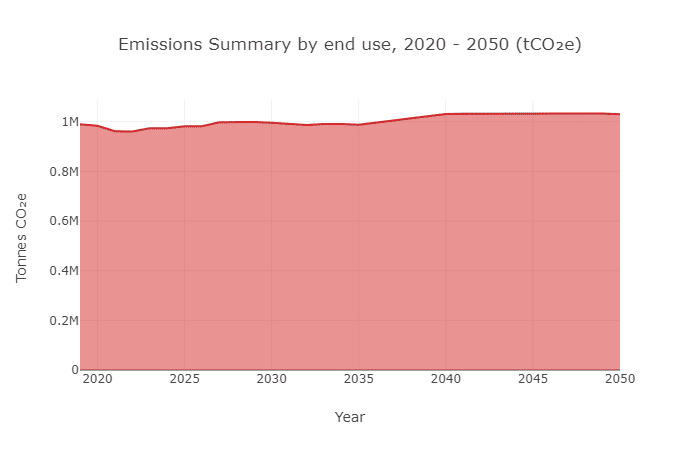
ASSESSMENT OF POTENTIAL EFFECTS
Natural England advises that the potential for loss of functionally linked land and/ or construction/operational impacts from wind and solar development, including collision risk (mortality resulting from collisions with wind turbines or ancillary infrastructure) and disturbance and displacement (including disruption to flight lines resulting from avoidance action associated with wind development) of birds on functionally linked land, should be assessed in more detail in the HRA.
West Yorkshire Ecology list the following birds as target species for the South Pennine Moors Phase II SPA; golden plover, twite, curlew, ring ouzel and lapwing. These birds need to be considered in the HRA Screening, however of this list golden plover is possibly the most crucial and most likely to travel to forage. The density of breeding golden plover on the SPA is high compared to other regional populations in northern England and Scotland (292 breeding pairs representing 1.2% of the British breeding population; JNCC 2015). This population is also the most southwestern in the world making the SPA crucial in maintaining the breeding range of this species (Berthinussen, 2018). It is important that policies which would encourage an increase in wind and solar farms in the district are assessed against any likely significant effects on the 7.5kms of functionally linked land.
Leeds has declared a climate emergency and wants to do all it can to reach zero carbon by 2030. An important step towards achieving this is to make the most of opportunities for renewable energy generation in the district. To this effect the Local Plan includes areas which have been identified as potential opportunities for renewable energy generation. Outside of these opportunity areas applications for renewable energy generation will not be supported. Policy EN3 proposes criteria which applications for renewable energy generation must meet.
By ensuring that the areas identified as an opportunity for wind and solar energy generation exclude the 7.5kms of functionally linked land it is highly unlikely for planning applications to gain consent for renewable energy generation in the functionally linked land. This means there are no likely significant effects to the birds associated with the SPA from collision with wind turbines or ancillary infrastructure and no risk from disturbance and displacement. The boundary of the North Pennine Moors Special Protection Area is well beyond the 7.5kms distance from Leeds and it can therefore be concluded that there will be no likely significant effects to that SPA either.
The opportunity area for wind energy generation already includes a buffer of 12kms from the South Pennine Moors SPA and therefore ensures that the functionally linked land is excluded. However the buffer for solar energy generation is 2.5kms and therefore it is recommended that this buffer be extended to 7.5kms and the map be redrawn to ensure that the opportunity areas for solar energy generation also excludes functionally linked land. In this way the assessment of Policy EN3 can be considered to rule out any likely significant effects on the birds associated with the SPA.
REFERENCES
Berthinussen, Anna, Habitat Suitability Modelling for foraging European Golden Plover (Pluvialis apricaria) that breed on the South Pennine Moors Special Protection Area, (2018)
British Trust for Ornithology, Winter Ecology of Golden Plovers and Lapwings: A Review and Consideration of Extensive Survey Methods BTO Research Report No. 224 (1999) S. Gillings & R.J. Fuller. Available at: https://www.bto.org/sites/default/files/shared_documents/publications/research-reports/1999/rr224.pdf
JNCC (2015) NATURA 2000 – STANDARD DATA FORM Special Protection Areas under the EC Birds Directive. South Pennine Moors Phase 2. Available at: http://jncc.defra.gov.uk/pdf/SPA/UK9007022.pdf
Natural England (2018) data available at: UK9007022_SouthPennineMoorsPhase2SPA_COSA_Formal Published 19 Nov 18.doc.pdf
Bradford District Council data available at: South Pennine Moors Supplementary Planning Document (bradford.gov.uk)
West Yorkshire Ecology data available at: 20201217-spa-bird-survey-methodology.pdf (wyjs.org.uk)
[1] BEIS. Emissions of carbon dioxide for Local Authority areas. Emissions of carbon dioxide for Local Authority areas https://data.gov.uk/dataset/723c243d-2f1a-4d27-8b61-cdb93e5b10ff/emissions-of-carbon-dioxide-for-local-authority-areas (2021).
[2] UKGBC. Net Zero Carbon Buildings: A Framework Definition https://ukgbc.s3.eu-west-2.amazonaws.com/wp-content/uploads/2019/04/08141151/Net-Zero-Carbon-Buildings-A-framework-definition-print-version.pdf (2019)
[3] https://www.ukgbc.org/wp-content/uploads/2021/01/New-Homes-Policy-Playbook-January 2021.pdf (2021).
[4] UKGBC. Embodied Carbon: Developing a Client Brief. https://www.ukgbc.org/wp-content/uploads/2017/09/UK-GBC-EC-Developing-Client-Brief.pdf (2017).
[5] https://www.ukgbc.org/wp-content/uploads/2021/01/New-Homes-Policy-Playbook-January 2021.pdf (2021).
[6] LETI Climate Emergency Design Guide. https://www.leti.london/_files/ugd/252d09_3b0f2acf2bb24c019f5ed9173fc5d9f4.pdf (2019).
[7] Pitman, K. Lowering embodied carbon: five trends in building design and construction. RICS World Built Environment Forum https://www.rics.org/uk/wbef/megatrends/urbanisation/lowering-embodied-carbon-five-trends-in-building-design-and-construction/
[8] Delahunty, S. MMC cut carbon emissions by up to 45%, research finds. Inside Housing (2022).
[9] Spatial-Development-Strategy-Net-zero-new-buildings-Evidence-and-Guidance-to-inform-Planning-Policy-Jan-2022.pdf (westofengland-ca.gov.uk)
[10] https://www.rics.org/uk/upholding-professional-standards/sector-standards/building-surveying/whole-life-carbon-assessment-for-the-built-environment/
[14] Government confirms local authorities can set energy standards beyond Part L in NPPF - UKGBC - UK Green Building Council
[18] Labour’s Plan for Change: The Government’s ambitious milestones to deliver for working people – The Labour Party
[19] The-costs-and-benefits-of-tighter-standards-for-new-buildings-Currie-Brown-and-AECOM.pdf (theccc.org.uk)
[22] Model developed by Rod Holt, Otley 2030, and used with permission within the Study on the Carbon Reduction of Buildings by the University of Leeds
[23] Approximate figures which relate to a standard detached 3 bedroom home.
[25] https://www.westofengland-ca.gov.uk/wp-content/uploads/2022/01/Spatial-Development-
Strategy-Net-zero-new-buildings-Evidence-and-Guidance-to-inform-Planning-Policy-Jan-2022.pdf
[26] https://www.homequalitymark.com/wp-content/uploads/2018/09/HQM-ONE-Technical-Manual-England.pdf
[30] Spatial Planning for Health: an evidence resource for planning and designing healthier places (publishing.service.gov.uk)
[34] HM Treasury Green Book Supplementary Guidance https://www.gov.uk/government/publications/valuation-of-energy-use-and-greenhouse-gas-emissions-for-appraisal (carbon factors: Table 1, grid average; retail fuel prices: Tables 4-8 ‘High’ scenario)
Discover more

Statement of Representation
Providing details about the purpose of the consultation, how to view the material, how to submit comments, accessibility and privacy notice.

Archived 2025 Consultation Material
This is for information only

Further information
Explains the work already undertaken on the Plan and the new plan-making process

Leeds Local Plan Issues & Options Consultation Report
Summary of the Leeds Local Plan Issues & Options Consultation Summer 2025

Leeds Local Plan Scoping Consultation Document
We would like your views on which general topic areas the Leeds Local Plan should cover and how you would like to be consulted as the plan is developed.
Stay Informed
Follow our projects to get notified of upcoming engagements and the latest project related news.