

Consultation Results
View the results of the consultation and any proposal changes as a result of the feedback.
South Accommodation Road
Consultation results
Thank you to everyone that fed back on our proposals for South Accommodation Road. The consultation ran from Tuesday 16 September until Tuesday 14 October 2025. 6163 people visited the Commonplace site, and 286 surveys were completed.
Below are the main findings from feedback received from online surveys, paper surveys at events, postal surveys and emails.
How do you feel about the proposals overall?
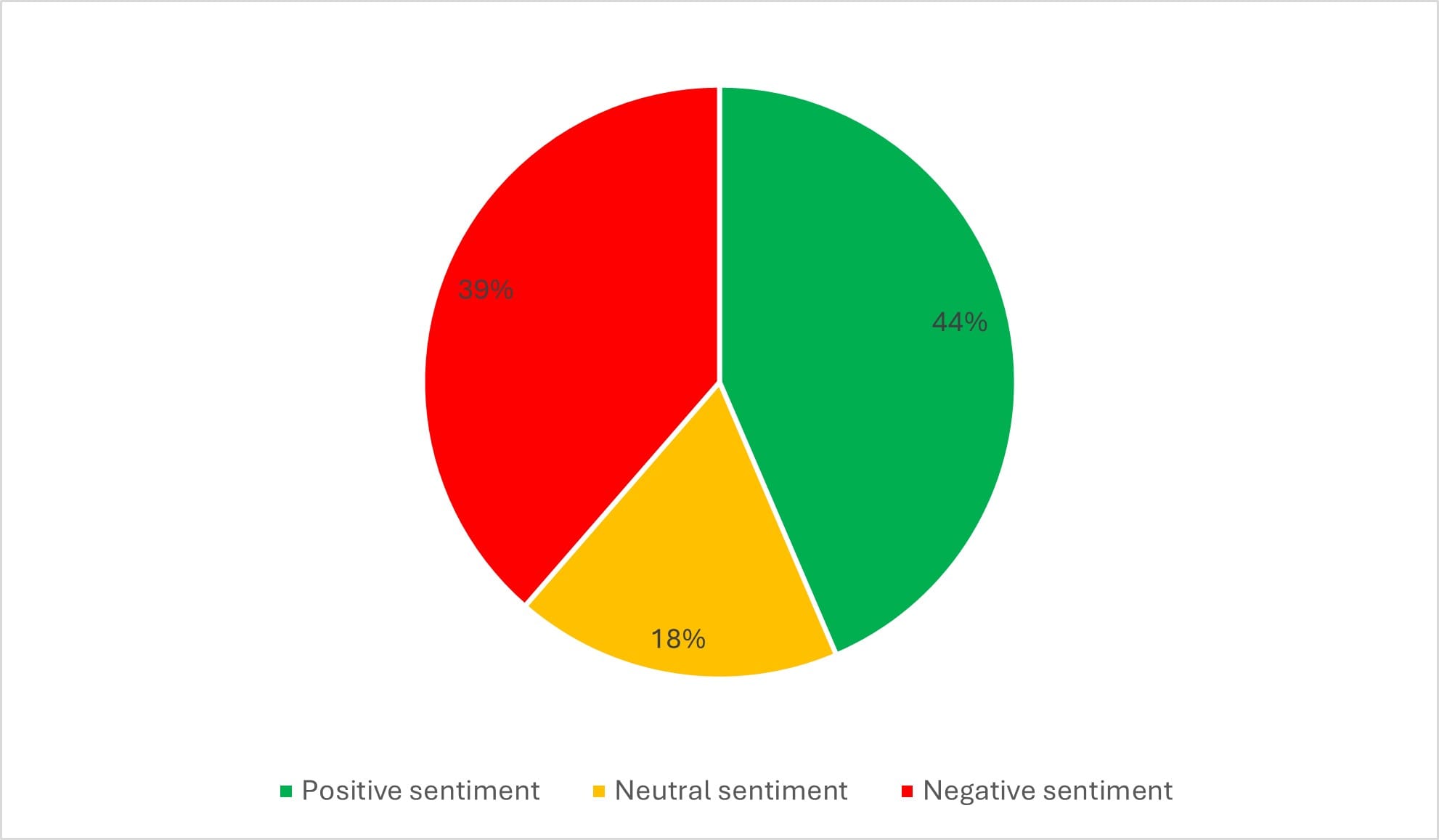 44% of respondents were positive or mostly positive regarding the proposals overall. 39% were negative or mostly negative and 18% were neutral.
Free text comments
Analysing the 186 free text comments, the most common themes were:
- Traffic congestion and delays - Respondents described severe congestion, especially during rush hours. Delays at roundabouts, bottlenecks, and long queues were common complaints. Several noted that congestion has worsened due to previous road changes, lane reductions, or diverted routes. Concerns were raised that further changes (like bus lanes) could exacerbate delays for all road users.
- Concerns about bus lanes and route changes - Several comments raised concerns about the introduction of new bus lanes or changes to bus routes. Many felt that bus lanes would reduce road capacity for cars, worsening congestion. Others argued that bus lanes are underused, and that previous changes to bus routes (e.g., diverting away from Crown Point Road) have made journeys less convenient for both bus users and motorists.
- Poor public transport experience - Comments mentioned unreliable, infrequent, or delayed bus services. Some noted that buses are often caught in the same congestion as cars, making public transport unattractive. Several called for better bus routes, more direct services, or improved connections to key destinations.
- Road layout, traffic lights, and signage issues - Comments highlighted problems with road layout, short or poorly timed traffic lights, confusing lane markings, and roundabout design. Suggestions included adjusting signal timings, adding yellow box junctions, or redesigning roundabouts to improve flow and safety.
- Negative impact on residents, businesses, and disabled people - Concerns were raised about the impact of congestion and road changes on local residents, businesses, and people with disabilities. Some felt that changes prioritise buses and cyclists at the expense of those who rely on cars, including disabled people and business owners needing vehicle access.
- Cycling and walking infrastructure - Several comments noted poor or disconnected cycling and walking routes, narrow or shared paths, and unsafe crossings. Some supported better infrastructure for active travel, while others felt that cycle lanes are underused or poorly designed.
- Pollution, noise, and environment – Some respondents mentioned increased air pollution and noise due to idling traffic and congestion. Some worried about the impact on health, especially for children and residents living near the road.
- Road surface and maintenance – A small number of comments criticised the poor condition of road surfaces, potholes, and lack of maintenance, suggesting that repairs should be prioritised over new schemes.
- Safety concerns – A small number raised safety issues for all users: dangerous crossings for pedestrians, risky cycling conditions, and aggressive driving or lane changes due to congestion.
- Support for public transport or active travel improvements - A minority expressed support for prioritising buses, improving public transport, or enhancing cycling and walking infrastructure, provided changes are well planned and do not worsen congestion for others.
User break down
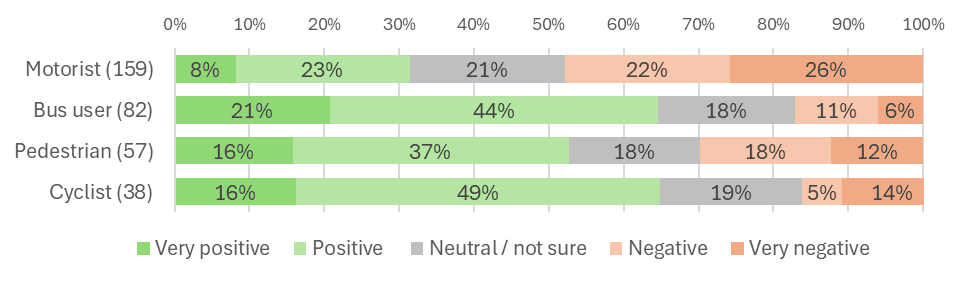 The chart shows how each type of user feels towards the overall scheme.
- 65% of bus users were positive about the proposals, 18% were neutral, and 17% were negative.
- 65% of cyclists were positive about the proposals, 19% were neutral, and 19% were negative.
- 53% of pedestrians were positive about the proposals, 18% were neutral, and 30% were negative.
- 31% of motorists were positive about the proposals, 21% were neutral, and 48% were negative.
Results for individual sections
Next steps
Leeds City Council will formally advertise new Traffic Regulation Orders (TROs) under the Traffic Regulation Act 1984. Following this, the Chief Officer of Highways and Transportation and the Executive Member for Economy, Transport, and Sustainable Development will make a decision.
Construction is expected to take place in Autumn / Winter 2026.
If you have any further queries, please contact connectingleeds@leeds.gov.uk.
Discover more
Frequently asked questions
View frequently asked questions about the scheme.
Proposals and survey
Find out more about our plans and have your say
In-Person events
Attend an in-person event to have your say and find out more
Stay Informed
Follow our projects to get notified of upcoming engagements and the latest project related news.