Frequently Asked Questions
Do the robots use the pavement or the road?
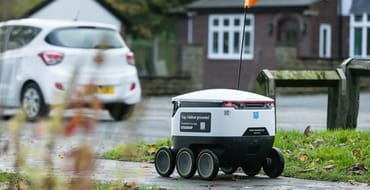
The robots use the pavement, they travel at no more than 4mph which is the same pace as a pedestrian.
Are the robots a danger to people on the pavement?
The robots are low speed and low weight (they weigh around 36kg). They are programmed to travel at no more than 4mph.
The robots have numerous cameras, a sensor suite, radar and GPS which means they automatically avoid any object in their path and can tell how quickly objects around them are moving. Moreover, they’re programmed to be risk averse - their main objective if there is anything near them is to slow down and move out of the way.
The robots can also be remotely assisted by Starship's human team should an issue arise. Average response times are between 10-30 seconds.
Will the robots impact people with disabilities?
Starship has consulted with charities and experts around accessibility and disability, both in the US and the UK.
Its deliveries help those with restricted mobility, the elderly and wheelchair users who find it more difficult to get to the shops.
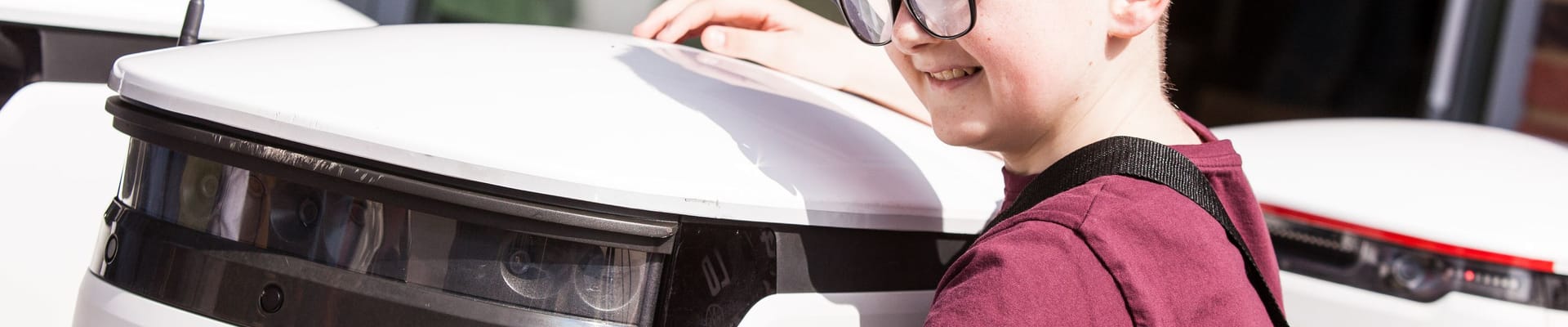
The robots use computer vision to identify objects. When the robots recognise a wheelchair user they stop at a safe distance and give way if necessary, reversing or pulling over to the side. The robots can communicate their intention directly with the wheelchair user via speakers and they frequently climb up curbs to make way for oncoming pedestrians or wheelchair users.
The robots also stop when a person gets too close and can emit a high-pitched beep to signal their presence.
Who operates the robots and what happens if they breakdown?
If a robot comes to an unscheduled stop, Starship's system is very quickly notified and a human operator will quickly be able to diagnose the problem. If the robot is stuck or broken, a local field assistant will attend the site as soon as possible to fix or retrieve the robot.
What happens if someone tries to vandalise or steal one of the robots?
All of the robots have cameras, are GPS tracked and only the customer can open the very securely fitted lid.
The robots usually contain relatively low value shopping so there is little incentive to steal them and Starship would be able to track them wherever they went. As an added disincentive, the robot has an inbuilt siren that is very loud and is activated if it is unexpectedly lifted off the ground.
When does the trial run until?
The initial trial ran from 30th November 2022 until 4th March 2023 in Adel and Tinshill and a further trial was then added in Kippax and Swarcliffe, with the majority of public feedback being positive in both areas. As a result of this, Leeds City Council has agreed to extend the trial in the same areas. Starship Technologies will continue operations in the original catchment zones, and we will keep both surveys open to continue to gather feedback.
Why were these areas chosen?
The areas were chosen due to a number of factors, including:
- Location of Co-op Food stores.
- Sufficient resource to receive orders and pick, pack and load the robots.
- Footways surrounding the Co-op Food stores being suitable.
- Quality of surrounding footways, amount of traffic in the area, amount of pedestrians on footways, limited need to use pedestrian crossings.
- Commercial viability of area.
Is there a chance the trial will be extended or expanded to other areas of Leeds?
The trials have been extended in the same catchment areas. If they continue to be successful, Starship hopes to increase the service area in Leeds.
Who are Starship Technologies?
Starship Technologies are a global company, with robot deliveries happening in many countries already, including university campuses in America. Nationally, Starship operate in Milton Keynes, Cambridge and Northampton.
The company was created in 2014 by the co-founders of the Skype communications platform and, since launching commercial deliveries in 2018, Starship's robots have travelled more than 4 million miles and completed more than 3.5 million deliveries to customers.
How does it work?
Starship's robots are advanced autonomous devices that can carry items over short distances without needing a driver. Orders are made through the Starship food delivery app, which is available for download on iOS and Android, with groceries picked fresh in local Co-op stores and delivered quickly and conveniently in as little as one hour or less. The robots are powered by zero carbon electricity.
If you're an eligible resident, you can choose from a range of grocery items, schedule the delivery, drop a pin where you want your delivery to be sent. Then watch in real-time via an interactive map as the robot makes its journey to you. Once the robot arrives, you will receive an alert and can meet and unlock it through the app.
Are the robots safe?
The robots are lightweight and travel at the speed of a pedestrian (no faster than 4mph). They use a combination of sensors, artificial intelligence and machine learning to travel on pavements and navigate around any obstacles, while computer vision-based navigation helps them map their environment to the nearest inch.
Discover more
Co-op Food Survey
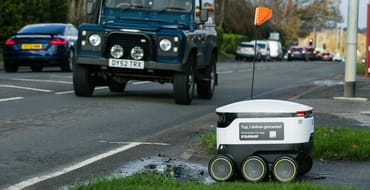
Find out where the robots can deliver Co-op Food groceries in Leeds and have your say on the introduction of the robots.
Uber Eats Service Area
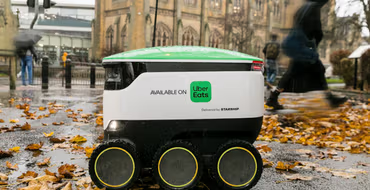
Find out where the robots can deliver from Uber Eats
Survey - Lofthouse
Let us know what you think about the automated robot trial.
Survey
Let us know what you think about the robot trial in Leeds
Survey - Adel and Tinshill
Let us know what you think about the automated robot trial.
Stay Informed
Follow our projects to get notified of upcoming engagements and the latest project related news.