
Oak Processionary Moth in the Woods
Oak Processionary Moth is an invasive non-native insect in the UK. It is a serious pest of oak trees and a hazard to human and animal health. Surveys in 2023 found infestation in different parts
Haringey’s Ancient Woodlands
Oak Processionary Moth is an invasive non-native insect in the UK. It is a serious pest of oak trees and a hazard to human and animal health. Surveys in 2023 found infestation in different parts of our ancient woodlands.
About OPM
OPM was first accidentally introduced to Southeast England in 2005. The caterpillars are recognizable by their distinctive, nose-to-tail procession on oak. They have black head, grey body and are covered by white hairs.
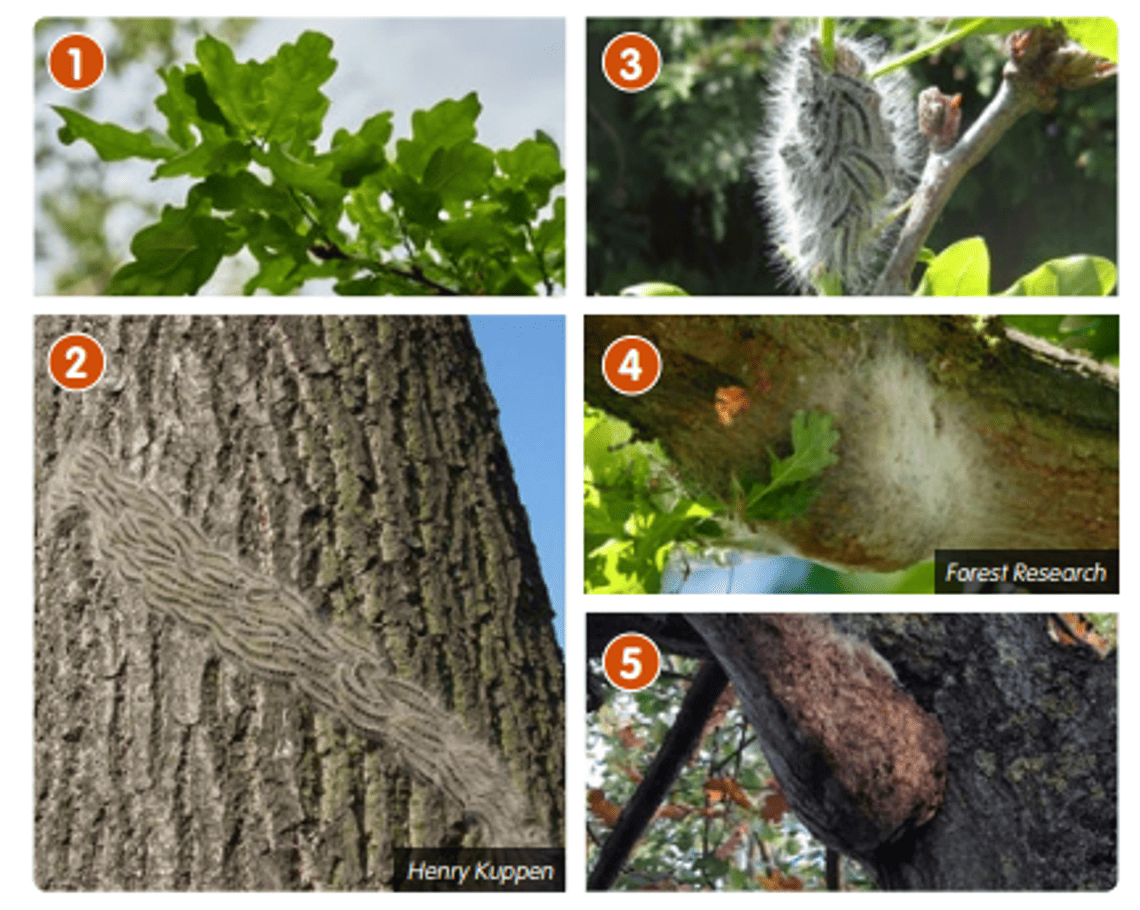
Oak, caterpillars and nests (Images from Forest Commission)
Impact
OPM can threaten the health of all species of oak trees. The caterpillars feed on leaves at night.
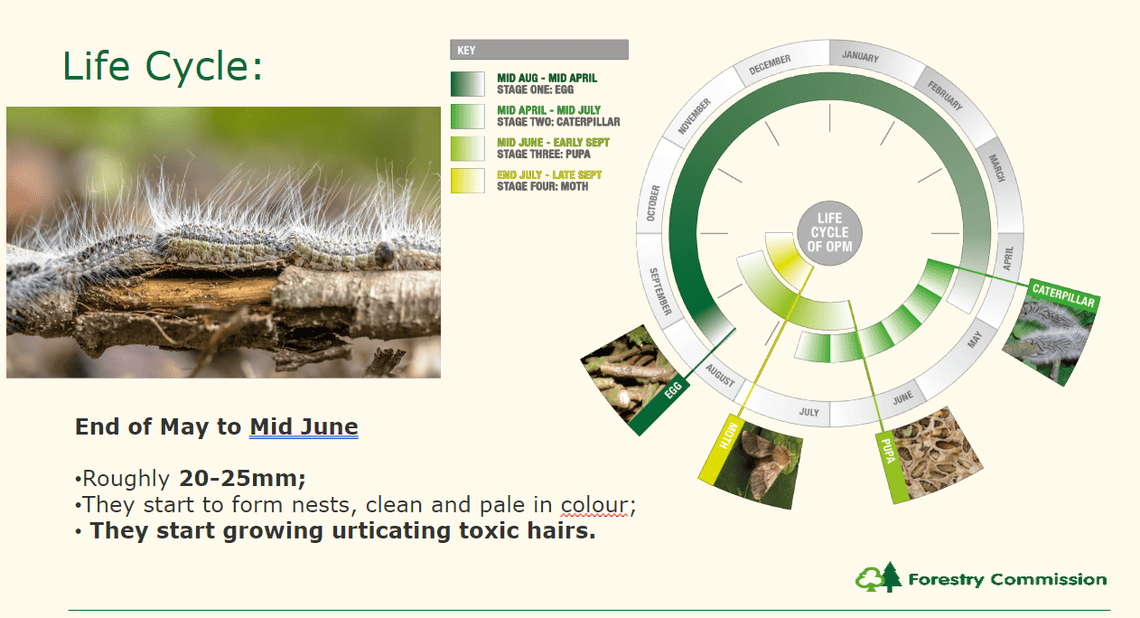
In end of May to Mid-June, the caterpillars develop urticating hairs and start to form nests full of hairs on oak trees. If people or animals touch the hairs, they may get itchy skin, rashes and, or even sore throats, breathing difficulties and eye problems.
In June to late July, the trees may show feeding damage, and nests are larger. In Late July to September, the moths emerge. The moths are harmless.
What to do if you spot an OPM caterpillar, adult or nest?
Report to the Forestry Commission via the Tree Alert Online Form Tree Alert (forestresearch.gov.uk) (preferred)
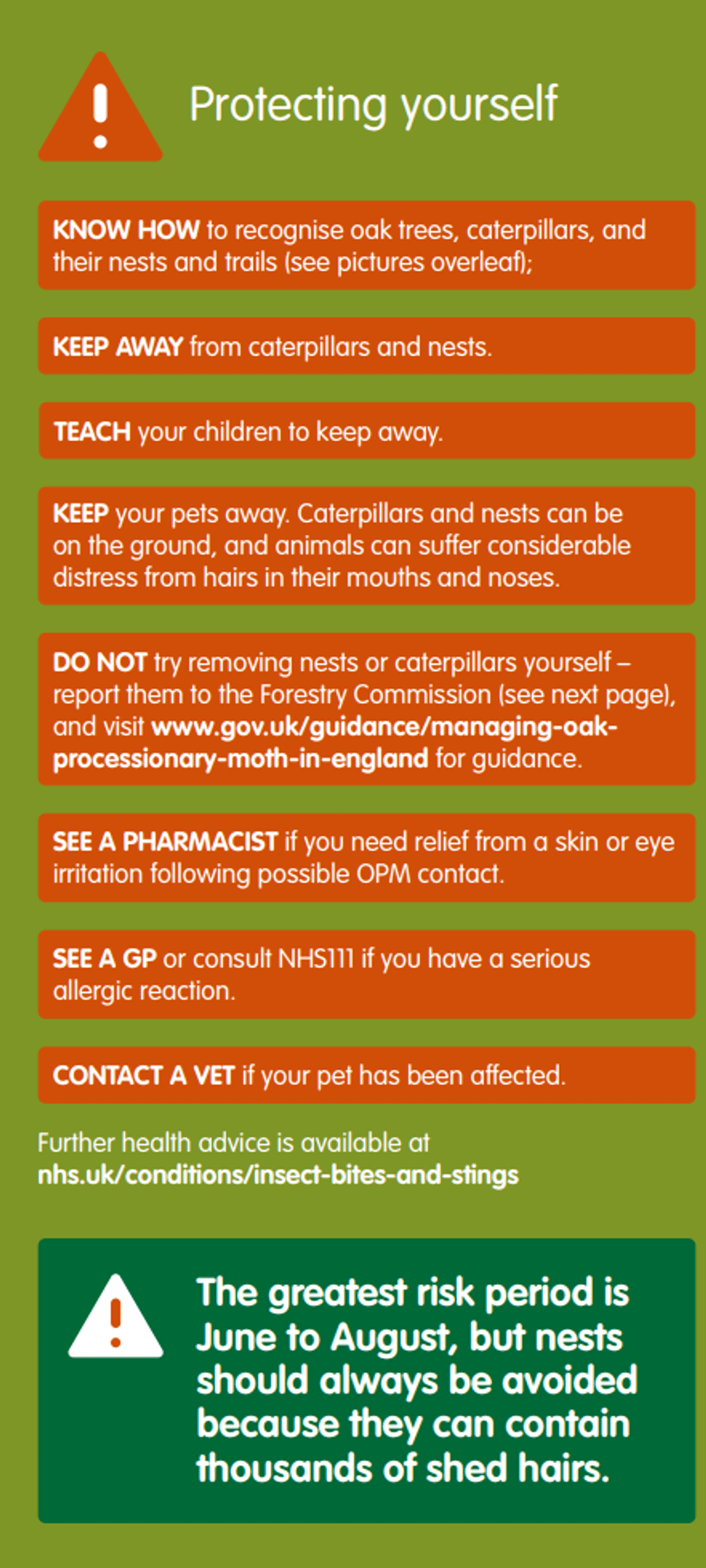
Information from Forest Commission Public Leaflet
Find out more: Managing oak processionary moth in England - GOV.UK (www.gov.uk)
Stay Informed
Follow our projects to get notified of upcoming engagements and the latest project related news.