
4th Year of our Ancient Woodland Networking Day!
Recently we hosted our 4th annual Ancient Woodlands Networking Day. It was a great day to celebrate the ancient woodlands, meet up and learn about woodland management. Cherry Tree Wood The day started
Haringey’s Ancient Woodlands
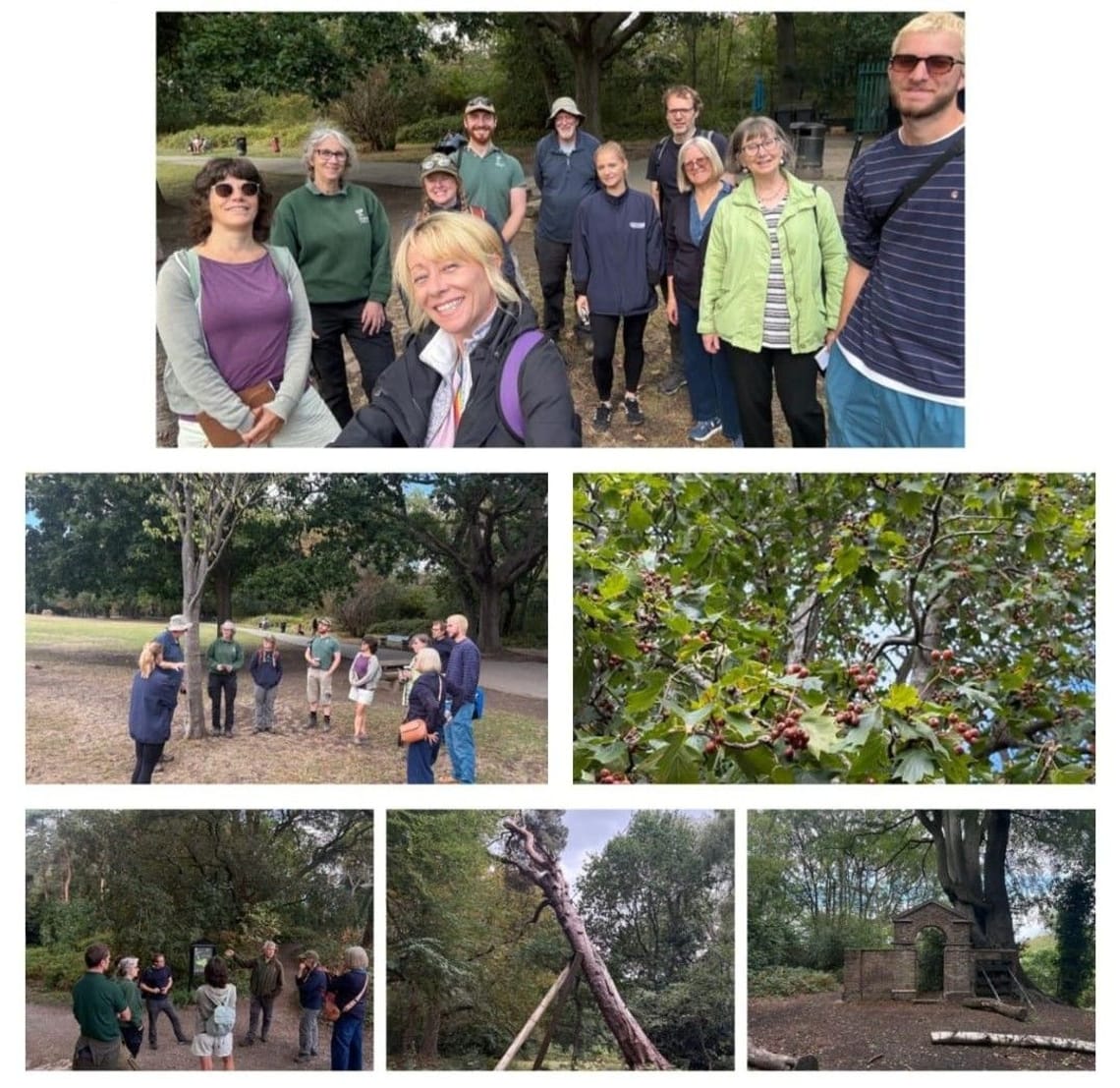
Recently we hosted our 4th annual Ancient Woodlands Networking Day. It was a great day to celebrate the ancient woodlands, meet up and learn about woodland management.
Cherry Tree Wood
The day started with a visit to Cherry Tree Wood. Located next to East Finchley tube station, this is a site in Barnet, and includes an area of ancient woodland.
We were joined by Roger, Chair of Friends of Cherry Tree Wood and Harriet from Barnet Council who were able to tell us more about the site's history, features, and current use.
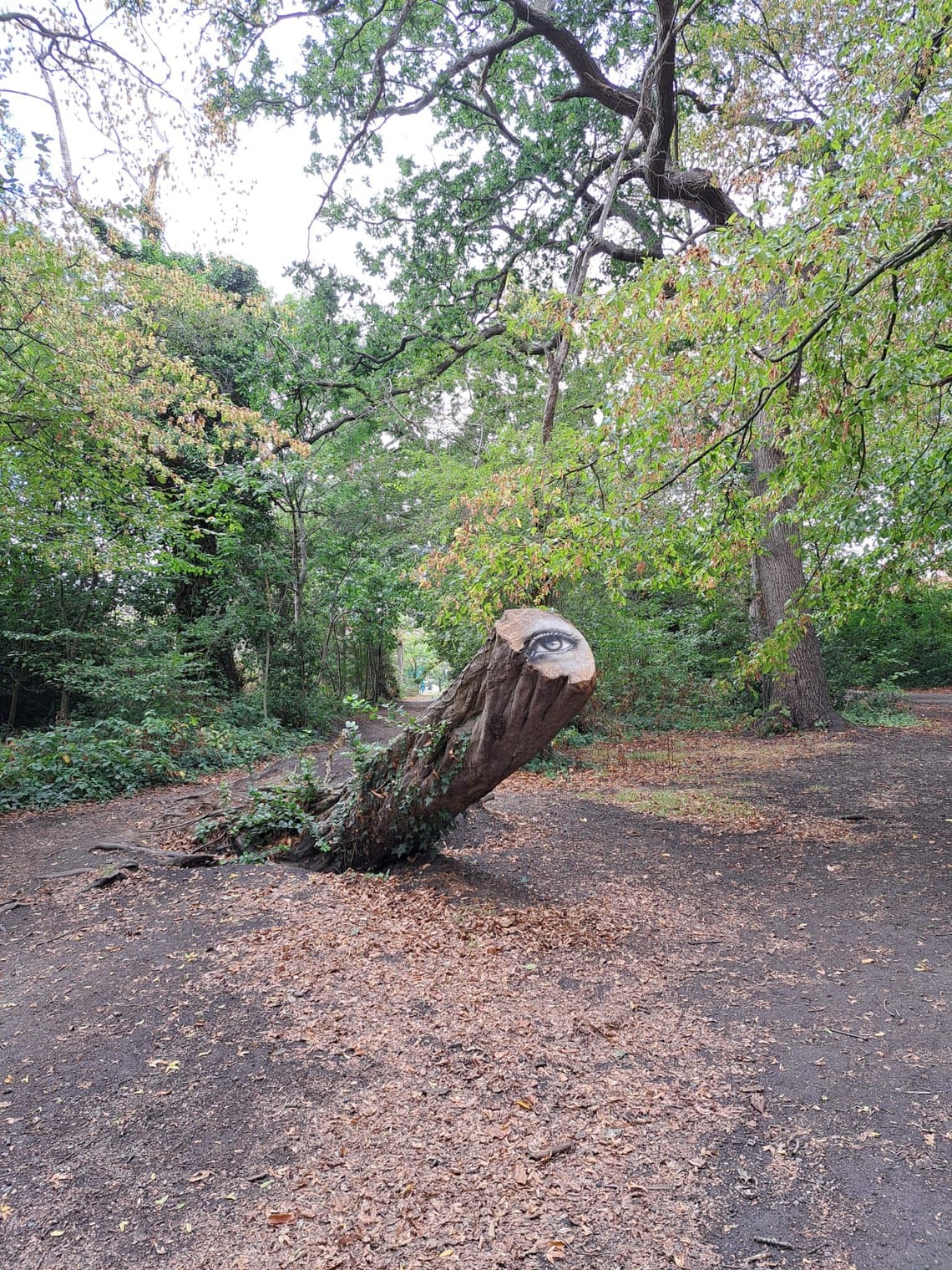
(Some art work on one of the felled trees in the wood).
The space includes tennis/basketball courts, a cafe, orchard, and areas of trees & woodland.
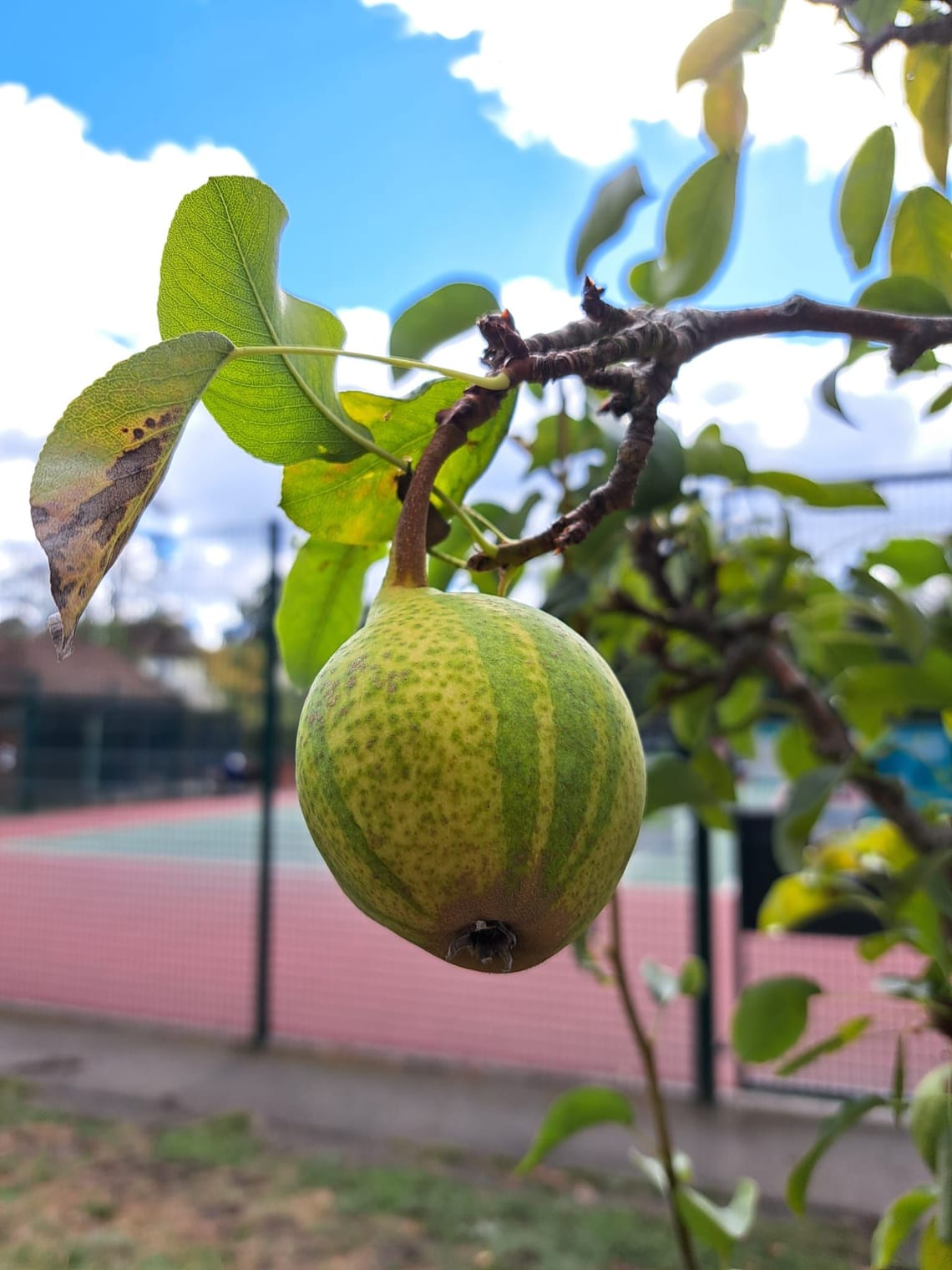
(A charming looking humbug pear tree found in the orchard. Also known as the Easter or pysanka pear).
Like Haringey's ancient woodlands, cherry tree wood included conservation areas that were fenced off to allow regeneration.
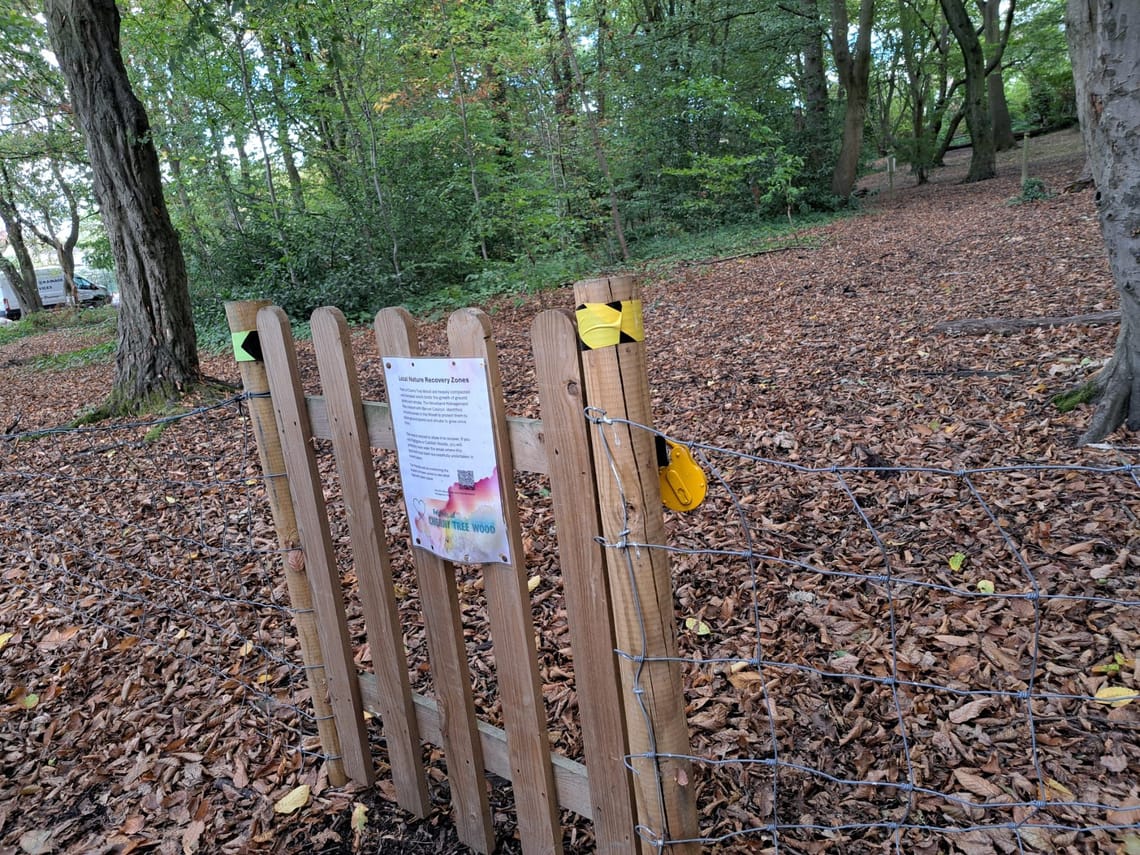
(One of the fenced off conservation areas).
The site did show signs of compaction in some areas, where high footfall was present.
It also seasonally deals with flooding, and during our meetup swales were being dug to help combat the excess water.
Sandy Heath
Next we moved onto Sandy Heath, a part of the wider Hampstead Heath. Here we met the tree team, who kindly showed us around a collection of some of their excellent veteran trees.
Veteran or ancient?
Ancient tree = a tree that has outlived the typical lifespan of their species and is therefore exceptionally old! The age threshold for a tree to be considered ancient varies by species. A birch may be considered ancient at around 150 years, while an oak may need to be at least 400 years old.
Veteran tree = A tree that has features associated with old age. This can include wounds, decay, hollow trunks, fungal fruiting bodies, or dead wood. These features may arise from natural damage, environmental conditions, or deliberate management by people.
“Words that might come to mind are gnarled, knobbly, huge, bent and hollow”. - Ancient Tree Forum.
The leaning pine
One of the veteran trees we saw was the “leaning pine” or "Constable pine" which is tethered to another standing tree nearby. It is also propped up to support it.
The area around the tree has been fenced off, which has prevented the issues with footfall and compaction. As the bramble grew up around it, it has further helped provide a buffer around the tree.
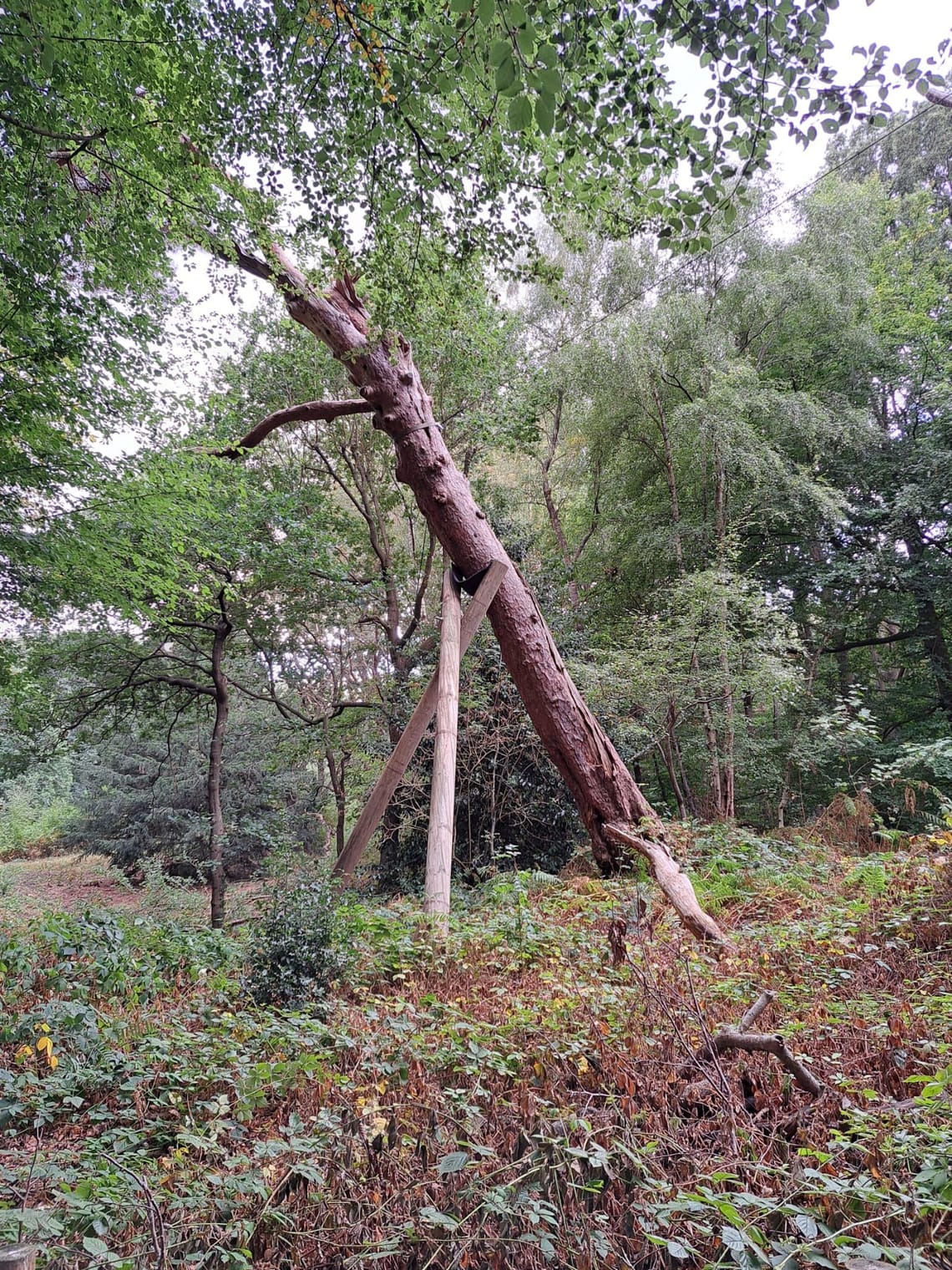
(The leaning pine)
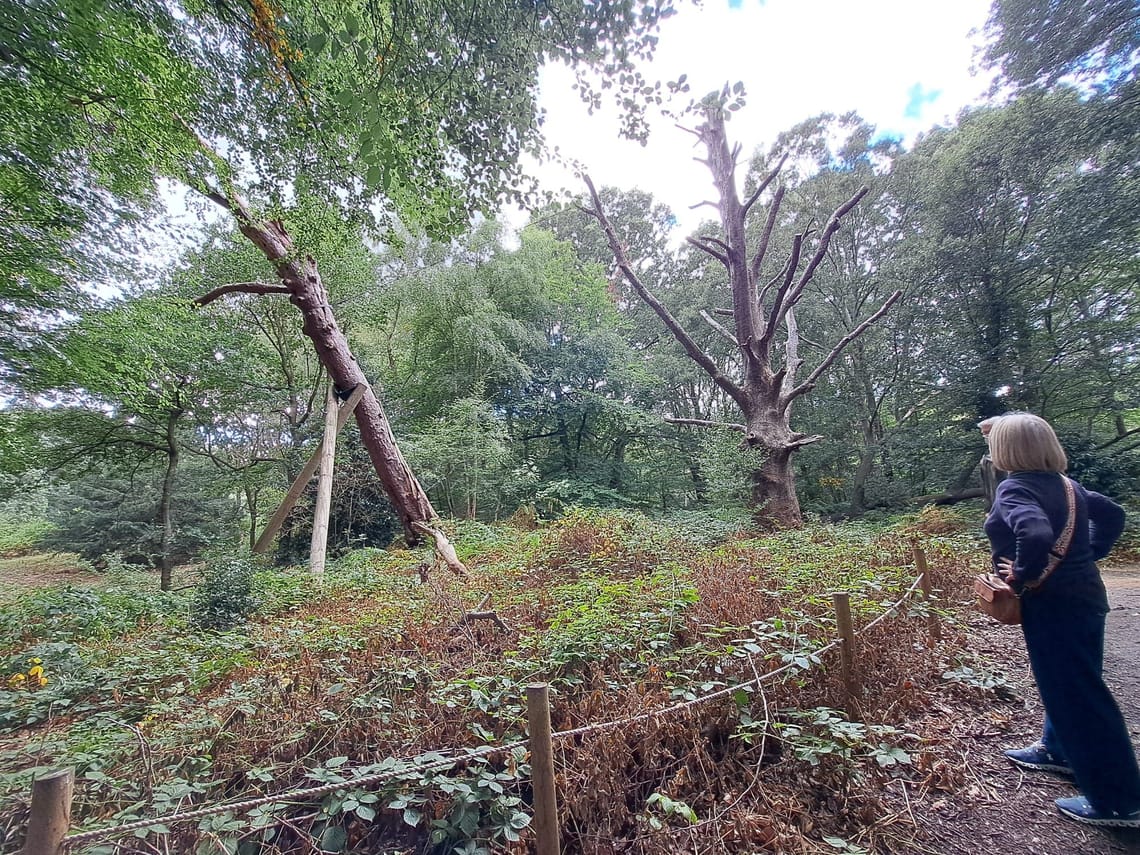
(The leaning pine and its brambly defence!)
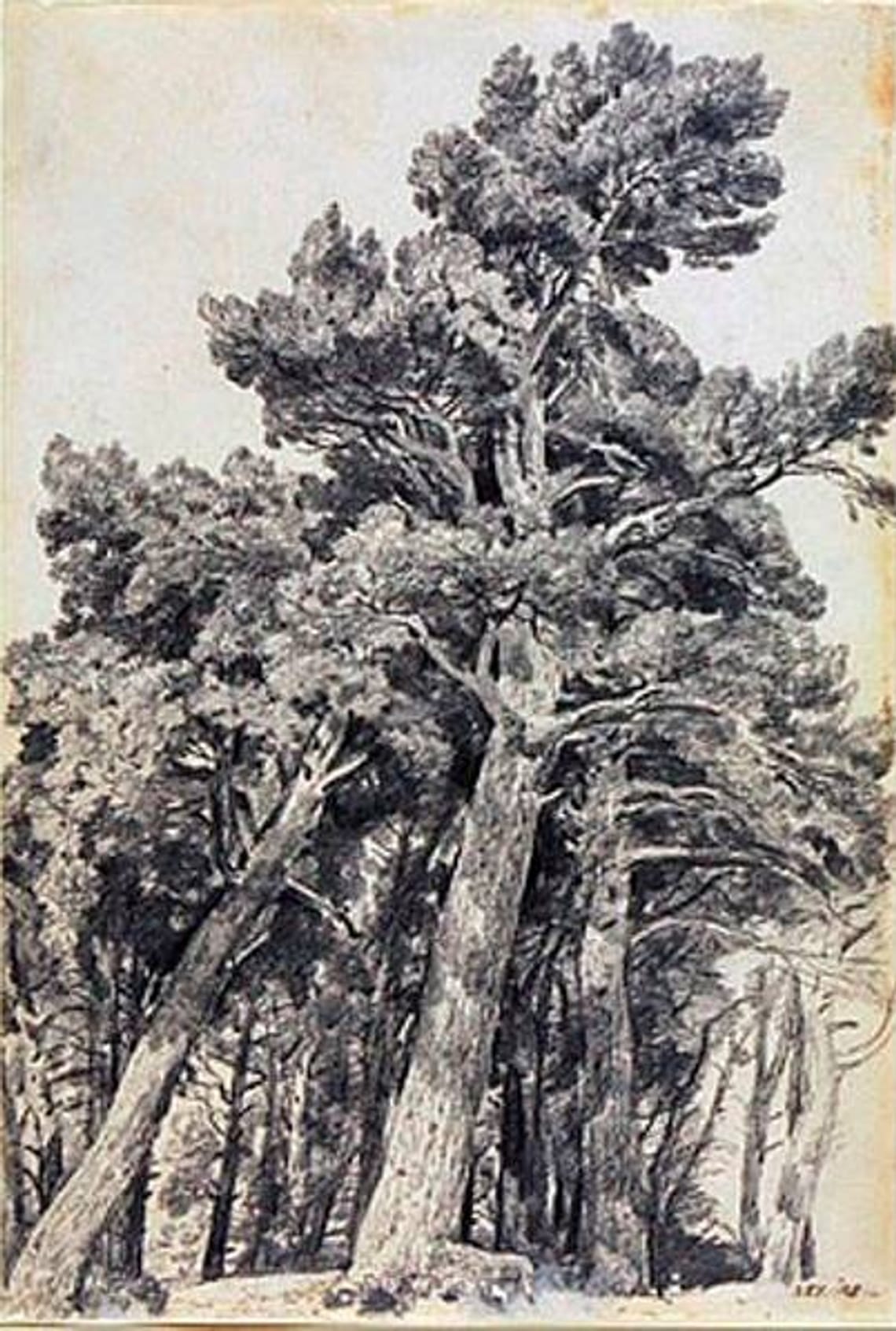
(John Constable – Fir Trees (sic) at Hampstead 1820. Photo credit: ancient tree forum website).
Two Tree Hill
This was an area that had two trees that were around 400 years old! The site was previously excavated for sand.
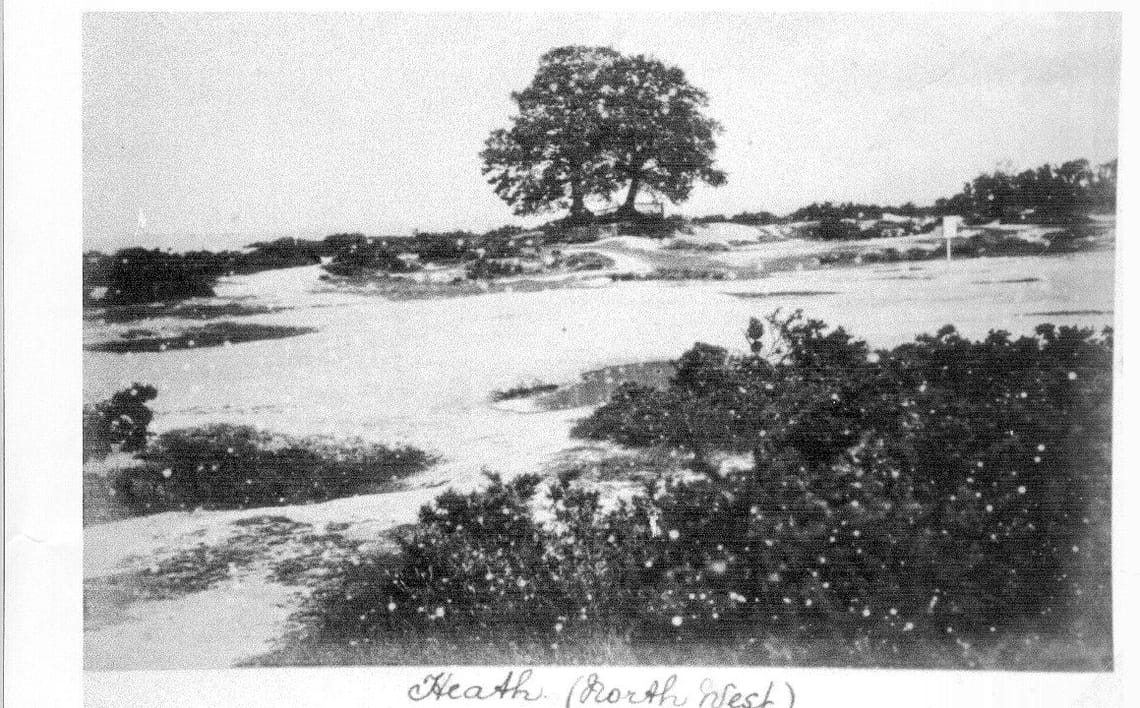
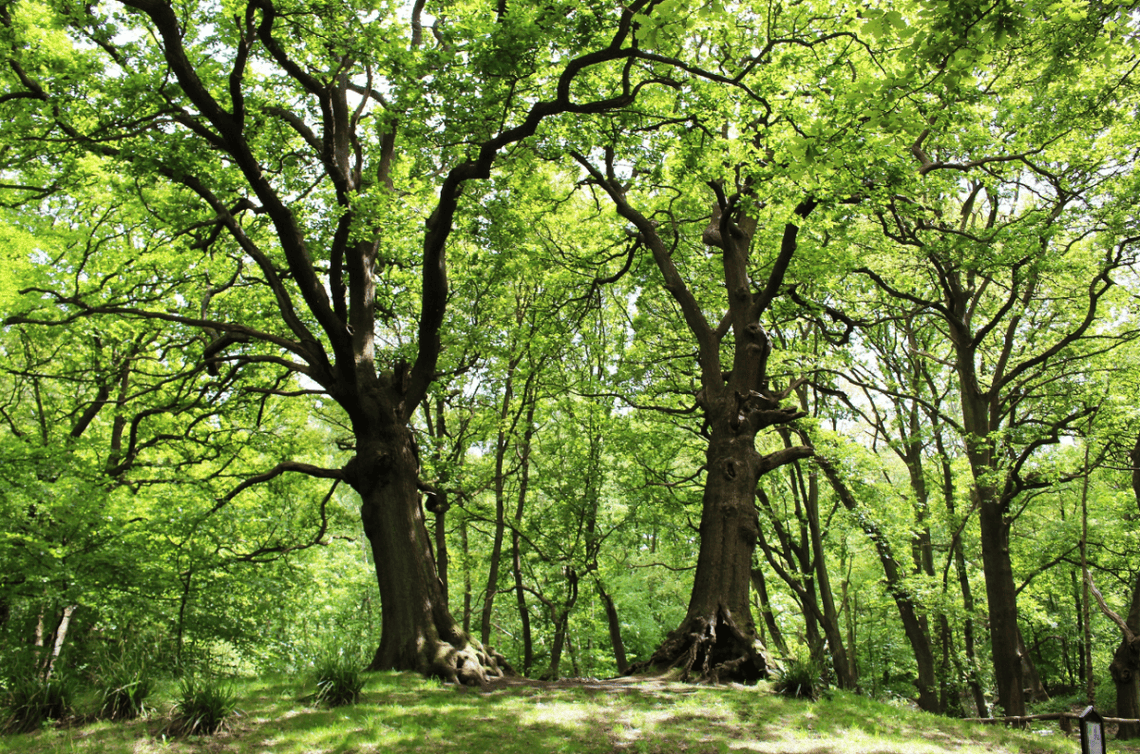
(Photo credit: ancient tree forum website. Showing the trees in 1880 and 2015).
Management here included pruning the surrounding encroaching trees to ensure sufficient light, removing saplings and fencing around the trees to prevent compaction.
We saw examples of epicormic growth (shoots springing out from the side of the tree), which can be a survival mechanism for a tree.
Pitt's Arch Beech
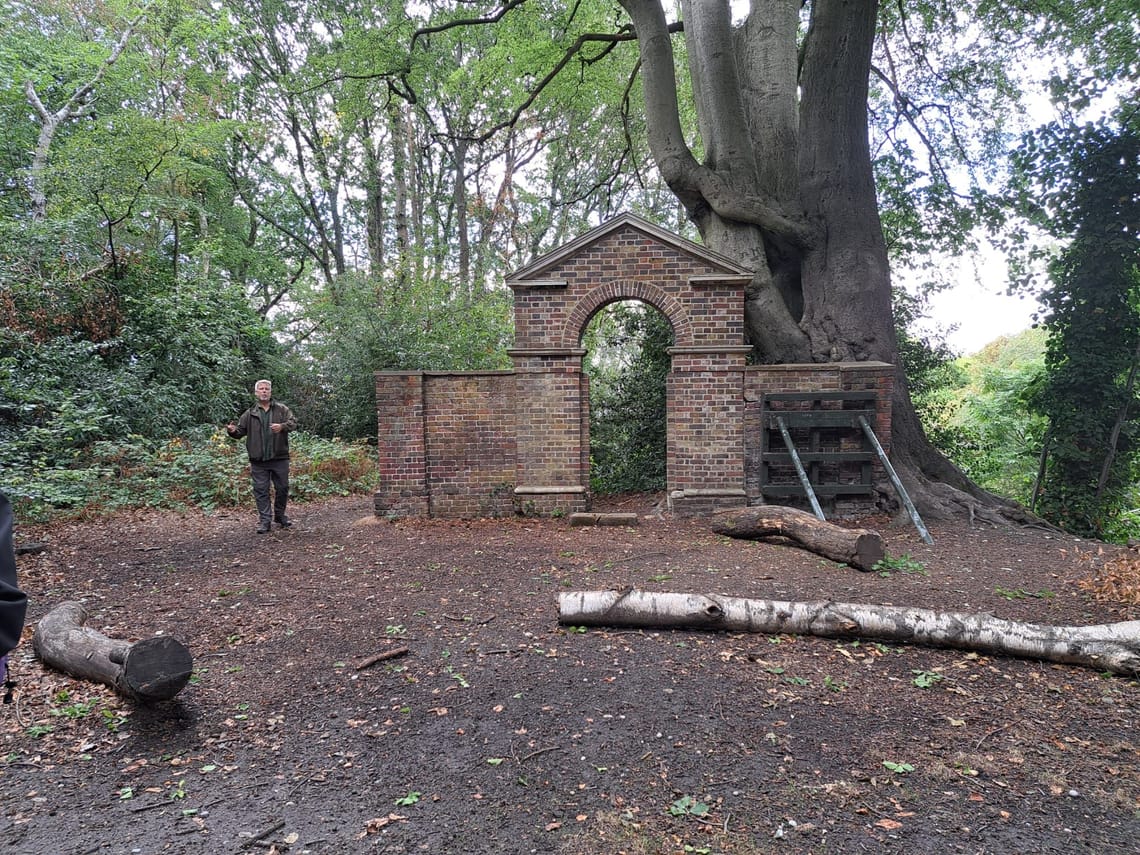
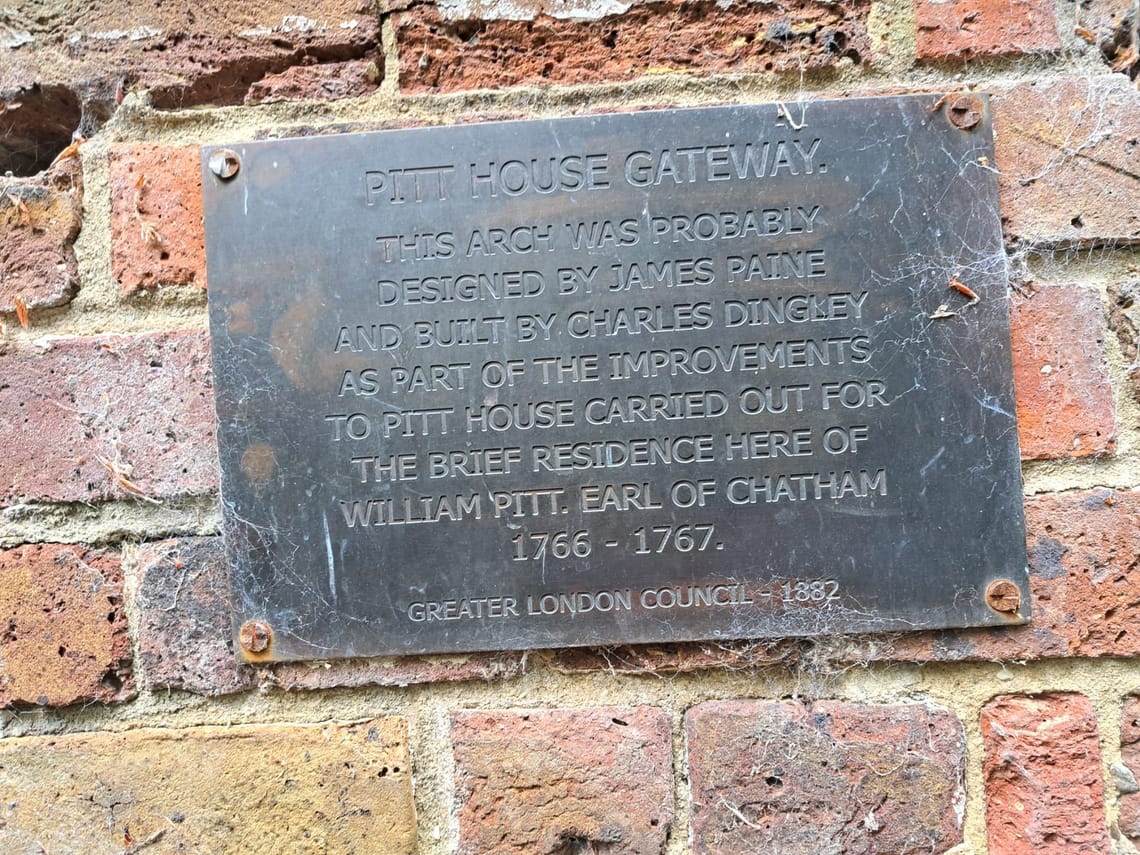
Then we moved on to William Pitt’s arch, an interesting historical and natural area.
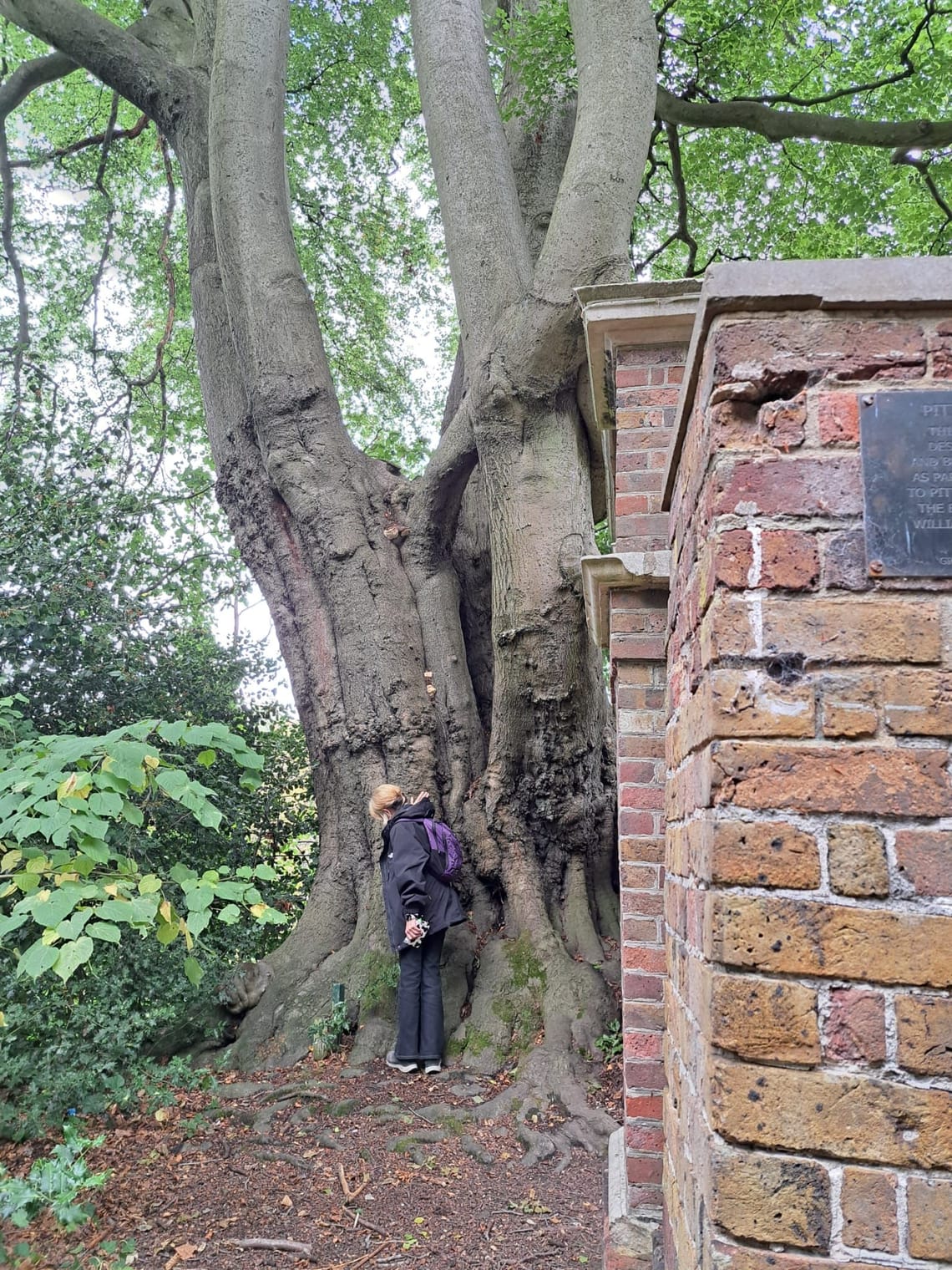
Here the tree was pressing against the historic arch, and rather than fell the tree – the arch has been supported with a brace on the right hand side.
The tree has also been supported with bracing higher up in the canopy, and the team have done pruning around it to support it with more natural light.
Learn more about Hampstead’s veteran trees:
For anyone who would like to explore further, here's the Veteran Tree Trail: https://www.ancienttreeforum.co.uk/ancient-trees/ancient-tree-sites-to-visit/veteran-tree-trails/hampstead-heath/
Want to stay in the loop about events in 2026?
Find out More re Volunteering & Events:
The Conservation Volunteers (TCV)
- Looking for volunteer opportunities in Haringey, including the ancient woodlands? Join a TCV activity day:
- Events posted via Website
- Social media: Facebook, Instagram, Bluesky, North London Eventbrite, Paddock Eventbrite
Friends Groups
To learn more about volunteering with local Friends groups please see links below:
Queen’s Wood:
- Website: https://www.fqw.org.uk/
- Social media: Facebook,
- Email: info@fqw.org.uk
- Events posted on webpage here
Coldfall Wood & Muswell Hill Playing Fields:
- Website: https://coldfallwoods.co.uk/
- Social media: Facebook, Instagram,
- Email: info@coldfallwoods.co.uk to sign up to mailing list
- Events posted on Ticketsource
Bluebell Wood:
- Email: friendsofbluebellwood@gmail.com
- Social media: Facebook,
- Events posted on Ticketsource
Stay Informed
Follow our projects to get notified of upcoming engagements and the latest project related news.