Low Traffic Neighbourhoods (LTNs) in Waltham Forest
Waltham Forest Council is committed to creating people friendly streets and neighbourhoods that actively encourage walking, cycling and using public transport. That’s why we’ve spent the past 18 months developing and submitting funding bids to the Transport for London (TfL) Liveable Neighbourhoods programme for improvements in South Leytonstone, as well as Forest Gate and Maryland in partnership with the London Borough of Newham (LBN).
Due to the Covid-19 pandemic, there is an even more urgent need to improve London’s streets for walking and cycling, to reduce pressure on our road and public transport networks. With London’s public transport capacity currently significantly reduced, millions of journeys a day need to be completed by other modes of transport. If these are replaced by car journeys, streets will become heavily congested, air quality will reduce, and road danger will increase. In some places we are already seeing traffic levels increase above pre Covid-19 levels.
To prevent this from happening, in August 2020 we partnered up with LBN to introduce an experimental Low Traffic Neighbourhood (LTN) in the Forest Gate, Maryland and South Leytonstone areas. This area is referred to as Area 1 and Area 2 and is bounded by Crownfield Road, Cann Hall Road, Dames Road, Woodgrange Road, Forest Lane,Leytonstone Road and Leyton Road. We are now extending this scheme further in South Leytonstone into the areas bounded by Ferndale Road, Montague Road, Harrow Road, Cann Hall Road, Crownfield Road, High Road Leyton, the A12 and Cathall Road (which we are referring to as Area 3 and Area 4).
These LTN schemes were included in the 2018 and 2019 joint-borough TfL Liveable Neighbourhoods bids and were developed taking into consideration feedback from the community engagement that took place during each bid process. However, due to the Covid-19 pandemic, TfL suspended the Liveable Neighbourhoods programme and redirected funding towards emergency interventions to support social distancing and enable active travel. Even though the Liveable Neighbourhoods funding is currently suspended, both boroughs allocated funding towards the LTN Area 1 and Area 2 as part of their commitment to delivering better streets for walking and cycling.
Since launching Area 1 and Area 2 Waltham Forest Council has secured funding from TfL’s London Streetspace Plan (LSP) to deliver Area 3 and Area 4 of the LTN scheme, to ensure we deliver a scheme that will benefit the wider South Leytonstone area.
Click on the tiles below for more information on each area and to provide feedback.
About the project
Get your neighbours involved
The more people involved, the better the needs of the whole community will be reflected.
Share the project with people you know locally.
Active engagements
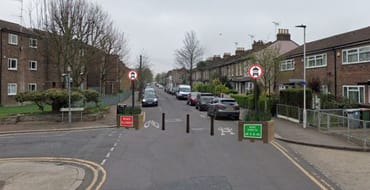
Newham Waltham Forest LTN
Due to the Covid-19 pandemic, there is an even more urgent need to improve London’s streets for walking and cycling, to reduce pressure on our road and public transport networks, and to support social distancing. With London’s public transport capacity currently significantly reduced, millions of journeys a day will need to be completed by other modes of transport.
Even if a small fraction of these are replaced by car journeys, roads will become heavily congested, air quality will worsen, and road danger will increase. That is why the London Boroughs of Newham and Waltham Forest are working together to create people-friendly streets and neighbourhoods in the Forest Gate, Maryland and South Leytonstone areas.
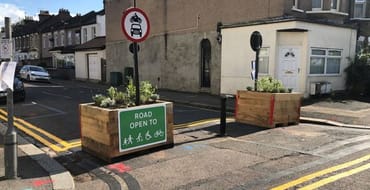
South Leytonstone LTN Map
Due to the Covid-19 pandemic, there is an even more urgent need to improve London’s streets for walking and cycling, to reduce pressure on our road and public transport networks, and to support social distancing. With London’s public transport capacity currently significantly reduced, millions of journeys a day will need to be completed by other modes of transport.
Past engagements
Newham Waltham Forest LTN
Due to the Covid-19 pandemic, there is an even more urgent need to improve London’s streets for walking and cycling, to reduce pressure on our road and public transport networks, and to support social distancing. With London’s public transport capacity currently significantly reduced, millions of journeys a day will need to be completed by other modes of transport.
Even if a small fraction of these are replaced by car journeys, roads will become heavily congested, air quality will worsen, and road danger will increase. That is why the London Boroughs of Newham and Waltham Forest are working together to create people-friendly streets and neighbourhoods in the Forest Gate, Maryland and South Leytonstone areas.
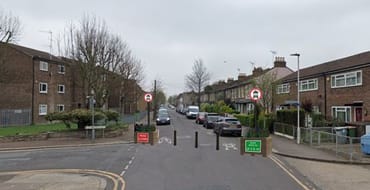
Newham Waltham Forest LTN
Due to the Covid-19 pandemic, there is an even more urgent need to improve London’s streets for walking and cycling, to reduce pressure on our road and public transport networks, and to support social distancing. With London’s public transport capacity currently significantly reduced, millions of journeys a day will need to be completed by other modes of transport.
Even if a small fraction of these are replaced by car journeys, roads will become heavily congested, air quality will worsen, and road danger will increase. That is why the London Boroughs of Newham and Waltham Forest are working together to create people-friendly streets and neighbourhoods in the Forest Gate, Maryland and South Leytonstone areas.
South Leytonstone LTN Map
Due to the Covid-19 pandemic, there is an even more urgent need to improve London’s streets for walking and cycling, to reduce pressure on our road and public transport networks, and to support social distancing. With London’s public transport capacity currently significantly reduced, millions of journeys a day will need to be completed by other modes of transport.
Meet the team

The London Borough of Waltham Forest will use the comments received on this website to review the experimental Low Traffic Neighbourhood, make any changes if needed, and consider a possible permanent scheme in the future.
Team
This team is responsible for engaging and acting on your views and opinions. You may see them around the area interviewing residents and at community events.

The London Borough of Waltham Forest will use the comments received on this website to review the experimental Low Traffic Neighbourhood, make any changes if needed, and consider a possible permanent scheme in the future.