
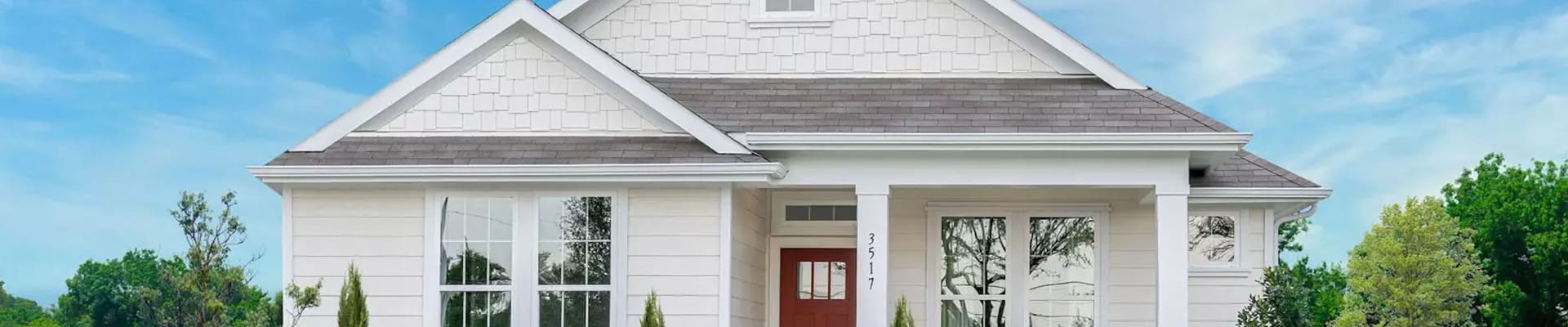
Accessory Dwelling Units
What are ADUs?
Accessory Dwelling Units (ADUs) are accessory units, with independent living facilities, to a primary residence on a shared lot. ADUs can be attached to the primary residence, detached as a separate structure, or created from converting existing space in the primary residence to a separate living space.
ADUs offer numerous benefits to the Town of Los Altos Hills, including expanded affordable housing choices for its key workers, new rental income, and community stability and diversity. With ADUs, residents can actively help the Town address its affordable housing needs and create a more inclusive and sustainable community.
Types of ADUs
There are two main types of accessory dwelling units, and each may be converted from an existing area or proposed as a new one:
- Accessory Dwelling Units (ADUs) - attached or detached residential dwelling unit, up to 850 square feet, that provides complete independent living facilities for one or more persons and is located on a lot with an existing or proposed primary residence. It shall include permanent provisions for living, sleeping, eating, cooking, and sanitation on the same parcel as the single-family home. Generally, an ADU falls into one of the following categories:
- Junior Accessory Dwelling Units (JADUs) - A unit that is up to 500 square feet in size and is contained entirely within an existing single-family structure. A JADU must have an efficiency kitchen and a separate exterior entrance, and may include separate or shared sanitation facilities.
ADUs come in two sub-types:
- Detached: The unit is separate from the primary residence as either a newly constructed detached accessory structure or as the conversion of an existing detached accessory structure (i.e. detached garage)
- Attached: The unit is attached to the primary residence as an integrated addition with independent entrance. A JADU must be attached to the primary dwelling.
How are ADUs different from SB-9?
While both ADUs and SB-9 units are housing developments aimed at expanding affordable housing options, ADUs exist on the same lots as primary dwellings, whereas SB-9 divides a single-family lot into two separate lots or creates duplexes out of a singular unit. Both also have different legal justifications.
Basic Guidelines for ADUs
Allowed Uses
Either one accessory dwelling unit and one junior accessory dwelling unit per lot with a proposed or existing single-family dwelling or one detached, new construction, accessory dwelling unit that does not exceed four-foot side and rear yard setbacks for a lot with a proposed or existing single-family dwelling. The accessory dwelling unit may be combined with a junior accessory dwelling unit described above. See Gov. Code, § 65852.2, subd. (e)(1)(A-D) for more.
Development Area and Floor Area
ADUs with one bedroom may be a maximum of 850 square feet or 1000 square feet if it has more than one bedroom. JADUs may be a maximum of 500 square feet.
Setbacks
Forty foot front setbacks and four foot rear and side setbacks are required.
Height
Detached ADUs/JADUs may be up to 18 feet in height, while attached ADUs/JADUs may be the same height as the primary dwelling, which must be less than 27 feet tall, or 32 feet tall if it meets the exceptions mentioned in Los Altos Hills municipal code 10-1.504(a).
Parking
One new on-site parking space, in addition to those required for the primary residence, is required for a new ADU with a few excetions. ADU parking spots may use the same driveway as the primary residence.
Occupancy
An ADU may be rented separately from the primary residence, but it must be rented for a period of at least than 31 days. The ADU cannot be conveyed or sold separately from the main residence unless it meets exceptions outlined in Gov. Code, § 65852.26.(a)(1-5).
Design
An ADU is not subject to the Site Development Review process or any discretionary design criteria, but does need to meet the following objective standards:
- The design of the ADU must be similar to that of the primary residence, for example, by use of similar exterior wall materials, window types, roofing materials, and roof pitch.
- All exterior lighting shall be shrouded and/or downward facing.
- Exterior finish colors for new ADUs shall have a light reflectivity value (LRV) of 50 or less and roof materials shall have an LRV of 40 or less.
The placement of a new ADU cannot be:
• Located on slopes that exceed 30 percent;
• Within 25 feet of the top of a creekbank;
• Within a recorded easement (open space, public utility, etc.); or
• Within a geotechnical or seismic hazard zone.
Permitting Process
One accessory dwelling unit and one junior accessory dwelling unit are allowed and may be ministerially approved on any lot with an existing or proposed single-family dwelling unit, provided that it meets Town requirements. An application for an accessory dwelling unit must be submitted to the Building Department on a form and with information and materials as required by the Building Official and the Planning Director, and shall be deemed approved if the Town has not approved or denied the completed application within 60 days.
Resources
California Housing and Community Development's ADU Guidebook (2022)
Los Altos Hills Municipal Code for ADUs
Permit application for an ADU in Los Altos Hills
Recent Legislation
ADUs were primarily introduced in the 2015-2016 legislative cycle through SB 1069, AB 2299, and AB 2406, all of which became effective in September 2016 or January 1, 2017, which is beyond the scope of this project.
AB 881 (2019) -- Removes impact fees, ensures proportional fee charges, and stalls owner-occupancy rules (2019).
SB 13 (2019) -- Authorizes ADUs in single-family or multi-family zones; revises the requirements for attached and detached ADUs; prohibits local agencies from requiring minimum square footages, maximum square footages any less than 850 sq ft for one-bedroom ADUs, 1000 sq ft for two-bedroom ADUs, and owner-occupancy requirements; deems applications approved after a 60-day period if local agencies have not considered or approved submitted applications before the 60-day period; prohibits local agencies from requiring impact fees for ADUs less than 750 sq ft, but requires that impact fees for ADUs greater than 750 sq ft are proportional to the square footage of the ADU; authorizes the California Department of Housing and Community Development (HCD) to submit written findings of noncompliance regarding ADU ordinances.
AB 68 (2019) – Permits the construction of both an ADU and a JADU on the same lot; grants the ability for ADUs to be attached to or located within accessory structures like garages or storage areas; prohibits a local agency from issuing a certificate of occupancy for an accessory dwelling unit before issuing a certificate of occupancy for the primary residence.
AB 587 (2019) -- If the primary dwelling and ADU are built by a nonprofit for low-income housing, the ADU may be sold separately from the primary dwelling by allowing deed-restricted sales to occur, so long as its local agency adopts an ordinance accommodating this.
AB 670 (2019) – Voids covenants or restrictions that prohibit ADUs on single-family zoned lots.
AB 671 (2019) – Rules that the Housing Element of each municipality must incentivize the creation of ADUs for very low, low, or moderate-income households.
AB 3182 (2020) -- ADU and JADU shall be deemed approved if the local agency has not acted on the permit application within 60 days; an application for an ADU or a JADU may be approved ministerially; Common Interest Developments cannot restrict separate interest ADUs or JADUs from renting their units; at least 25% of separate interest units within a Common Interest Development must be rentable; homeowners associations may not prohibit the construction of ADUs or JADUs.
AB 345 (2021) – Rules that an ADU must be held in "recorded tenancy" between the local Registry of Deeds and the tenant; the property may be subject to affordability restrictions to reserve the ADU for low-income housing; ADUs may be built by nonprofit organizations.
AB 1584 (2021) -- Voids covenants that prohibit or unreasonably restrict the construction or use of ADUs and/or JADUs on a single-family-zoned lot.
SB 8 (2021) -- Initiates a 30-day deadline to approve non-short-term rentals of 31+ days.
AB 2221 (2022) -- Specifies that detached ADUs may include those from a detached garage; prohibits local agencies from limiting setbacks; orders local agencies to approve or deny applications for ADUs and JADUs within the same timeframe.
SB 897 (2022) – Requires that local development standards may not include lot size; eliminates all owner-occupancy requirements for ADUs approved between 1/1/2020 - 1/1/2025; instructs local agencies to establish a maximum size of at least 850 square feet for 1 bedroom ADUs and 1000 square feet for 2 bedroom ADUs; reduces the application review time from 120 to 60 days; authorizes the HCD to notify the local agency if HCD finds that the local ADU ordinance is not in compliance with state law; permits attached JADUs within the primary residence; and restructures fee exemptions and limitations based on size, ruling that ADUs of less than 750 square feet are exempt from impact fees and ADUs greater than 750 square feet are charged impact fees proportional in size to the primary dwelling.

Stay Informed
Get notified on upcoming engagements and the latest project related news.
