
Stormwater Utility
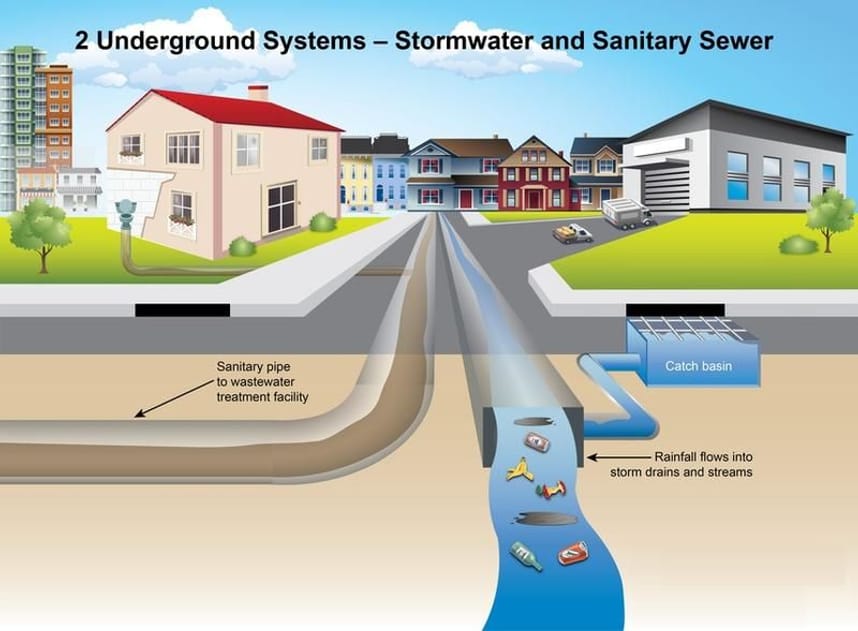
As part of our commitment to maintaining and protecting McMinnville’s infrastructure, natural resources, and quality of life, the City is exploring a potential way to tackle growing stormwater challenges in our community. To date, funding for stormwater efforts competes with funding for all other General Fund activities within the City budget, reducing funding for other services such as Police, Fire, Public Works, and Parks & Recreation. The introduction of a dedicated funding source would allow us to maintain and improve drainage systems, and meet state and federal stormwater regulations in a much more direct and effective manner. Your input is vital as we work towards a solution that reflects the needs and priorities of our residents, businesses, and stakeholders.
What the Proposed Stormwater Fee Really Looks Like for Residents
The actual impact on most households is modest, predictable, and based on impervious surface—not property value. An ERU is the average square footage of the impervious surface area (measured in square feet) for a single-family residential property determined pursuant to the City’s proposed ordinance. That amount is 2,058 square feet. The ERU was determined by performing detailed measurements of impervious surfaces contained on a representative sample of single-family residential properties across the City. The resulting data was analyzed and the median impervious surface value for the data set determined the ERU value.
McMinnville has approximately 4,039 single-family residential properties (excluding apartments and other multi-unit housing). Based on the proposed fee schedule, the monthly cost breaks down as follows:
			•	2,512 homes (62.2%) would pay $1.50 per month
			(0.5 ERU – properties with 0–2,000 sq. ft. of impervious surface)

			•	1,385 homes (34.3%) would pay $3.00 per month
			(1.0 ERU – 2,000–4,000 sq. ft. of impervious surface)

			•	134 homes (3.3%) would pay $4.50 per month
			(1.5 ERUs)

			•	7 homes (<0.1%) would pay $6.00 per month
			(2.0 ERUs)

			•	1 home (<0.1%) would pay $7.50 per month
			(2.5 ERUs)
In practical terms, more than 96% of single-family homes would pay $3.00 per month or less, with nearly two-thirds paying just $1.50 per month under the tiered rate structure approved by the Board of Mayor and Aldermen.
Apartments, Rentals, and Multi-Family Housing
For apartments and other multi-family residential units, the impact is even smaller:
			•	Each tenant would pay $1.00 per month
			(0.33 ERU per dwelling unit when individually metered)
This ensures costs are distributed equitably while keeping the fee affordable for renters and smaller households.
Non-Residential Property
All non-residential properties will be billed at a rate based on their measured impervious area. To determine the monthly fee, divide the total impervious area of your property by 2,058 square feet (or one Equivalent Residential Unit) to obtain the number of ERUs and multiply by the base single-family rate of $3.00 per month per ERU. Impervious areas were determined by analyzing aerial photographs to identify the amount of impervious surface on each property. For most properties, the City’s fee will be billed on the McMinnville Utilities bill. However, in some circumstances, alternative billing methods may be used.
Why This Matters
The stormwater utility fee creates a dedicated, stable funding source to address flooding, drainage, and water quality issues proactively—rather than relying on emergency repairs after storms. Without this utility, stormwater projects must compete annually with Police, Fire, Parks & Recreation, and other essential services in the General Fund, which already face structural pressure.
The proposed fee structure ensures:
- Costs are tied to runoff impact, not property value
- The vast majority of residents pay a very small monthly amount
- Renters are protected with a low, flat rate
- Stormwater funding no longer displaces core public safety and quality-of-life services
Stormwater Utility Public Hearing Questions & Answers
The following summarizes questions and statements raised by residents regarding the proposed Stormwater Utility public hearing on 2/10/26, and provides responses based on the proposed ordinance, financial structure, and supporting materials.
Applicability & Billing
Q. Will the Stormwater Utility Fee apply to properties that receive city water but are not within the city limits?
Answer:
No. If you receive City water but your property is located outside the McMinnville city limits, you will NOT be charged the Stormwater Utility Fee.¹
Q. For commercial properties with multiple tenants, how are charges divided?
Answer:
The Stormwater Utility Fee is assessed to the property owner based on total impervious surface area—not to individual tenants. The City bills the account holder of record. The property owner, not the City, determines how costs are allocated among tenants.¹
Why Are We Considering This?
Q. I’d like to see data that supports how we got here. How and why are we considering this?
Answer:
Over many years, the City has received numerous complaints from property owners regarding flooding, drainage failures, and stormwater runoff impacting private property. Residents consistently request that the City address these issues; however, stormwater currently competes for limited funding within the General Fund.⁴
As development has increased and rainfall events have become heavier and more concentrated, older infrastructure has struggled to keep pace. Without a dedicated funding source, the City is largely limited to reactive maintenance rather than proactive system-wide improvements.¹
The proposed Stormwater Utility provides a stable funding source to:
- Address recurring flooding concerns
- Develop a comprehensive Stormwater Master Plan
- Prioritize infrastructure improvements
- Reduce reliance on emergency repairs
Bureaucracy & Structure
Q. Please don’t add more bureaucracy and red tape.
Answer:
The Stormwater Utility will operate within the existing Public Works Department under the supervision of the Public Works Director or designee. It is not a standalone department.¹
The goal is not to create unnecessary bureaucracy, but to provide dedicated funding and accountability for infrastructure that already exists and must be maintained.⁴
Q. Why bifurcate a department and create another one?
Answer:
The proposal does not technically create a separate standalone department. It establishes a funding structure within Public Works. Stormwater infrastructure already exists and requires oversight. The utility formalizes funding and accountability rather than creating duplicative administration.¹
Housing & Market Impact
Q. Implementing this would make it harder for people to sell their homes due to unpredictability of the fees.
Answer:
The proposed fee structure is transparent, predictable, and based on impervious surface—not property value.³
Over 96% of single-family homes would pay $3.00 per month or less.²
Any adjustment to the fee would require public notice and Board approval.¹ This structure provides predictability rather than volatility.
Program Oversight
Q. Regular reviews of the program should be done.
Answer:
The ordinance requires annual operating budgets adopted by the Board of Mayor and Aldermen.¹
Additionally, the fee structure and services are reviewed annually, and any change requires public notice and Board approval.¹
The City supports ongoing evaluation to ensure efficiency, transparency, and alignment with infrastructure needs.⁴
Property-Specific Concerns
Q. You still haven’t fixed the problem on my property, so I don’t support this.
Answer:
The City understands the frustration of residents experiencing recurring drainage problems. Many of these issues stem from aging or undersized infrastructure and limited funding for capital improvements.⁴
Currently, stormwater projects must compete with Police, Fire, Streets, and Parks for General Fund resources.³
A dedicated Stormwater Utility allows the City to systematically prioritize and address these concerns rather than relying on limited, reactive repairs.¹
Funding Philosophy
Q. Citizens shouldn’t be paying for this. Cut other things to make it happen within the resources we already have.
Answer:
Stormwater is currently funded through the General Fund, which already supports Police, Fire, Parks, Streets, and other essential services.³ Reducing funding in those areas would directly impact public safety and core services.
Sanitation, for example, operates as a Special Revenue Fund funded entirely through garbage collection rates—not General Fund tax dollars.⁴
Similarly, the Stormwater Utility establishes a dedicated funding mechanism so that stormwater infrastructure does not displace other essential services.¹
Implementation Timeline
Q. How long would this take to get up and running?
Answer:
Implementation would occur in phases. Billing integration through McMinnville Utilities would occur shortly after adoption.¹
Administrative procedures, appeals processes, and the credit manual would follow Board approval.¹
A comprehensive Stormwater Master Plan would be developed once funding is established.¹ Infrastructure improvements would then be prioritized and phased over multiple fiscal years.
Fee Structure & Real-World Impact
Q. How much will residents actually pay?
Answer:
McMinnville has approximately 4,039 single-family residential properties (excluding apartments and other multi-unit housing).²
Under the proposed fee schedule:
- 62.2% of homes would pay $1.50 per month
- 34.3% of homes would pay $3.00 per month
- Over 96% of homes would pay $3.00 per month or less
- Apartments (individually metered): $1.00 per month per unit²
- Fees are tied to runoff impact—not property value.³
Appeals & Credits
Q. Is there an appeal process?
Answer:
Yes. Property owners may file a written appeal if they believe their impervious surface measurement is incorrect. Staff may verify measurements and issue written determinations.¹
Q. Can I reduce my fee?
Answer:
Yes. The ordinance authorizes a credit system for properties that install approved stormwater mitigation measures that reduce runoff or system burden. Written procedures will be developed and approved by the Board.¹
References
¹ Stormwater Utility Ordinance (Proposed February 10, 2026)
² “What the Proposed Stormwater Fee Really Looks Like for Residents”
³ Stormwater Utility: Myth vs. Fact
⁴ City of McMinnville Stormwater Utility FAQ
Opportunities to Engage
Stormwater Utility: Building a Resilient McMinnville Together
We’re exploring a stormwater utility fee to enhance our stormwater solutions, management, and features, along with water quality. Share your thoughts and help shape McMinnville's future stormwater solutions!
Stay Informed
Get notified on upcoming engagements and the latest project related news.