
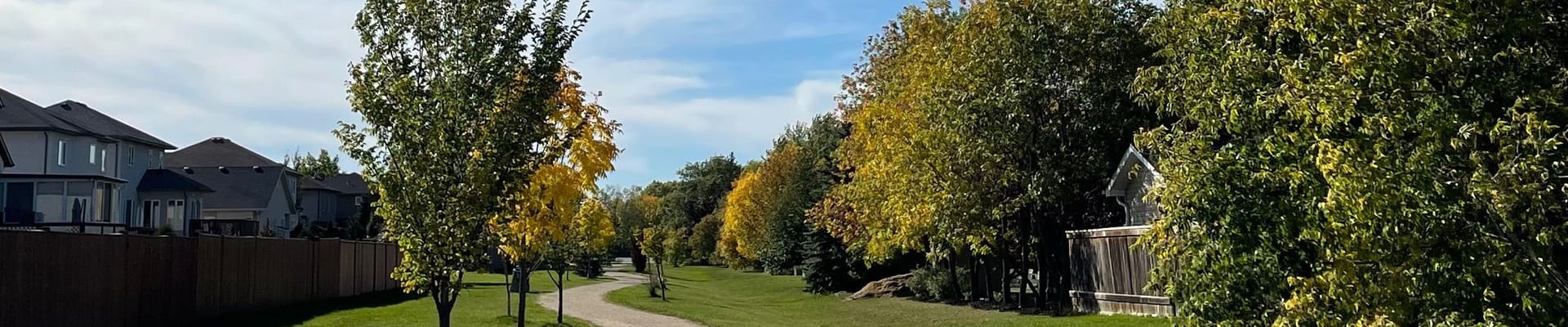
Oakbank Tree Inventory
About
The Rural Municipality of Springfield contacted Davey Resource Group (DRG) to conduct Oakbank’s first comprehensive street and park tree inventory. The project assessed the health and structural condition of municipally owned trees, identified maintenance needs, and provided a baseline dataset to guide urban forest planning and long-term asset management.
Purpose
The inventory was designed to:
Assess tree health and structural condition.
Recommend maintenance actions, including pruning, young tree training, and removal of trees in decline.
Establish a data-driven baseline for future planning, monitoring, and growth of Oakbank urban forest.
Support Springfield’s broader environmental and climate adaptation goals.
Key Findings
Community Growth Pressures: Oakbank, with growing population of 5,041 (approx. 2% annual increase), faces increasing development pressures. Expanding subdivisions and infrastructure upgrades will place stress on the urban forest through direct removals, increased impervious surfaces, and urban heat island effects.
Tree Inventory Scope: The assessment focused exclusively on municipally owned street and park trees. Private property trees and overall canopy coverage were not included, but future aerial canopy studies could complement this dataset.
Maintenance Needs: The inventory highlights the need for:
Proactive pruning and structural training of young trees to improve long-term form and stability.
Targeted removal of hazardous or declining trees.
Ongoing monitoring of urban forest health.
Benefits and Next Steps
This inventory establishes Oakbank’s first structured dataset of municipal tree assets, forming the foundation for:
Prioritized maintenance scheduling to improve tree safety and longevity.
Strategic planning for future tree planting and canopy growth.
Integration of urban forestry into Springfield’s Climate Adaptation Plan (in progress) to address resilience, stormwater management, and heat mitigation.
Potential future studies, such as canopy cover analysis and ecosystem service valuation, to quantify environmental and economic benefits.
Additional Context
Tree inventories are also planned for the communities of Dugald and Anola. At this time, it is still to be determined whether these will be completed in-house or through an external consultant such as Davey Resource Group. The decision will depend on available budget next year and, ultimately, on Council’s direction.
Conclusion
The Oakbank Tree Inventory provides council with valuable management tools to guide decision-making, budget planning, and community engagement. As development continues and climate risks intensify, proactive management of Springfield’s urban forest will be essential to protecting community livability, resilience, and environmental health.