

Measure G
Curious about how your tax dollars are working for Salinas? Discover how local funding from Measure G has been invested in our community and the services it supports.
About
In 2014, the residents of Salinas faced a clear and consequential choice: whether to create a stable funding source to protect essential city services and invest in a safer, stronger community. That choice became Measure G, a voter-approved, one-cent local transactions and use tax with strict accountability requirements - a 15-year term, and independent resident oversight committee that oversees the fund.
More than a decade later, Measure G remains a foundational part of how Salinas delivers public safety, emergency response, blight reduction, and other core city operations, including services like:
- Police services, including staffing, operations, and emergency response readiness
- Fire protection and emergency medical services, including disaster preparedness
- City infrastructure and operations, which keep Salinas functioning safely and efficiently, such as street and sidewalks
- Community safety programs, including prevention, blight reduction, and health and safety and quality-of-life initiatives
- Neighborhood services, parks, and youth and senior programs
Measure G is projected to generate $36.1 million in revenue for FY 2025-26 and support staffing for 106.5 full-time positions across multiple departments.
As a time-limited measure, it is set to expire in 2030, potentially leaving the City with a significant annual revenue gap of over $40 million if not renewed by voters.
As the measure approaches its sunset date, the City is reviewing its history, performance, and role in Salinas’ long-term fiscal health so residents can understand what Measure G has meant, why it is being reviewed for renewal, and the implications if it expires.
Measure G
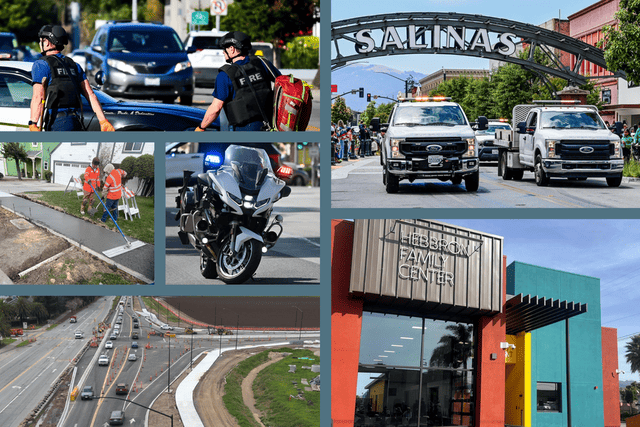
Measure G has also funded a variety of significant projects since its inception, including:
- Street Preventative Maintenance
- Sidewalk Repair
- Alisal Vibrancy Plan
- Safe Routes to School
- Active Transportation Plan
- Playground Improvements
- Stormwater and Sewer Infrastructure
- Traffic Signal & Street Light Upgrades
- Hebbron Family Center
- Bicycle Lane Installations & Pedestrian Safety
- Boronda Rd Traffic Congestion Relief
- Striping & Signing Improvements
- Williams Rd Streetscape & Safety
- Traffic Calming
- Recreation Center at Municipal Pool
Measure G Logos - Full Color with Decorative Background, Full Color, Black, and White

Letter from the City Manager Regarding Measure G
Timeline
Kick Off
Preliminary Tax Measure Survey
Sign up for text and email updates on City News and other projects!
Community Engagement
Frequently Asked Questions
What Measure G Has Done for Our Community?
Public safety has consistently been identified by residents as a top priority. Measure G revenue has helped the City maintain police, fire, and emergency response capacity during a period when many cities have faced difficult service reductions. However, public safety also includes infrastructure, public spaces that are accessible, and providing community services and maintenance that improve the overall quality of life for residents for safer, more connected neighborhoods and places where families can live, work, and raise children.
Measure G has supported services and initiatives like:
- Police services, including staffing, operations, and emergency response readiness
- Fire protection and emergency medical services, including disaster preparedness
- City infrastructure and operations, which keep Salinas functioning safely and efficiently, such as street and sidewalks
- Community safety programs, including prevention, blight reduction, and health and safety and quality-of-life initiatives
- Neighborhood services, parks, and youth and senior programs
What Happens If Measure G Is Not Renewed?
Because Measure G does not fund just a single department, it plays a critical role in stabilizing the City’s overall budget, helping ensure that core services can be delivered consistently as costs rise.
Loss of Critical Local Funding
For FY 2025 - 2026, Measure G is projected to generate $36.1 million in revenue and support staffing for 106.5 full-time positions across multiple departments. If measure G is not renewed by voters, the potential impact would be an annual revenue gap of over $40 million.
Potential Service Impacts
While future City Council decisions would determine specific responses, the expiration of Measure G could require difficult choices that could affect:
- Police and fire services
- Emergency response readiness
- Street and facility maintenance
- Community safety programs, including prevention, blight reduction, and health and safety and quality-of-life initiatives
- Neighborhood services, parks, and youth and senior programs
If the renewal of Measure G is approved by Salinas voters, would it be a new tax?
No, if the renewal of Measure G is approved by Salinas voters, the Salinas sales tax remains the same, and Measure G funds would stay in Salinas to continue funding services and initiatives, for our residents.
Your Role
Measure G has always been a community decision. Voters approved it in 2014. The services provided through Measure G funding are for the voters of Salinas. Voters will decide whether it continues.
The City’s role is to provide clear, accurate information about:
- How Measure G works
- How funds are used
- How oversight and accountability are maintained
- What renewal would mean
This information allows residents to make an informed choice, consistent with Salinas’ tradition of community engagement and local decision-making.
Why Measure G Is Being Reviewed for Renewal
The Sunset Provision
Salinas voters approved Measure G with a sunset term of 15-years (set to expire in 2030) and an independent resident oversight committee that oversees the fund. For FY 2025 - 2026, Measure G is projected to generate $36.1 million in revenue and support staffing for 106.5 full-time positions across multiple departments.
As the sunset approaches, the City is required to plan. Responsible financial planning means evaluating what Measure G currently supports and what would happen if that funding source were no longer available.
Rising Costs and Ongoing Needs
Since 2014, the cost of providing city services has continued to rise. Labor, equipment, infrastructure maintenance, emergency preparedness, and regulatory requirements all cost more today than they did a decade ago.
Measure G does not automatically increase with inflation. Over time, this means the measure helps maintain stability but does not fully offset rising costs. Even so, it remains a critical part of the City’s ability to fund essential services.
Oversight, Transparency, and Accountability
Independent Resident Oversight Committee
A defining feature of Measure G is its Independent Citizens Oversight Committee, established by ordinance and required as a condition of the measure’s approval. Key features of the Oversight Committee include:
- A minimum of seven members of the public, appointed by the City Council
- Members who are Salinas residents or representatives of businesses located in Salinas
- Responsibility for reviewing the City auditor’s annual report on Measure G revenues and expenditures
- Issuance of a public report to the City Council on the use of Measure G funds
The Committee meets multiple times per year, including meetings tied to the City’s budget process, including review of financial and audit reports. These meetings provide members with an opportunity to understand how Measure G funds are proposed, allocated, and spent.
Annual Audits and Public Reporting
Measure G funds are subject to annual independent audits, which are reviewed by the Oversight Committee and the City Council. Audit findings, Oversight Committee reports, and budget documents are all part of the public record.
This structure ensures that Measure G revenue is:
- Tracked separately
- Reviewed regularly
- Reported publicly
- Used for general municipal services benefiting Salinas
No Measure G funds can be spent outside the City, and no changes to the tax can occur without voter approval.
Measure G Funds Stay in Salinas: Why It Matters
One of the most important aspects of Measure G is that the funding stays in Salinas, commonly referred to as “local control”. Unlike many state or federal funds, Measure G revenue:
- Stays entirely in Salinas
- Is allocated through the City’s public budget process
- Reflects local priorities identified by the community
- Is overseen by residents
This matters because Salinas faces unique needs and challenges that cannot always be addressed through one-size-fits-all funding programs. Tax measures like Measure G allows the City to respond to emergencies, maintain essential services, and plan responsibly for the future.
Why Measure G Was Placed on the Ballot in 2014?
A Changing Fiscal Reality for Cities
Like many California cities, Salinas entered the 2010s facing structural financial challenges. State funding for cities had become increasingly limited, while the cost of providing essential services—police, fire protection, emergency response, infrastructure maintenance, and community programs—continued to rise.
Cities do not have access to the same range of revenue tools as the State or federal government. Instead, they rely on a small number of local sources, such as sales tax, State-set property tax allocations, and fees that are often restricted in how they can be used.
This creates vulnerability when costs rise faster than revenues.
By 2013 and early 2014, community outreach conducted by the City made one thing clear: residents consistently ranked public safety and neighborhood quality as top priorities, while also expressing concern about crime prevention, street conditions, emergency response times, and programs that bring people together, such as youth, recreation, and community services.
Community Input and City Council Action
In March 2014, the Salinas City Council reviewed the results of extensive public engagement and heard additional public comment. Based on that input, the Council directed staff to prepare a proposal for voters: a local transaction and use tax designed to restore and maintain services, remain under local control, and include independent oversight and annual audits.
Following a public notice of a hearing in June 2014, the City Council voted to place Measure G on the November ballot. The proposal was clear in both purpose and structure: a one-cent local sales tax, lasting 15 years, with citizens’ oversight, independent audits, and a guarantee that all funds would stay in Salinas and could not be taken by the State.
Why Salinas Voters Approved Measure G?
A Clear, Local Decision
When Measure G appeared on the November 4, 2014, ballot, voters were presented with a straightforward question focused on quality of life and essential services. The measure emphasized maintaining and enhancing city services, including:
- Crime and gang prevention
- Neighborhood policing and school safety
- Police, fire, and paramedic response
- Safety inspections
- Repairing streets and sidewalks
- Recreation and programs for youth and seniors
- Other core city services
Just as important as what Measure G funded was its structure. Voters were told that:
- The tax was local
- The State could not take the funds
- Spending would be subject to annual independent audits
- An Independent Citizens Oversight Committee would review revenues and expenditures
Voters approved Measure G because it reflected local priorities, local accountability, and local control. It was a community decision about community needs.