
Sewer System Rehabilitation
WHAT ARE WE DOING?
The Town of Southern Pines is committed to maintaining and enhancing the critical infrastructure that serves our community. One of our most pressing priorities is rehabilitating portions of the town's aging sewer system, much of which dates back over a century. As part of this multi-year effort, we will address areas where tree roots, overgrown vegetation, and system deterioration have caused breaches or blockages in sewer lines, resulting in significant repair costs and potential environmental challenges.
WHY ARE WE DOING THIS?
By ensuring the long-term reliability and efficiency of our sewer system, we will protect public health, preserve natural resources, and support the future needs of our town.
Since 2014, the Town has experienced 14 Sanitary Sewer Overflow (SSO) incidents that were directly caused by tree roots damaging lines. We completed the required regulatory notifications on 8 of these SSOs and were fined by the State of North Carolina for 2 of them. In addition, more than 450 residents have contacted us when the sewer has backed up into their home or business - in some cases causing significant financial damages.
In the past few years, the Town of Southern Pines has received numerous Notices of Delinquency from the State of North Carolina Department of Environmental Quality for not maintaining clear and accessible easements over our sewer lines.
Rehabilitation involves religning the inside of the sewer main with a flexible PVC sleeve. This ensures the pipe is adequate to provide additional decades of service. Rehabilitation is significantly cheaper, and less impact than replacement of the sewer main lines.
WHAT'S NEXT?
This phased initiative involves careful evaluation, community engagement, and collaboration with property owners to guide our decision-making process. We begin by identifying sewer lines most in need of attention and assessing any trees within easements that may impact the system. Trees and other vegetation within the easement are identified and marked in the first phase of the program and estimates are developed for removing that vegetation. Most sewer easements are 20 feet wide (10 feet on either side of the sewer line) and road rights-of-way are 60 feet wide. In the second phase, vegetation is removed and lines are assessed for repairs and rehabilitation. The third and final phase is performing necessary utilities line repair and rehabilitation. Residents are informed well in advance of any planned work in their area, allowing time for questions, input, and thoughtful coordination.
As we work to balance infrastructure improvements with environmental stewardship, your feedback remains a crucial part of shaping this project’s outcomes. Together, we can ensure thoughtful improvements that benefit all Southern Pines residents today and in years to come.
Budget
Sewer rehabilitation and associated tree removals are part of the annual budget for the Town of Southern Pines. We develop the following year's budget based on the Phased work of the current year informing estimates for work the following year. In addition, the Town received a $5M grant for sewer rehabilitation of lines in the Downtown, West Southern Pines, and Sandhurst neighborhoods as well as along US Highway 1. This work is in the final stage of rehabilitation work.
Opportunities to Engage
Stay Informed
Get notified on upcoming engagements and the latest project related news.

Project Phases
Longleaf, Talamore, and Reservoir Park: Trees Marked and Estimates for Tree Removal Developed
Longleaf, Talamore, and Reservoir Park: Sewer Line Inspections & Tree Removals
Knollwood and Middleton Place: Trees Marked and Estimates for Tree Removal Developed
Project Updates
**Knoll Road Traffic Update – Curb Installation**
Knollwood Heights- Tree Removal Begins
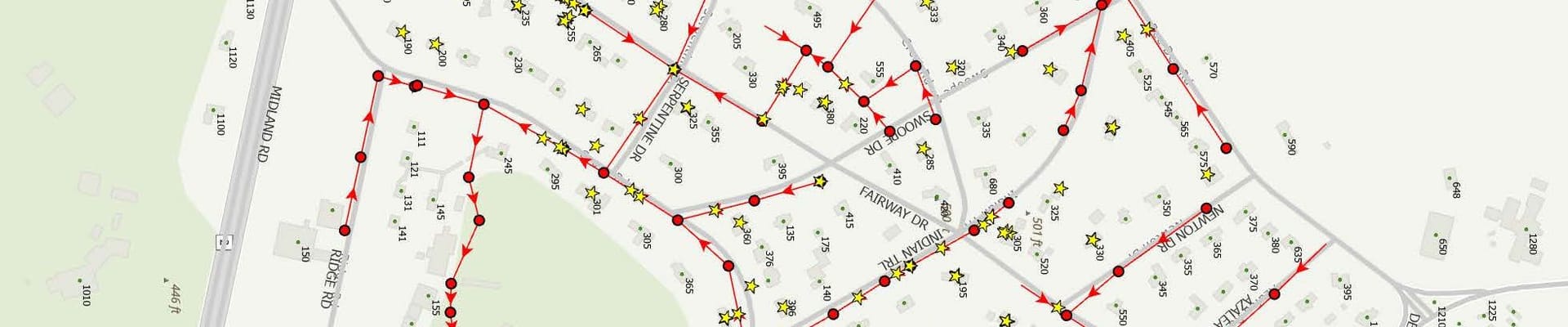
Knollwood Heights Sewer Rehabilitation Map
Knollwood Heights Sewer Rehabilitation Map
Neighborhood Survey Update
The surveyor has completed all field work in this neighborhood. Once the maps of the surveyed areas are finalized and delivered, they will be submitted to the U.S. Fish & Wildlife Service (USF&W) for their review and assessment.
Tree Survey Clarification: Tagging
We’ve received several questions about the white ribbons currently visible on trees. We want to clarify that white ribbons do not indicate that a tree is marked for removal.
Knollwood Tree Survey Work Beginning in Late July
A contracted surveyor will be in the Knollwood area beginning in late July to assess property boundaries and sewer lines.
Sewer Rehab Project Presentation
Presentation from Friday's public engagement
Sewer Easements Explained
A utilities easement is a legal right that allows utility companies and departments to access a portion of private property to install, maintain, repair, or replace utility lines and equipment.