
Walnut Spring Run Stream Restoration Project
Spring Creek MS4 Partners Chesapeake Bay Pollution Reduction Plan
Project Information
SITE INFORMATION
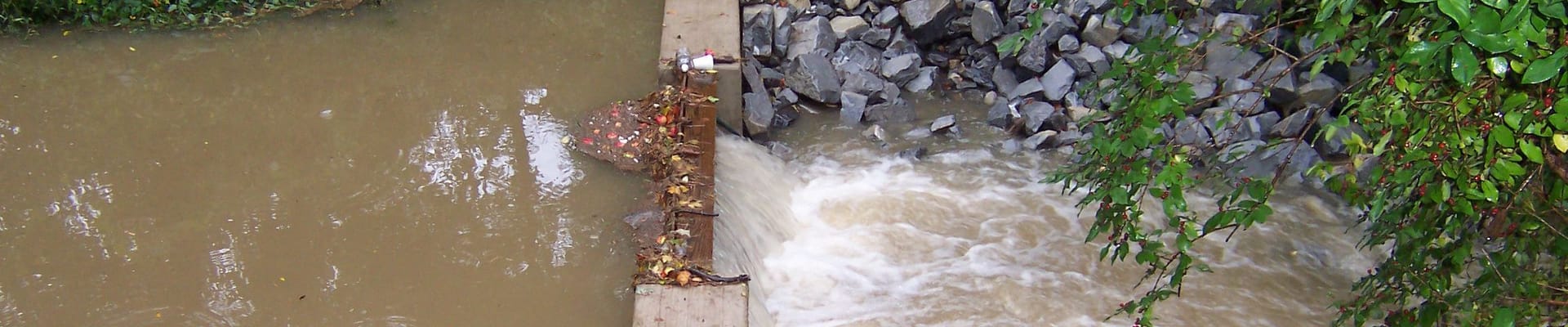
The stream in Walnut Spring Park is an unnamed tributary (UNT) to Thompson Run. At the park entrance, the stream is an ephemeral stormwater conveyance channel. The tributary drainage area (0.83 sq. mi.) is a medium density urban development in the Borough of State College that was developed prior to current stormwater regulations. A portion of the drainage area is detained in the Westerly Parkway Wetland, constructed in 2012 to provide stormwater treatment in addition to detention. For pollution control, a checked damn has been installed at the end of the ephemeral reach. The Walnut Spring Wetland mitigates downstream peak flow discharge upstream of Slab Cabin and, in doing so, mitigates peak flow to Millbrook Marsh.
SCOPE OF WORK
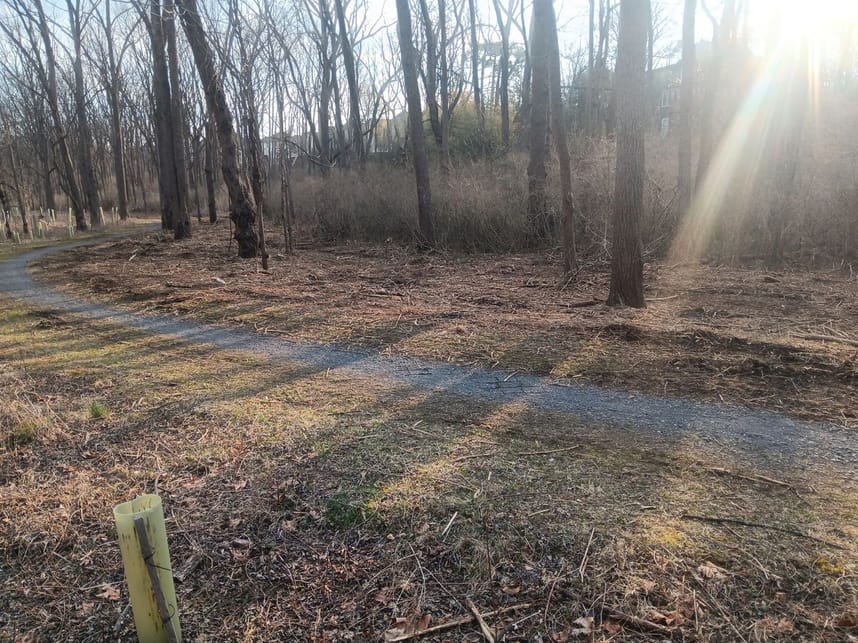
The Walnut Spring Stream Restoration Project addresses an existing problem with urbanization. State College Borough has substantial urban development within its bounds, making it prone to water quality issues. Walnut Run is an impaired first order stream classified in Chapter 93 as a high-quality, cold water, migratory fishery. The cause of impairment is siltation. Accelerated urban runoff upstream of the wetland continues to degrade the UNT and has resulted in over-widening and bank incision. The scope of work for this project includes grading banks to connect incised stream sections to the floodplain, which will help prevent sediment during stormflow. In addition, the restored banks and the floodplain will be vegetated with native riparian plantings in conjunction with the ongoing invasive species removal being conducted at Walnut Spring Park.
The work will be conducted by the U.S. Fish and Wildlife Service. For the complete project description, please visit the Supporting Documents section.
Chesapeake Bay Pollution Reduction Plans
On December 29, 2010, the U.S. Environmental Protection Agency established the Chesapeake Bay Total Maximum Daily Load in response to public concern about the health of the Chesapeake Bay. This comprehensive “pollution diet” plan established nitrogen, phosphorus, and sediment limits for the Bay. The plan is designed to ensure that pollution control measures needed to restore clean water quality in the Chesapeake Bay and its tidal rivers are in place by 2025.
Appendix D of the General Permit for Discharges of Stormwater from Small Municipal Separate Storm Water Systems (PAG-13) permit program in Pennsylvania requires permit holders within the Chesapeake Bay Watershed to develop a Pollution Reduction Plan (PRP) that addresses siltation, nutrient impairment, and local stream impairments. For Chesapeake Bay PRPs, the pollution reduction goal is 10% for Total Suspended Solids (TSS), 3% for Total Nitrogen (TN), and 5% for Total Phosphorous (TP). For impaired waters, “Organic Enrichment / Low D.O.” is a surrogate for TP pollution. The Pennsylvania Department of Environmental Protection (DEP) accepts that 10% reduction in sediment will automatically reduce the TN by 3% and TP by 5%.
The Spring Creek MS4 Partners jointly developed a comprehensive Centre Region MS4 Partners Pollution Reduction Plan that addresses the required Chesapeake Bay and impaired waters for nutrient and/or sediment requirements in the Spring Creek and Spruce Creek Watershed. The partners are required to address the pollution issues in Spring Creek, Slab Cabin Run, Buffalo Run, and Logan Branch by 2025. The PRP recommends best management practices (BMPs) for each municipality within the watershed to achieve the minimum required pollutant load reduction. For the Borough of State College, the two recommended BMPs are the Walnut Spring Stream Restoration Project and an increase frequency in the Borough’s street sweeping activity.
Click here for more information on the State College Borough's MS4 Stormater Management Program
Any questions about this project can be sent to Lance King (lking@statecollegepa.us), Facilties Manager & Arborist at the Borough of State College.
Stay Informed
Get notified on upcoming engagements and the latest project related news.
Project Phases
Pre-Construction
Construction
Important Dates
Walnut Spring Stream Restoration Project Site Tour
Walnut Spring Park
711 Walnut Spring Lane
State College, PA 16801
10:00am - 11:30am
Join US Fish and Wildlife Service and Borough Staff for a site tour and discussion on the upcoming stream restoration project. Attendees will be able to ask questions to staff working on the project.
Construction Begins
Construction begins. A job trailer is now on site. Loads of rock and logs will be delivered to and staged at the park throughout the duration of the construction.