
Potters Gate School Street - Experimental Traffic Regulation Order (ETRO) Consultation Findings and Decision
Thank you to everyone who took time to share their feedback on the School Street for Potters Gate Primary School Street, Farnham since going live on the 24th November 2025. We value your involvement
Potters Gate School Street
Thank you to everyone who took time to share their feedback on the School Street for Potters Gate Primary School Street, Farnham since going live on the 24th November 2025. We value your involvement and the feedback provided.
The School Street was installed under 18months Experimental Traffic Regulation Order (ETRO) with the first 6 months serving as a consultation period ( 24th November 2025- 25th May 2026)
An online survey was developed to gather more detailed feedback on the impact of the School Street scheme on residents, parents, and the wider community, as well as to understand any resulting changes in travel behaviour. Stakeholders were able to complete the survey multiple times if they wished to provide additional observations or experiences.
Sentiment of Respondents
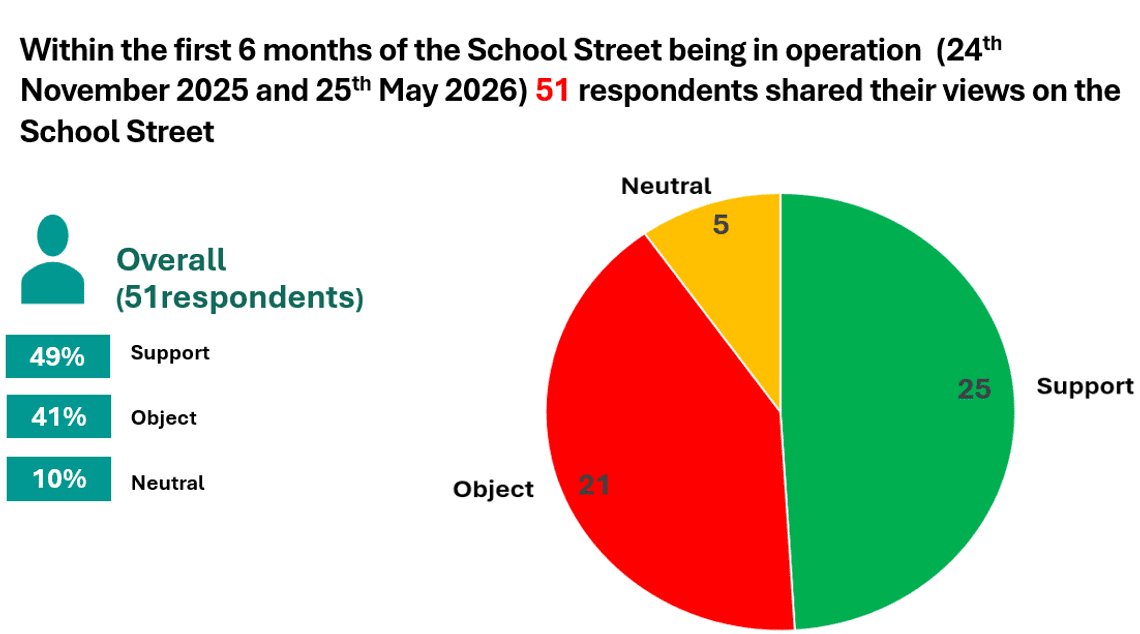
How different groups of people feel about the Potters Gate School Street
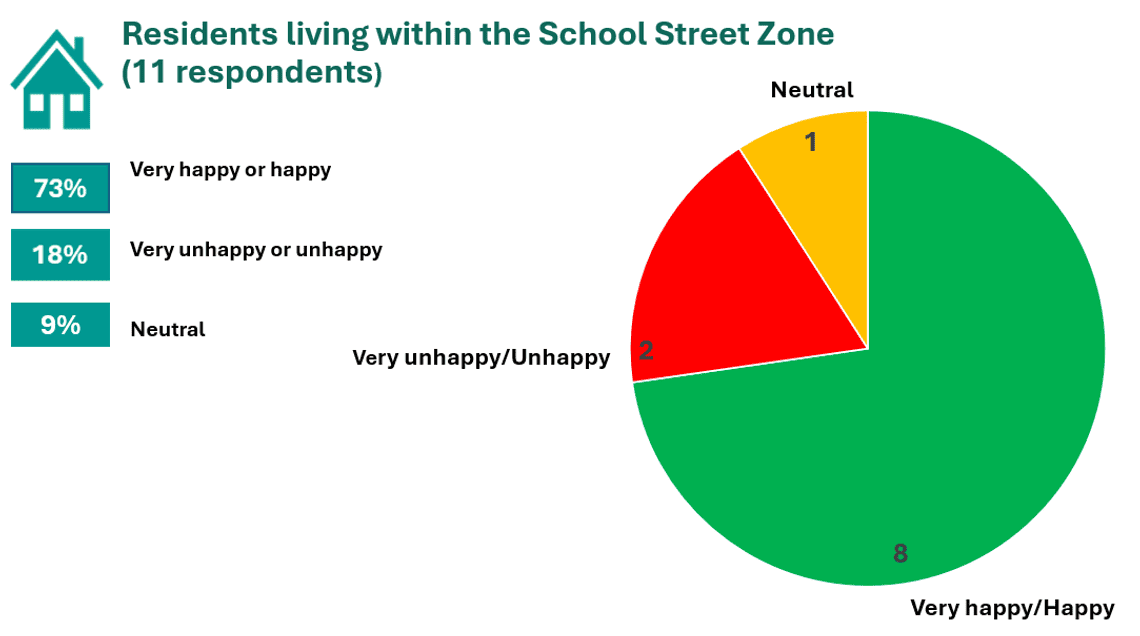
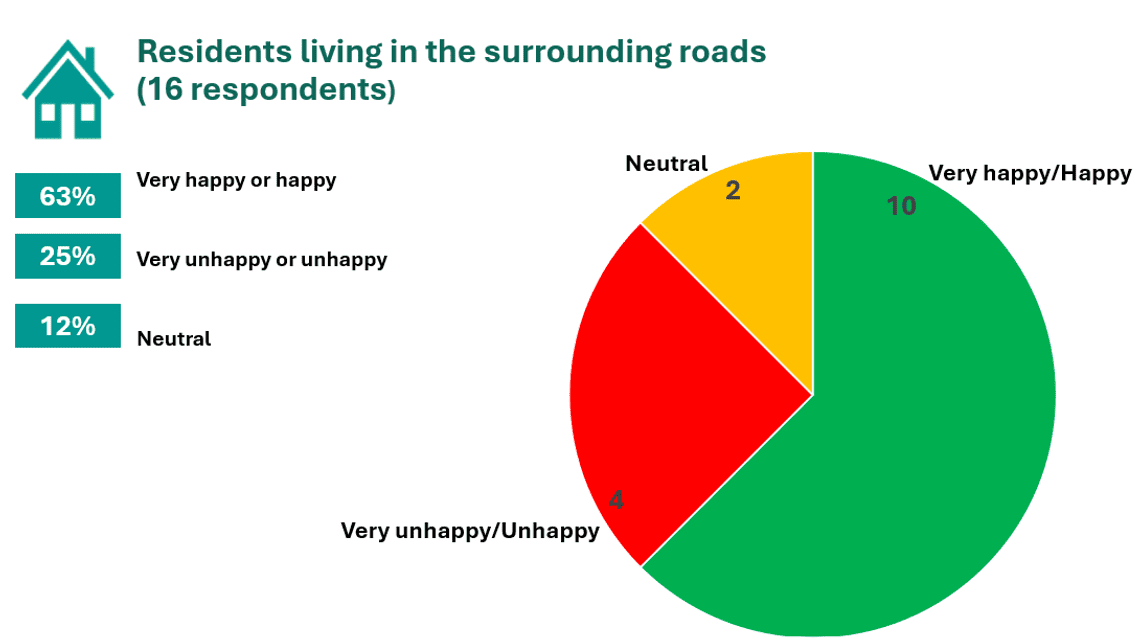
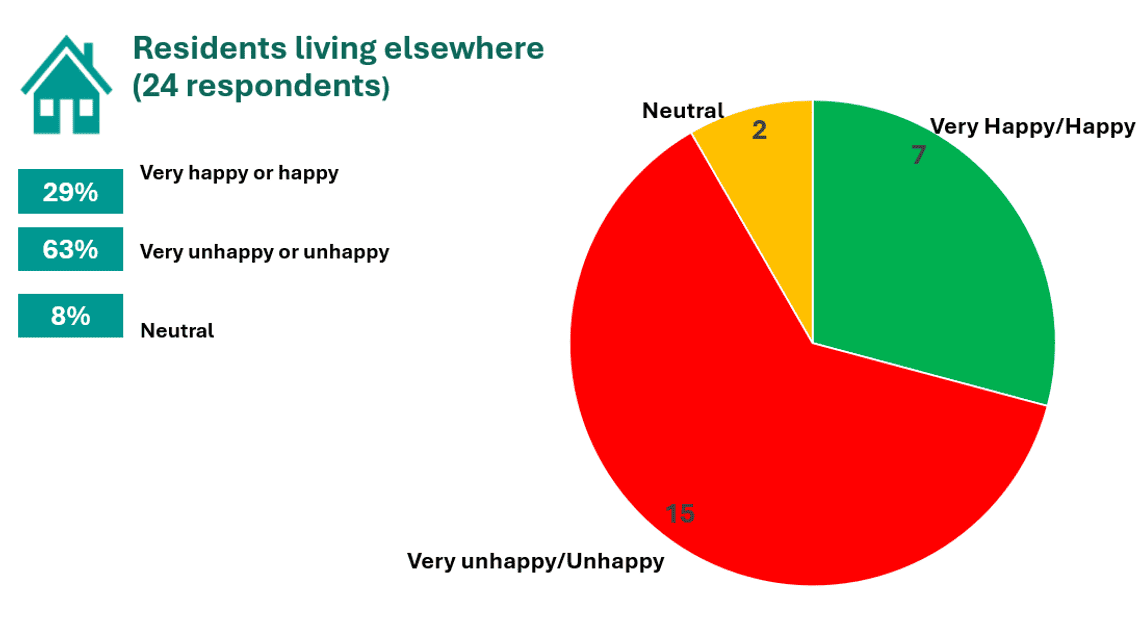
Feedback was received from a mix of residents living within the School Street area, nearby residents, and people travelling through or working in the wider Farnham area. Responses from those living within or immediately adjacent to the School Street were generally more supportive of the scheme, while concerns were more commonly raised by respondents travelling through the area or commuting to nearby destinations such as the University.
The most frequently reported benefits were:
- Improved road safety for children travelling to and from school.
- Significant reductions in traffic volumes, vehicle queuing, inappropriate parking, and vehicle conflicts during drop-off and pick-up times.
- A quieter, calmer environment with perceived improvements in air quality and pedestrian comfort.
- Increased confidence for walking, cycling and other active travel journeys.
The main concerns raised related to:
- The visibility and clarity of signage, particularly for drivers approaching from Crondall Lane.
- Uncertainty regarding operation during school holidays and term-time periods.
- Perceived displacement of traffic and parking to surrounding roads.
- Requests for additional exemptions or access arrangements for university staff, visitors, tradespeople and other regular users of the area
Officers response to concerns
Visibility and signage
The signage has been designed and installed in accordance with Department for Transport (DfT) regulations and guidance, which prescribe the format and content of School Street signs. In addition to the restriction signs located at the entry points to the School Street, advance warning signs have been installed on both approaches along Crondall Lane to advise motorists of the restriction ahead before reaching Beavers Road. Officers have reviewed the signage arrangements and are satisfied that they comply with the relevant standards and provide adequate warning to approaching drivers.
School holiday operation
Some respondents expressed uncertainty regarding whether the restrictions operate during school holidays or only during term time. While School Street restrictions are intended to operate during school term time, the wording and appearance of traffic signs are prescribed by DfT regulations and the Council is not permitted to add additional wording such as "Term Time Only" to the signs. Information regarding the school term dates is therefore communicated through supplementary channels, including the School's webpage, consultation materials, resident letters, and other stakeholder communications.
Additional Exemptions
School Street restrictions operate for short periods during school arrival and departure times Mon to Fri Term time only. Friends, family members and delivery drivers can continue to visit outside these times. The primary objective of a School Street is to successfully reduce traffic volumes, facilitate safer journeys for children travelling to school and make active travel options (walking and cycling) viable and more appealing.
Extending exemptions to friends, family and deliveries (outside of the qualifying criteria) would compromise the safety and purpose of the scheme. This approach is consistent with other School Street Schemes operating successfully across the UK.
Displacement of Traffic
Traffic displacement is a commonly raised concern in relation to School Street schemes. However, evidence from national research and evaluations of similar schemes indicates that, whilst some traffic redistribution may occur initially, significant long-term displacement is generally limited, with many schemes resulting in a wider reduction in vehicle movements as travel behaviours adapt over time.
To help minimise parking pressures on surrounding residential roads, both Surrey County Council and the school have clearly communicated to Potters Gate parents that the three nearby public car parks should be used for school drop-off and pick-up, with the school accessible via a walk of approximately 10 minutes from these locations.
Research also shows that School Streets can support a broader shift towards sustainable travel, with some journeys changing from car use to walking, cycling, scooting, or park-and-stride arrangements. These behavioural changes can help reduce traffic levels around schools and contribute to a safer and healthier environment for pupils and the wider community.
Conclusion
Overall, the consultation feedback demonstrates that the benefits of the School Street are being experienced by many local residents and school users, and is broadly achieving its intended objectives of improving safety, reducing traffic congestion, and creating a more pleasant environment for pupils and families travelling to and from the school.
Decision
The results of the consultation have been shared with the local County Councillor, and a decision has been made to make Potters Gate School Street permanent.
The Experimental Traffic Regulation Order (ETRO) will now be converted into a permanent Traffic Regulation Order (TRO) that formally revokes the experimental order and enacts the restrictions permanently under sections of the Road Traffic Regulation Act 1984.
Stay Informed
Follow our projects to get notified of upcoming engagements and the latest project related news.