
Why did Westminster look into ISRC's?
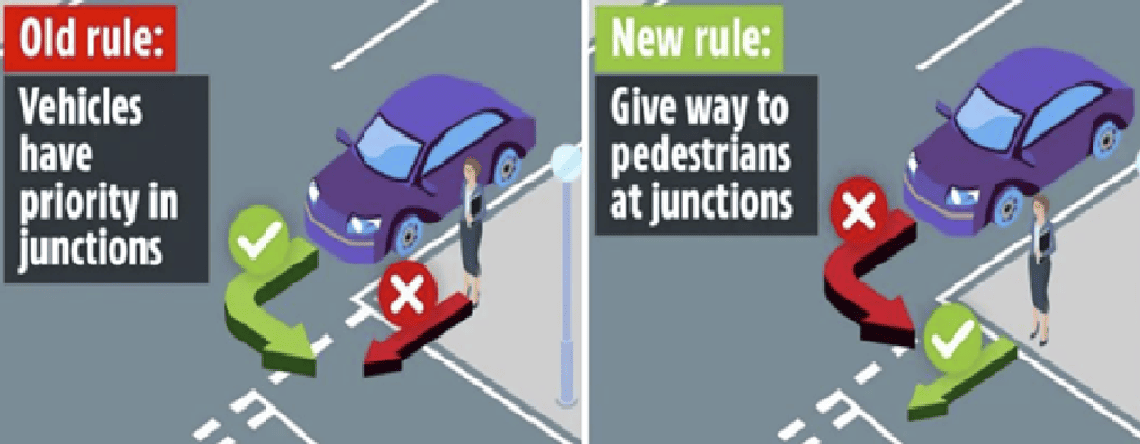
In January 2022 the Highway Code was updated to give priority to, and improve the safety of, pedestrians and cyclists. The updated code clarifies that:
- When people are crossing or waiting to cross at a junction, other traffic should give way
- If people have started crossing and traffic wants to turn into the road, the people crossing have priority and the traffic should give way
Anecdotal evidence suggests that even three years later many drivers are not adhering to the new rules. In areas of high pedestrian and traffic footfall the changes also have the potential to impact network resilience, public transport users, and cause safety issues.
The objectives of the trial are therefore:
- Understand the current compliance levels of drivers at various side road treatments
- Install non-prescribed side road Zebra crossings at selected locations and monitor the impact these have on driver compliance
- Review the data and undertake modelling to understand the capacity limits of various entry treatments and provide recommendations for designers
- Use this trial to raise awareness of current levels of compliance and to promote the most effective side road entry treatments, with the aim for design solutions to be included in relevant design guidance and standards.
What is an ISRC
An "informal side road crossing" (also called an informal crossing, uncontrolled crossing, or non-prescribed zebra crossing in some contexts) is a pedestrian crossing point at the mouth (entrance) of a side road where it meets a main road. It helps pedestrians cross the side road more safely and directly, often along their natural "desire line."
Key Features
- Dropped kerbs (curbs) on both sides for easy access, often with tactile paving for visually impaired users.
- Black and white striped markings (similar to a zebra crossing) across the side road mouth, but without the full formal elements like Belisha beacons (flashing orange globes), zigzag lines, studs, or traffic signals.
- No set-back requirement — it can be placed right at the junction (flush with the main road), unlike formal zebras which need space for zigzags.
- Sometimes includes raised tables (speed humps) or coloured surfacing to slow vehicles and highlight the area.
- Often marked with "give way" lines.
Stay Informed
Follow our projects to get notified of upcoming engagements and the latest project related news.